

there is a piece to be written about this "no contact" as a very specific kind of moral panic about status, intergenerational mobility, and maybe dementia. because it is wild how much this no contact thing riles up older people.

Michael Hobbes
Another one. The premise: Young people are cutting off their parents for minor mistakes and misunderstandings. The lead anecdote: A woman severs ties with her family for refusing to get vaccinated before her wedding — to a man who *lost his mother and brother to COVID*
Oct 19, 2026 at 4:53 PM
Researchers Confront an Epidemic of Loneliness (Published 2016)
Social isolation is linked to physical illness and to functional and cognitive decline. Programs to reach out to the elderly are growing, particularly in Britain.

Loneliness epidemic
The concept of a "loneliness epidemic" relating to rising rates of social isolation was first described in the 2000s. Robert D. Putnam's 2000 study Bowling Alone was an early instance of describing loneliness as an epidemic, arguing that decreased participation in civic life and community groups was weakening social bonds in the United States.[5]
Against the Couple-Form | LIES Journal
Libidinal flows cut through the social world. Amorous and sexual relations do not exist in some domain safely taped off from the rest of society. Rather they are constituent elements of nearly every aspect of social life. Desire flows and circulates amongst places of employment, intellectual debates, political organizing, artistic circles, playgrounds, and cemeteries. The elderly patient grabs at the breast of a nurse hunched over him. A governmental official strips his newly hired intern down to her leopard print thong during an important briefing in his office. The incarcerated man holds his hand up to the glass of the visiting booth, attempting to touch his wife after twenty years of their bodily separation. These flows of libidinal desire operate within and amongst broader social mechanisms, such that they help animate the dynamics of economic and political life. Often a locus of politics, desire permeates the so-called ‘public’ terrain.
Opinion | You’re How Old? We’ll Be in Touch (Published 2016)
Ageism in the workplace is toxic, and it hurts everyone.

We've Lost the Spaces That Foster Friendship
We keep offering individual fixes for loneliness while ignoring the disappearance of the spaces where adults once built real relationships.

This column will change your life: just sit down and think
'No wonder we don't dwell on what's inside: that would underline the loneliness of existence,' says Oliver Burkeman

Anti-Natalism | The Paper Pilot
The Paper Pilot's digital garden of thoughts on philosophy, politics, and sociology
The convoy model: explaining social relations from a multidisciplinary perspective
PURPOSE OF THE STUDY: Social relations are a key aspect of aging and the life course. In this paper, we trace the scientific origins of the study of social relations, focusing in particular on research grounded in the convoy model. DESIGN AND METHODS: We first briefly review and critique influential historical studies to illustrate how the scientific study of social relations developed. Next, we highlight early and current findings grounded in the convoy model that have provided key insights into theory, method, policy, and practice in the study of aging. RESULTS: Early social relations research, while influential, lacked the combined approach of theoretical grounding and methodological rigor. Nevertheless, previous research findings, especially from anthropology, suggested the importance of social relations in the achievement of positive outcomes. Considering both life span and life course perspectives and grounded in a multidisciplinary perspective, the convoy model was developed to unify and consolidate scattered evidence while at the same time directing future empirical and applied research. Early findings are summarized, current evidence presented, and future directions projected. IMPLICATIONS: The convoy model has provided a useful framework in the study of aging, especially for understanding predictors and consequences of social relations across the life course.

Young people five times more likely to have no friends than a decade ago | IPPR
The number of young people with no close friends has increased five-fold since 2014Gen Z are more isolated, more distressed and less productive than previo

How Social Isolation Is Killing Us (Published 2016)
Research confirms our deepest intuition: Human connection lies at the heart of human well-being.

Social Model of Disability | The Paper Pilot
The Paper Pilot's digital garden of thoughts on philosophy, politics, and sociology
"Don't Engage, Just Block" absolutely IS the Bluesky motto. The notion of a "Bluesky Elder" is vaguely ridiculous but the ONE THING that we oldheads are good for is telling the new folks that blocking without engagement is praxis, and encouraging them to do it early and often.

Nic Lake
"Don't Engage, Just Block" should be the Bluesky motto. We have a chance to start over and make this place better than the other place.
Loneliness epidemic

And related subjects
Loneliness Epidemic


Americans’ Social Activity Has Steeply Declined in the Past 30 Years
Young people five times more likely to have no friends than a decade ago | IPPR
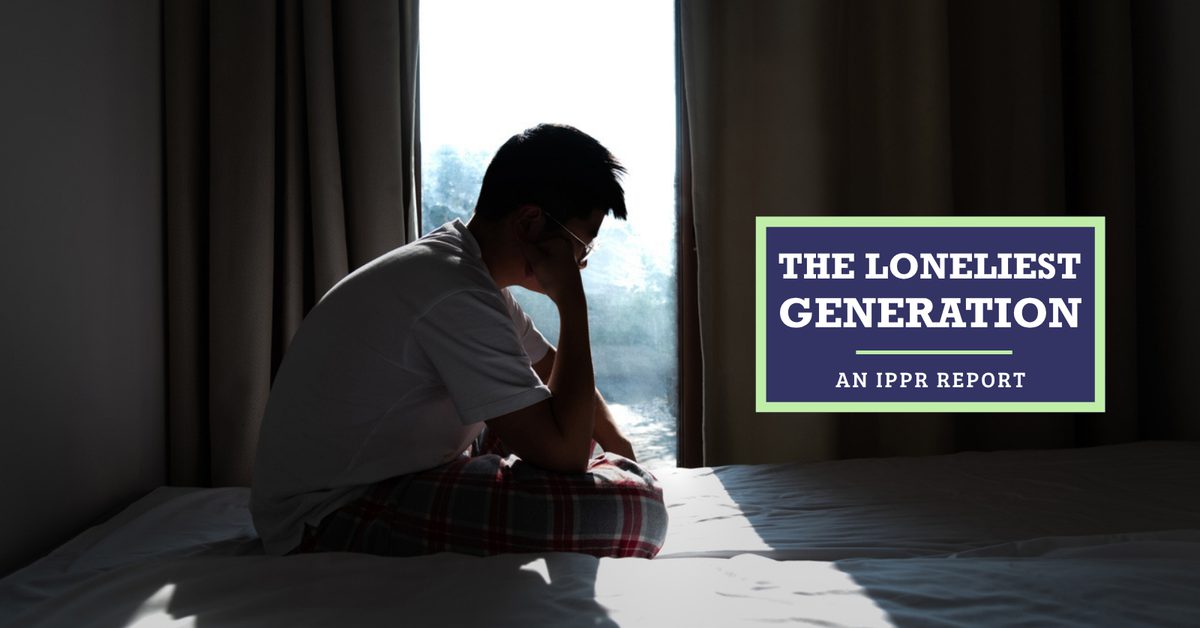
The loneliest generation: What it is like to grow up in England today | IPPR

Why You're Bored and Lonely: The Death of Third Places

Third Places Aren’t Gone. We Just Stopped Going.

The Disappearance of Third Places

Nowhere to Go: The Loss of Third Places

Impact of the COVID-19 pandemic on social media
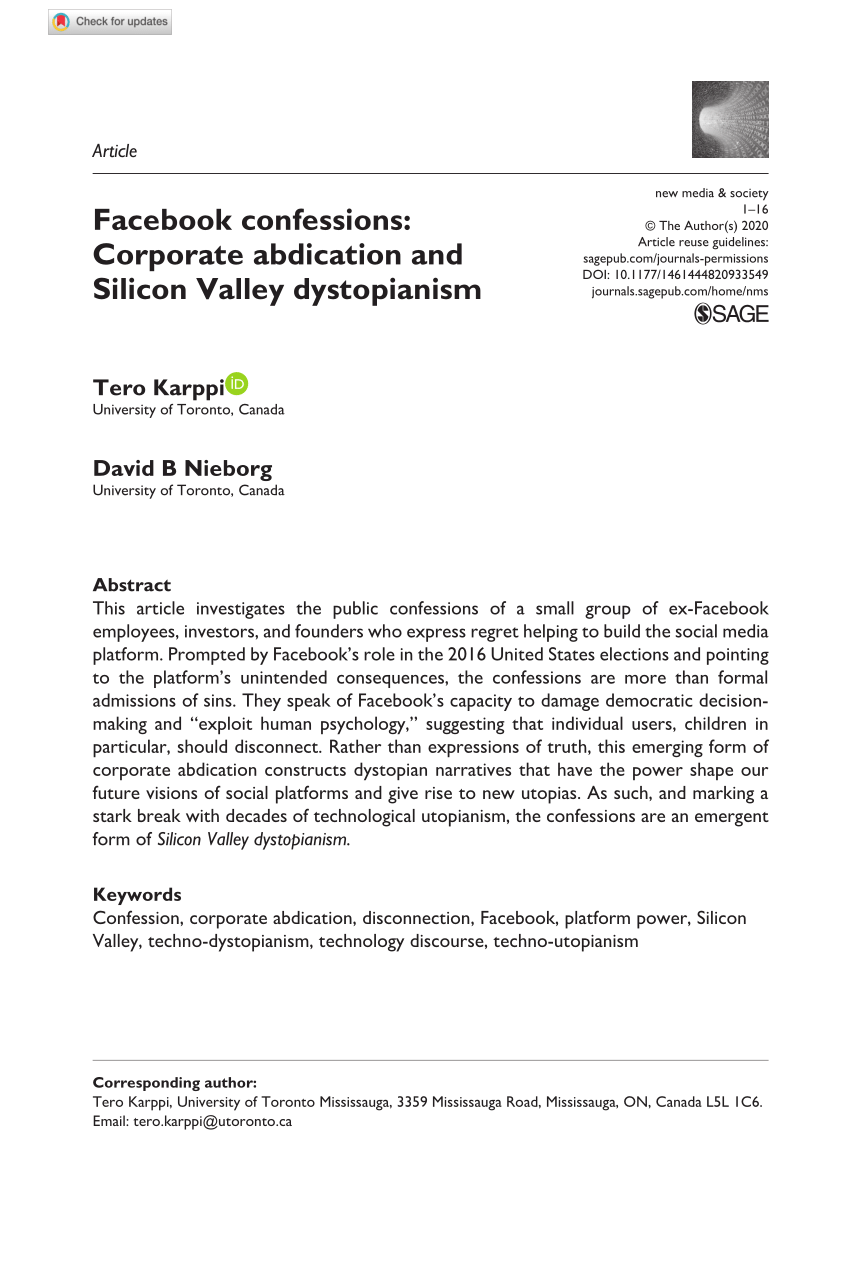
(PDF) Facebook confessions: Corporate abdication and Silicon Valley dystopianism


