In 1977, Disabled activists occupied the Federal Building in San Francisco to demand the passage of Section 504— legislation to protect against disability discrimination.When the building was cordoned off, in an effort to starve activists out, The Black Panthers *Broke In* to deliver them hot meals.
The 504 Protests and the Black Panther Party – Disability Social History Project
disabilityhistory.orgAug 19, 2025 at 1:44 AM
From Redlining to Greenlining: The Political Ecology of Race, Class, and Access to Green Space in Oakland, California from 1937-2020
Author(s): Corbin, Chryl Natasha Elaine | Advisor(s): Morelli-Frosch, Rachel | Abstract: Since the 1960s, Oakland, California, has been represented as a predominantly African American, low-income, and high crime urbanity. In the 2000s, the municipality started to become recognized as a top green city, and by the 2010s the city began to emerge as a gentrification hot spot. This dissertation elucidates how the relationships between race, class, housing, and access to green spaces have changed from redlining—prior to the Civil Rights Acts of 1964, 1965, and 1968—to 2020, after Oakland adopted an environmental agenda and began to establish itself as a green city starting in the 1990s. I question how Oakland’s urban environmental “sustainable development” agenda has impacted residents’ access to green spaces, and to what extent and how are these policies and practices creating, exacerbating, and/or mitigating urban environmental (in)justice issues. I examine both sides of environmental (in)justice, uneven distribution of environmental harms and the uneven development of environmental goods in which low-income residents and communities of color are disproportionally exposed to environmental hazards while also being prevented from benefiting from environmental amenities. I interrogate Oakland as a 21st century sustainable green city while also examining the historical urban policies and practices embedded in legal residential segregation and the current green gentrification processes which influence and contribute to the environmental (in)justices being (re)produced today.

The Sky's the Limit — Oakland Public Library
The Sky's the Limit — Pearlman, Lise A., 1949- — The FBI could not help but take notice when militant black leaders converged on Oakland, California, from all across the nation in mid-February 1968 to meet with 10,000 local supporters. It was a fund-raising birthday party for Huey P. Newton, the Black Panther Party's Minister of Defense. For almost a year, the Panther Party's popular biweekly newspaper featured Newton seated on a wicker throne with a rifle in one hand and a shield in the other. Now the empty throne stood in for Newton. The honoree paced back and forth in an isolation cell in the Alameda County Jail just a few miles to the north. Newton was charged with murdering a police officer, wounding another and kidnapping a bystander at gunpoint—all while on parole that prohibited him from even carrying a firearm. Most people gathered in the Oakland Arena on February 17, 1968, expected the twenty-six-year-old, self-proclaimed revolutionary to be convicted and sentenced to death for shooting the officer. Militant Malcolm X disciples joined white radicals and nervous local black community members on common ground—a rally to raise some of the anticipated $100,000 defense costs for the Newton murder trial. His lawyers cultivated grassroots support to prevent the outspoken critic of police brutality from going to the gas chamber. Comrades like Panther spokesman Eldridge Cleaver did not believe the pretrial publicity portraying Newton as a victim, but thought it useful propaganda; while conservative and mainstream newspapers denounced Newton as a cop killer, his militant followers celebrated the shooting death of a racist “pig.” For many of them, his guilt was never in question, but it didn't matter; in fact, some considered the shooting a long-awaited signal from the revolutionary leader. A capacity crowd came to hear SNCC leaders: the incendiary H. Rap Brown, “black power” champion Stokely Carmichael, and organizer James Forman. Though the black separatists mistrusted them, leaders of the white radical Peace and Freedom Party had forged an alliance with the Black Panthers. The theme of the rally was unity; at Forman's insistence, Panther co-founder Bobby Seale had even invited Ron Karenga, the head of the United Slaves (US) gang from Los Angeles, where the Panthers had just opened a second branch. At the gathering, the Panthers and United Slaves held in check their bitter rivalry.The Panthers owed some of their countercultural clout to the fame of ex-felon Eldridge Cleaver, basking in the success of his recently published, best-selling prison essays—Soul on Ice—and his new platform as a journalist for the Leftist political magazine Ramparts. A self-educated Marxist, Cleaver had won parole from prison in December of 1966. By the time Cleaver walked out of Folsom Prison he had committed himself to becoming a professional revolutionary, as he envisioned his idol Che Guevara: “a cold, calculating killing machine, able to slit a throat at the drop of a hat and walk away without looking back.”1 Huey Newton impressed Cleaver at first sight in February of 1967. By daring a San Francisco cop to draw a gun on him in a street confrontation, Newton proved he was no paper Panther. Cleaver dubbed the birthday rally “the biggest line-up of revolutionary leaders that had ever come together under one roof in the history of America.”2 As Air Force veteran James Forman took his turn at the podium near Newton's empty throne, he was similarly inspired. Though Forman had the least militant track record of the SNCC representatives who spoke, he electrified the gathering with his call for retaliation if Newton were executed: “The sky is the limit.”3 This did not sound like empty boasting coming off a year marked by race riots. After two political assassinations that spring and growing unrest over the Viet Nam War, the Newton trial became a cause célèbre for radical groups and anti-war activists. In mid-July, when the proceedings began, one underground newspaper ran a blaring headline proclaiming “Nation's Life at Stake.” The article explained: History has its pivotal points. This trial is one of them. America on Monday placed itself on trial [by prosecuting Huey Newton]. . . The Black Panthers are the most militant black organization in this nation. They are growing rapidly. They are not playing games. And they are but the visible part of a vast, black iceberg. The issue is not the alleged killing of an Oakland cop. The issue is racism. Racism can destroy America in swift flames. Oppression. Revolt. Suppression. Revolution. Determined black and brown and white men are watching what happens to Huey Newton. What they do depends on what the white man's courts do to Huey. Most who watch with the keenest interest are already convinced that he cannot get a fair trial.4 For a full year before the trial began, the FBI's twenty-year-old Counter Intelligence Program (COINTELPRO) began to focus on black radical gangs and various ways to eliminate them. By the summer of 1968, COINTELPRO was bent on destroying the Black Panther Party, but the threat of government persecution could not stop the Panthers from ramping up their rhetoric. Taking his cue from the inflammatory rhetoric of both Newton and SNCC leaders, “El Rage” Cleaver challenged the government to instigate a second American revolution. In early July of 1968, the Panther spokesman held a press conference in New York City predicting open warfare in the streets of California if Huey Newton were sentenced to death. Cleaver expected the carnage to spread across country. The day Newton testified on his own behalf, crowds started lining up before dawn and broke the courthouse doors as they pushed against each other, vying for access. Governor Reagan took keen interest in the proceedings from Sacramento, while J. Edgar Hoover elevated the Panthers to the number one internal threat to the country's security. Following Newton's trial, Panther Party co-founder Bobby Seale faced conspiracy charges accusing him of a leadership role in the battle between Chicago police and demonstrators that had exploded onto the floor of the 1968 Democratic Convention. Soon far more serious allegations confronted Seale. He was extradited to New Haven, Connecticut, for allegedly ordering the torture and murder of Alex Rackley, a suspected government plant in the local Panther office. By 1969, the FBI was targeting members of the Panther Party in nearly eighty percent of 295 authorized “Black Nationalist” COINTELPRO missions nationwide. Among these raids was a widely condemned, predawn invasion in December of 1969 by plain clothes policemen who stormed the apartment of charismatic young Panther leader Fred Hampton. The police riddled Hampton's front door with bullets and killed the twenty-one-year-old community organizer as he lay in bed. The largely white anarchist Weathermen retaliated by bombing police cars. To far greater political effect, 5,000 people gathered in Chicago from across the nation to attend Hampton's funeral. Reverends Ralph Abernathy and Jesse Jackson led the eulogies. Jackson proclaimed, “When Fred was shot in Chicago, black people in particular, and decent people in general, bled everywhere.”5 Just six months before his death, Hampton had negotiated a truce among the city's rival gangs, the first “rainbow coalition” that Jackson would later popularize in his own 1984 historic campaign for the presidency. As reporters revealed cover-ups and discrepancies in the police account of the Hampton apartment raid, the Panthers and their outraged supporters launched a public relations campaign decrying governmental persecution and demanded a probe into COINTELPRO. In April of 1970, tens of thousands of demonstrators descended on New Haven, Connecticut, from across the country to protest Seale's upcoming trial. The instigators were Youth International Party (“Yippie”) leaders Abbie Hoffman and Jerry Rubin, joined by other “Chicago Seven” defendants. They wanted to show solidarity with Seale, who was the eighth co-defendant in their highly publicized Chicago conspiracy trial until Judge Julius Hoffman ordered Seale bound and gagged for backtalk and severed his prosecution from the others. In response to the Yippie-led pilgrimage to New Haven, President Nixon mobilized armed National Guardsmen from as far away as Virginia, who came prepared to spray tear gas on demonstrators and students alike. Yale's President Kingman Brewster sized up the impending confrontation and decided to shut down the Ivy League University for a week to let students and professors who were so inclined to take part in voluntary teach-ins. In comments to the faculty that were quickly leaked to the press, Brewster created a storm of controversy that instantly put the Mayflower Pilgrim descendant on President Nixon's growing “Enemies List.” Angry editorials throughout the nation reinforced Vice President Agnew's demand that Brewster resign for daring to say that “I am appalled and ashamed that things should have come to such a pass in this country that I am skeptical of the ability of black revolutionaries to achieve a fair trial anywhere in the United States.”6 Yet Brewster, and those who rallied to his defense, echoed what Yale Law School's dean had noted eight years earlier, “The quality of a civilization is largely determined by the fairness of its criminal trials . . .”7 So was Brewster's skepticism justified? Under intense pressure, an effort by a trial judge, prosecutor, and jury to provide a fair trial to a black revolutionary had in fact been undertaken in the summer of 1968. As Newton's lead lawyer Charles Garry questioned his final witnesses, the feisty Leftist knew that most of the packed courtroom had just seen shocking video footage of Mayor Daley's police force in Chicago cracking heads of both demonstrators and mainstream reporters during the Democratic Convention. Garry referred to the Chicago debacle in his highly emotional closing argument as another exa9781845646202\\Comprised of the papers presented at the eighth, and latest, International Conference Simulation in Risk Analysis and Hazard Mitigation, this book covers a topic of increasing importance. Scientific knowledge is essential to our better understanding of risk. Natural hazards such as floods, earthquakes, landslides, fires and others, have always affected human societies. Man-made hazards, however, played a comparatively small role until the industrial revolution when the risk of catastrophic events started to increase due to the rapid growth of new technologies and the urbanisation of populations. The interaction of natural and anthropogenic risks adds to the complexity of the problem.<br/>Anyone fascinated by true crime and legal thrillers will want to read The Sky's The Limit: People v. Newton, The Real Trial of the 20th Century? In comparing the 1968 trial of Black Panther Party leader Huey Newton to other riveting American trials from 1901 to 1999, author Lise Pearlman revisits historic legal battles featuring murder, rape and kidnapping, skeletons in celebrity closets, class warfare, fixing the World Series, evolution versus creationism, abuse of power and political conspiracy. Each “trial of the century” serves as a window into its own era, but the author asserts that the Newton murder trial following a shootout with two Oakland policemen-—where the accused revolutionary put America itself on trial for 400 years of racism—should head the list. It drew an international spotlight on a superpower rocked by two political assassinations and bitterly divided over the Viet Nam War and the Civil Rights Movement. At the time, the FBI considered the Black Panthers the greatest internal threat to America's security. So did Party spokesman Eldridge Cleaver, who threatened revolution if Newton were condemned to die. The author contends that the jury's surprising verdict still reverberates today—had it turned out otherwise Barack Obama would likely not be President.<br/>This comprehensive volume examines the impact of important 20th century criminal trials on American history and culture. The work begins with a discussion of sixteen important legal cases from 1901 to 1967, each at one time considered "the trial of the century," and explores the cultural and political impacts of each in depth. The second part of the work provides a detailed analysis of the 1968 murder trial of Black Panther co-founder Huey P. Newton and its significance to the nation. The third part of the book discusses competing "trials of the century" from 1968 to 1999. The text concludes with a discussion of the racial impacts of the Panther prosecutions and the developments in the politics of race that have led now to the election of the nation's first black president. Pearlman is a retired a judge and prominent California lawyer and legal scholar. Annotation ©2012 Book News, Inc., Portland, OR (booknews.com)
Somebody Blew up Oakland: Dispossession as a Praxis of Racial Ordering
Author(s): Jones, Stephanie Delise | Advisor(s): Hironaka, Ann; Sojoyner, Damien | Abstract: In this dissertation, I investigate the relationship between underdevelopment and Black geographies. I then explore the consequences of this relationship on the city of Oakland. From 2019 to 2021, I conducted 68 in-depth field interviews of Black Oakland residents who detailed the processes and mechanisms by which California housing policy contributed to the displacement of Black subjects. Building on the work of scholars of Black geographies, I have interrogated the myth of development and the relationship to the dispossession of Black geographies. I theorize how racial capitalism produces vulnerable populations through housing in urban areas. The empirical contribution of my research is to provide a framework for Black geographies as people are being displaced. The theoretical contribution is to provide a conceptualization for Black geographies existing through abjections and placelessness as understood through residents of Oakland.I argue that the relationship between dispossession and refusal creates a distinct politic. In chapter two, I theorize the work of Moms for Housing to further understand Black knowledges of resistance to dispossession. Moms for Housing is used as a case study to highlight the many theoretical implications of dispossession occurring in Oakland. In chapter 3, I use two interviews from developers to demonstrate the contradictions in what I call the mythology of development. In chapter 4, I walk through the geographic stories of 2nd and 3rd generation Oakland residents and demonstrate each of the ways they feel locked out of the city as a result of the urban changes. In chapter 5, I demonstrate how communities resist dispossession and disposability. The city of Oakland lacks proactive implementation of equitable housing policy. The lack of action by the city of Oakland puts the onus on everyday residents to organize against their landlords, employers and the state.
Job-seeking graduates with disabilities launch hunger strike as protest enters 21st day
Job-seeking graduates with disabilities began a hunger strike unto death on Saturday, marking the 21st consecutive day of their protest demanding immediate government action on their five-point charter of demands. The strike, organized by the Chakri Pratyashi Protibondhi...

The Color of Power — Oakland Public Library
The Color of Power — Douzet, Frédérick — <p></p><p> <i>The Color of Power </i>is a fascinating examination of the changing politics of race in Oakland, California. Oakland has been at the forefront of California’s multicultural changes for decades. Since the 1960s, the city has been a shining example of a fruitful liberal black-and-white political partnership and the successful incorporation of black politicians into the political landscape. But over the past forty years, the balance of power has changed as a consequence of dramatic demographic trends and economic circumstances. The city’s formerly dominant biracial political machine has been challenged by the demands of new multiracial interests.</p><p></p><p>The city, once governed by a succession of black mayors and majority black city councils, must now accommodate rapidly growing Asian and Latino communities. While the black-led coalition still relies on white progressive support, this alliance has weakened due to a shift in the progressives’ agenda and the voting habits of the black community, the rise of a Hispanic-Asian coalition, and a strong demographic decline of the African American population. With similar demographic changes taking place across the nation, Oakland’s experience provides insight in to the multiracial future of other American cities.</p><p></p><p> <i>The Color of Power</i> investigates Oakland’s contemporary racial politics with a detailed study of conflicts over issues like education, elections and political representation, and crime. Trained as a journalist, a political scientist, and a geographer, the author provides a unique perspective supported by numerous maps and extensive interviews.</p><p>Winner of awards from the French Society of Geography and the French National Academy of Sciences</p><br/>Trained as a journalist, a political scientist, and a geographer, the author provides a unique perspective supported by numerous maps and extensive interviews.<p>Winner of awards from the French Society of Geography and the French National Academy of Sciences</p>
San Francisco cuts affordable housing requirement from 15% to 5%
The San Francisco Board of Supervisors voted to reduce the rate after the city controller warned new housing was too difficult to build.

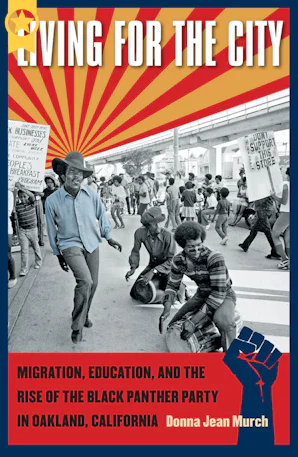
Living for the City
In this nuanced and groundbreaking history, Donna Murch argues that the Black Panther Party (BPP) started with a study group. Drawing on oral history and unt...
American Babylon
A gripping portrait of black power politics and the struggle for civil rights in postwar Oakland

Tower Of Power - Back To Oakland
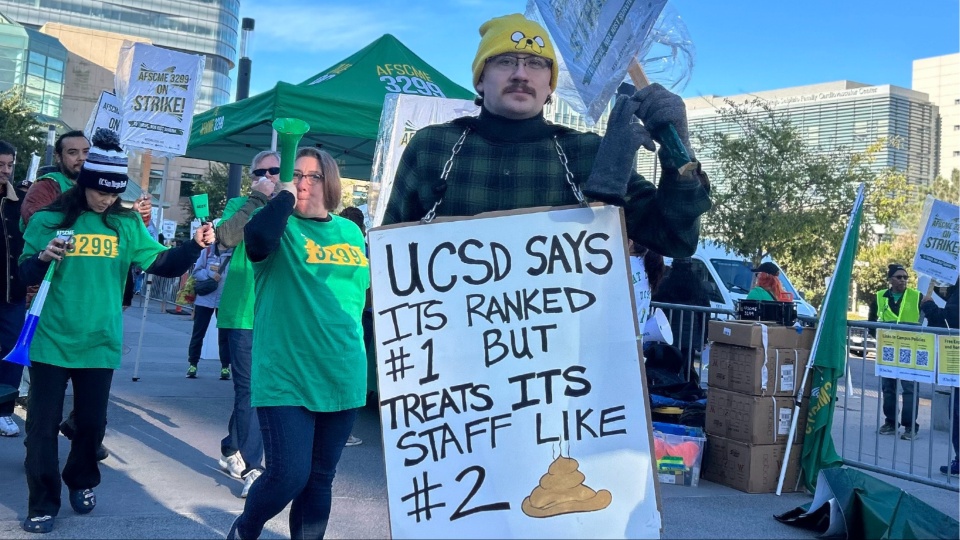
40,000 University of California hospital system workers in two-day strike
SAN DIEGO—As 40,000 AFSCME Local 3299 workers throughout the ten-campus University of California system launched a two-day strike on Nov. 17, two Communist Party members—Alvin, an AFSCME-represented employee at University of California at San Diego (UCSD), and another worker, an AFSCME retiree f...
SustainOSS: The Report
On June 19th, 2017, one hundred people gathered in San Francisco to create a cultural shift in how we think about the sustainability of…

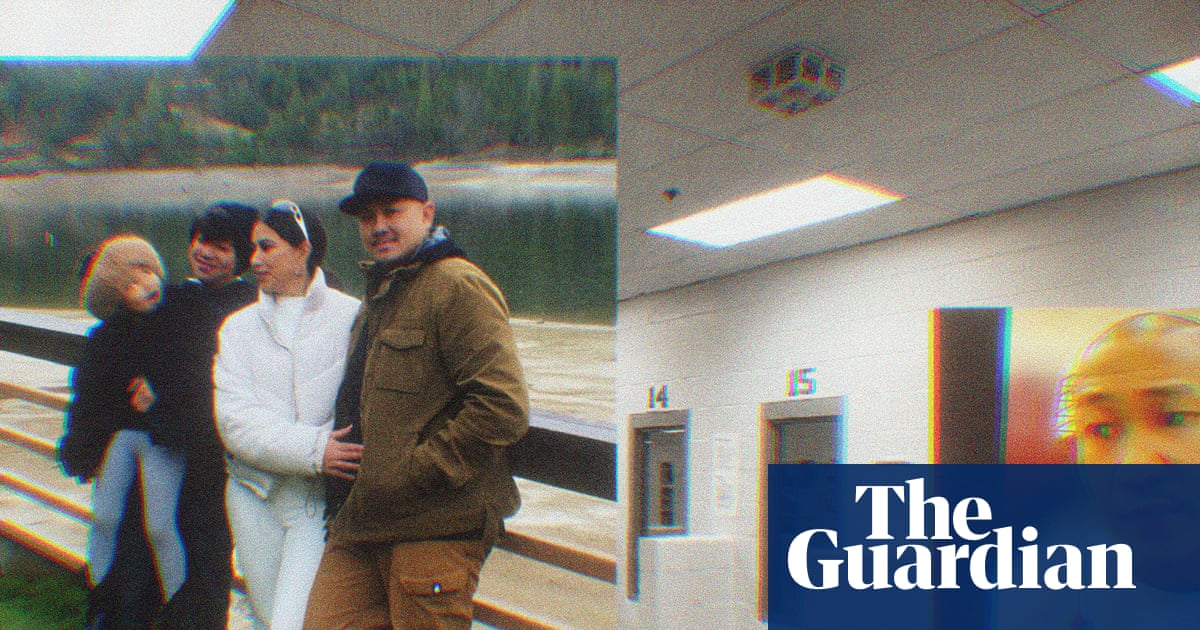
ICE bans hugging inside California’s largest detention center. Families are fighting back
In the California City facility, ‘contact visits’ are strictly forbidden – but detained residents aren’t staying quiet. Are officials listening?
Civil Rights Era (1950–1963) - The Civil Rights Act of 1964: A Long Struggle for Freedom | Exhibitions - Library of Congress
The Brown decision fueled violent resistance during which Southern states evaded the law. The Montgomery bus boycott began a campaign of nonviolent civil disobedience to protest segregation that attracted national and international attention. Media coverage of the use of fire hoses and attack dogs against protesters and bombings and riots in Birmingham compelled Kennedy to act, sending a civil rights bill to Congress.

Press Releases | Congressman Jerry Nadler
Rep. Nadler charged that the EPA has abrogated its responsibility to protect public health by proclaiming lower Manhattan “safe” without comprehensive data to support that statement. And the Congressman revealed that the EPA had its own office building at 290 Broadway extensively tested and properly cleaned, in stark contrast to EPA directives which told Manhattan residents to follow NYC Department of Health (NYCDOH) guidelines that advise cleaning with “wet rags.” The Congressman stated that these guidelines may be in violation of the federal law that EPA is responsible for overseeing. As a result of these findings, the Congressman made a number of immediate demands of the EPA and called for the continued, unfettered and independent investigation by the EPA National Ombudsman and for Congressional Hearings. EPA Region II officials have claimed in multiple public statements that they have no responsibility for indoor testing and cleaning of residences in lower Manhattan. In a November 20th New York Daily News article, Region II Counsel Walter Mugdan said, “They [the federal regulations] were never contemplated to apply to someone cleaning an apartment.” Another spokesperson for Region II, said in a recent St. Louis Post-Dispatch article, “That’s not our job and we have no policies or procedures for doing that type of testing.” She also stated, “We are not a health agency.” However, today Congressman Nadler said that he had spoken with EPA officials who dispute the accuracy of those statements. The EPA National Ombudsman, Robert Martin, confirmed that the agency is, in fact, currently doing indoor testing and removal of hazardous materials in Herculaneum, Missouri, and has also done so in McFarland, California, and Kellog, Idaho. “The EPA has failed to uphold its own mission – ‘to protect human health and to safeguard the natural environment – air, water and land – upon which life depends.’ It is absurd that the EPA has claimed publicly that it doesn’t have the legal authority to do necessary environmental tests and remediation in response to the World Trade Center attacks when it has clearly done residential work throughout the country,” said Congressman Nadler. “Why is New York being treated differently?” “And given that the EPA has not tested inside people’s homes, despite my repeated requests for it to do so, I find it deeply troubling that Administrator Whitman said she was ‘glad to reassure the people of New York. . .that their air is safe to breathe, and their water is safe to drink.’ She clearly did not have comprehensive data to support that claim either way,” he added. Congressman Nadler also revealed today that the Federal buildings at 290 Broadway and 26 Federal Plaza were tested inside and outside for high levels of hazardous materials and, when some were found, the areas were cleaned (HEPA vacuumed) by properly trained personnel. Some sources have also indicated that even greater cleanup measures were taken. However, even when the EPA received test results from a study commissioned by the Task Force that indicated serious levels of asbestos and other materials inside downtown apartments, the EPA continued to guide residents to the NYC Department of Health (NYCDOH) for direction. The NYCDOH directed residents who are the same distance away from Ground Zero as the Federal buildings, to clean asbestos-laden dust “with wet rags and mops” or “wet brooms.” "We must ask why is what the EPA says is good enough for New York residents not good enough for the EPA itself? Either the cleanup measures taken at the EPA office were necessary to protect its workers or the EPA wasted tax-payer dollars on an unnecessary cleanup,” stated Congressman Nadler. Moreover, the Congressman argued, that by delegating authority to the more lenient City standard, the EPA may have violated the law, as the agency is compelled to ensure that such City standards are at least as stringent as Federal law. “Today, I have leveled some serious charges at the EPA because I believe I have the moral responsibility to do so. However, I want to make perfectly clear that we still do not know the extent of the presence of hazardous materials in some areas downtown. It may or may not be dangerous in some indoor areas of lower Manhattan. I believe that given that we don’t have all of the facts, we cannot conclude anything. I do know that we must get the proper facts and act swiftly and appropriately to get the job done right,” said Rep. Nadler. CALLS FOR ACTION Rep. Nadler and the Ground Zero Elected Officials Task Force called for four actions by the EPA: 1) Expedited testing of lower Manhattan residences and workspaces for hazardous materials levels. If shown to be necessary by test results, the proper cleaning of such indoor spaces by the EPA or appropriate government agency or its designated contractors. Such a testing and cleanup effort must be coordinated by a single agency utilizing the strictest Federal guidelines. 2) The full, independent and unfettered investigation by the EPA National Ombudsman into EPA’s response to the September 11th attacks in New York. 3) The release of all documents detailing the justification of the cleanup of 290 Broadway and 26 Federal Plaza, how that cleanup was conducted, by whom, and at whose expense; 4) An immediate explanation from EPA of why it didn’t utilize or enforce strict, Federal guidelines regarding hazardous testing and cleanup downtown, in favor of more lenient City standards. In addition, Congressman Nadler called for immediate Congressional hearings into all of these matters. Rep. Nadler has served in Congress since 1992. He represents the 8th Congressional District of New York, which includes parts of Manhattan and Brooklyn, including the area surrounding 'Ground Zero.' He is the Chair of the Ground Zero Elected Officials Task Force.
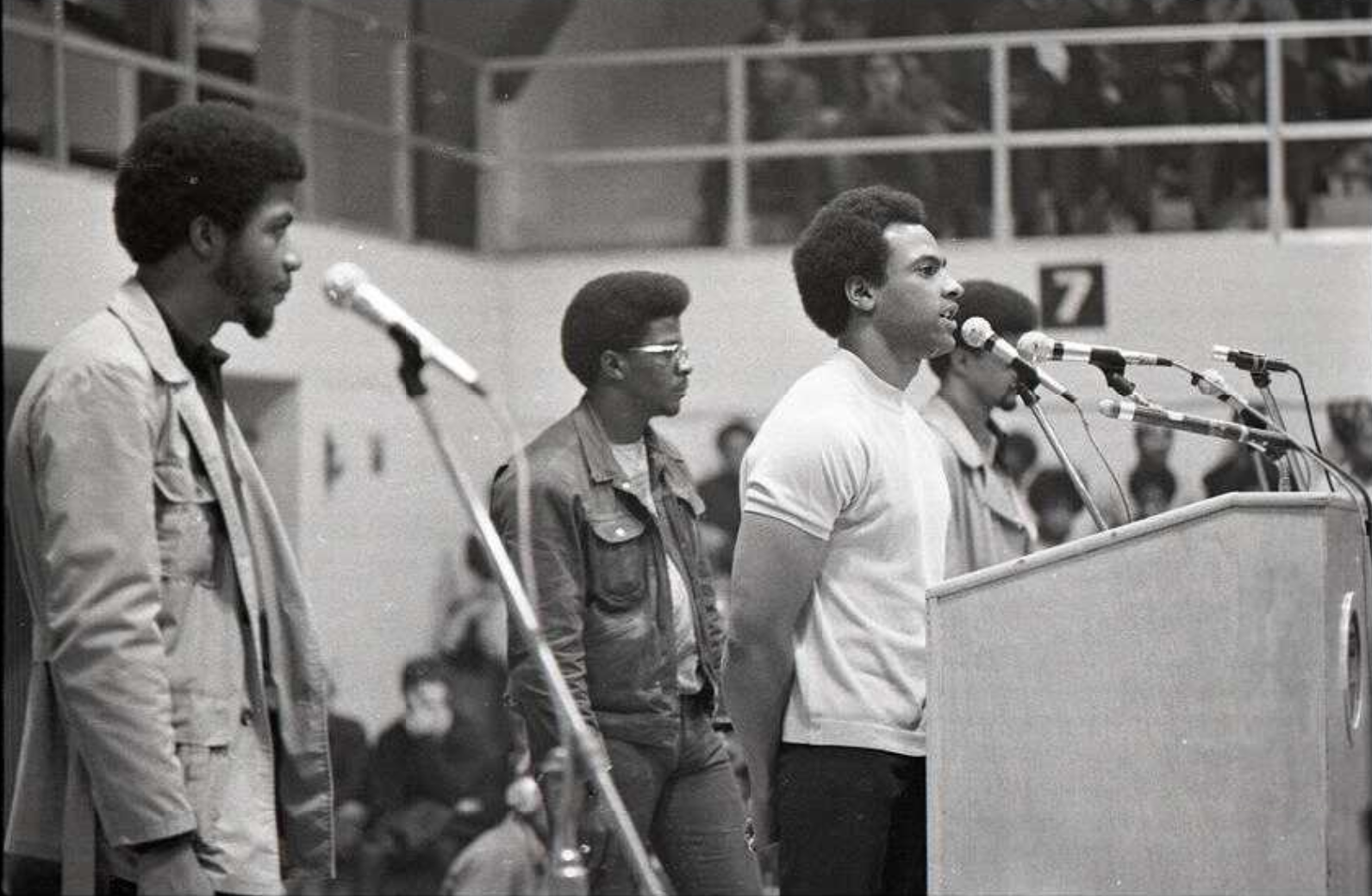
Huey Newton introduces Revolutionary Intercommunalism, Boston College, November 18 1970
In 1970 Huey Newton gave a speech at Boston college outlining a new ideological direction for the Black Panther Party, Revolutionary Intercommunalism. Newton described his rejection of the idea of black people being an internal colony in the US, that class struggle rather than national liberation was the only route to a communist society (describing the failure of liberation movements in Africa as 'neo-colonialism'), concerns around automation and the working class, and the impossibility of a socialist state in the US (against the position of the Progressive Labor Party), although he still described Vietnam and China as partially liberated.