

Some researchers, including some I very much respect, think that we need to stop pussyfooting around and start being more brutal in our way of talking about bad work in our field I disagree. When you are refuting someone’s work, I think it’s important not to be a dick about it
May 31, 2025 at 4:42 PM
So maybe now we can agree that having an unchecked research integrity militia who unfortunately has the ear of the press and increasingly that of the the publishers, but who fiercely rejects any… | Ioana A. Cristea
So maybe now we can agree that having an unchecked research integrity militia who unfortunately has the ear of the press and increasingly that of the the publishers, but who fiercely rejects any minimal ethics or code of conduct, is a (growing) problem? Also, that 1. problems have to be investigated before deciding they are are legitimate and serious; 2. this investigation is not social media, blogs and the press; 3. this investigation should not be on the front page of journals and Retraction Watch; 4. there are degrees of seriousness and some things can just be corrected or are simply not very consequential (no, it's not a house of bricks where we have to check every brick, that's a dumb analogy), so being absolutely hysterical and overdramatic about any lie, inaccuracy or mistake is purposeful at worse and should be ignored at best and 5. it is not only unnecessary, but harmful, to also go into other, non-academic things the person did or does to complete "investigations" that you (press, sleuth, blogger, etc) do not have the tools and information to do completely and accurately (this fixation would be called harassment in the before times). Others will justly write about what the institutions did or did not do, but what I want to say is that we really should end it with the blank credit we give to any and all allegations that come from the establish research integrity truth fighters.

Jay Van Bavel, PhD on Twitter / X
I think it’s extremely unhealthy for any academic field to make it taboo to critique publications from senior or junior scholars or to critique certain popular methods. This makes the field worse or makes us look bad to people outside our field (including the public). It erodes…— Jay Van Bavel, PhD (@jayvanbavel) October 13, 2024
Research ethics: 3 ways to blow the whistle
Reporting suspicions of scientific fraud is rarely easy, but some paths are more effective than others.

Claims about scientific rigour require rigour
Nature Human Behaviour - Claims about scientific rigour require rigour
A response to: Should universities investigate questionable papers students and faculty wrote elsewhere?
Editor’s note: We recently published a guest post on universities’ responsibility for investigating misconduct allegations related to work by staff and students conducted and/or published while the…

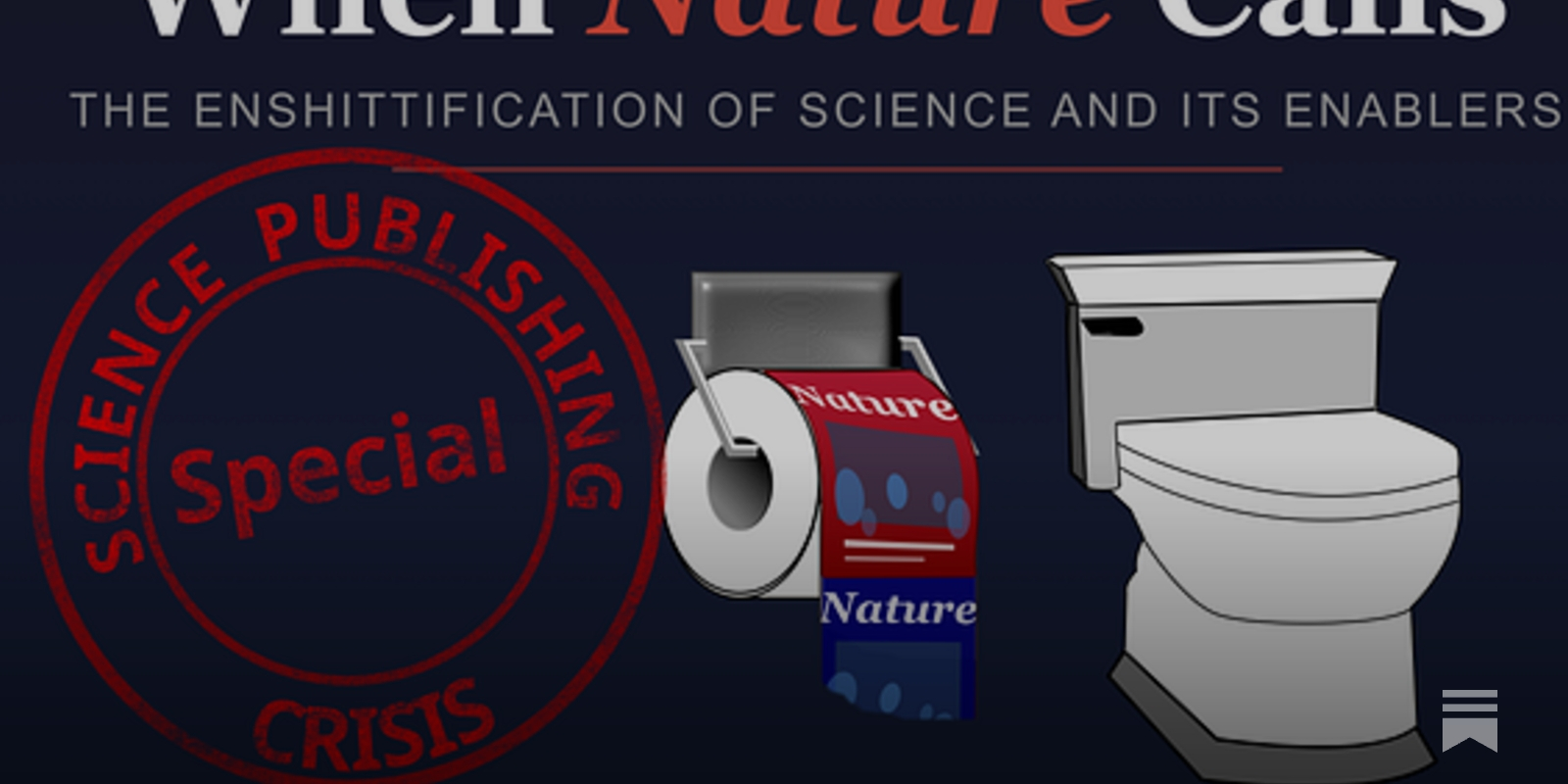
When Nature Calls: The Enshittification of Science and Its Enablers
Proof-of-work papers, policy laundering, and the collapse of self-correction
A Delphi survey on attitudes to serious research misconduct: Exploring convergence vs. polarization of views of research “sleuths” and research integrity experts
Research fraud is often seen as a rare event, but evidence from self-report surveys indicates that fabrication and falsification of data are common enough to be a problem. This study assessed attit...

Breaking the silence
Research on science communication has largely focused on teaching scientists how to describe their studies in ways that interest the public while deepening their understanding of scientific exploration. However, there is another, often overlooked side to science communication—how scientists respond when questions arise about the integrity of their research. Often, the tendency has been to stay silent and wait for any controversy to pass or be resolved in professional forums. But in an age of growing, intense attacks on science, silence can be detrimental to both public trust and the careers of scientists who are under scrutiny. For better or worse, journalists, social media professionals, and the public may take a response of “no comment” as a concession that the critics are correct, so forthright communication about research questions is more urgent than ever.

Scientific sleuths come in from the cold
Research integrity investigators are starting to organize, but the field, and the people, remain idiosyncratic

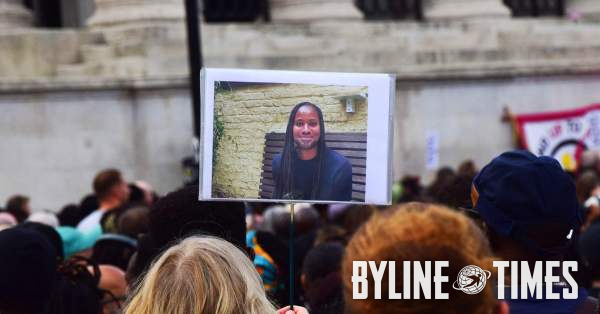
Jason Arday: We Must Rage – Rage Against the Journalism of Cruelty
The death of the academic shows the casual conversion of humiliation into entertainment by a media running on monetised hate and cruelty
Investigation finds ‘egregious misconduct’ by CUNY scientist
In a report shared with Science in October 2023, a committee investigating allegations of misconduct by Dr. Hoau-Yan Wang, a professor at the City College of New York (CCNY, which falls under the C…

Elena Rossini on GoToSocial ⁂ (@elena@aseachange.com)
[3 media attachments] Dear friends, Please gather around for a long post about #WSocial and how they are responding to critiques. I have noticed a trend: W Social leaders and staunch supporters are describing any critical posts about the company as "targeted disinformation." Its CEO said they will soon have a technical solution in place for this. Oh?!? 🔗: https://mu.social/profile/anna.wsocial.eu/post/3mtqufy6g4s2r I suppose the "targeted disinformation" claims are about recent posts by the likes of me and @pallenberg about troubling hate speech that is allowed on W Social. Claims backed by hard evidence, in the form of screenshots and video captures. (I am increasingly doing screen recordings of problematic posts and interactions by W Social people because they have a tendency to delete evidence - like an infamous comment on a video by the Instutute for Remigration). ⬇️ ⬇️ ⬇️ Discrediting sources, renaming evidence as "disinformation" and creating a victim narrative has a long, storied history. ⬆️ ⬆️ ⬆️ But I'm digressing. I speak up about W Social because: - Mainstream media runs PR fluff about them; - Horrid hate speech on the platform is completely unmoderated. W Social is currently showing the limits of free speech absolutism. Its CEO wrote: "We don’t need W to become another echo chamber." Reminds you of something? Atmosphere user @echna.bsky.social astutely remarked that "W Social is on an X speedrun, without ever having been like Twitter." 🔗: https://mu.social/profile/echna.bsky.social/post/3mtqlknzork2t Bluesky, #Blacksky, and #Northsky have mechanisms in place to report hate speech - and I am super thankful for that. As of today, I cannot report to W Social posts by their users that contain hate speech. The W Social moderation list's only purpose is to make a distinction between verified users and bots. Compare it with Blacksky's moderation list and be amazed (see screenshots). What's the big deal about the lack of content moder…

> It is worth considering the power dynamics of a well-known researcher *demanding* first comment on anything anyone publishes about their own work. It is a power move, and obviously so if they don't honor their own policy in cases where the other researchers weren't sufficiently obliging.
"We should be able to have an open discussion about what's good science and freely critique bad research. No not you! You shouldn't be having an open discussion about what's good metascience or freely critique bad metaresearch. That's censorship." Idk about you folks but I'm tired of the bullshit.
Excuse me but this is cult behavior. And as a scientist, I have no business joining a cult. These personalized insults and intolerance for criticism are not scholarly virtues however you cut it. I do not understand or relate to it. What is my worth as a scholar if I do not value evidence over faith?


