

I haven't, but I don't know that it's that kind of model. It's really different than an LLM, since if you want an answer from it you can only ask it multiple choice, true or false ( with confidence ), or "tell me the score of X" questions. So there's no generating proof code or anything directly.
Sep 19, 2026 at 3:31 AM
Your LLM Doesn't Write Correct Code. It Writes Plausible Code.
One of the simplest tests you can run on a database:

crawshaw - 2025-01-06
This document is a summary of my personal experiences using generative models while programming over the past year. It has not been a passive process. I have intentionally sought ways to use LLMs while programming to learn about them. The result has been that I now regularly use LLMs while working and I consider their benefits net-positive on my productivity. (My attempts to go back to programming without them are unpleasant.)
Provisional Guidance for Users of LLM-Based Code Generators
available intuition for avoiding big risks

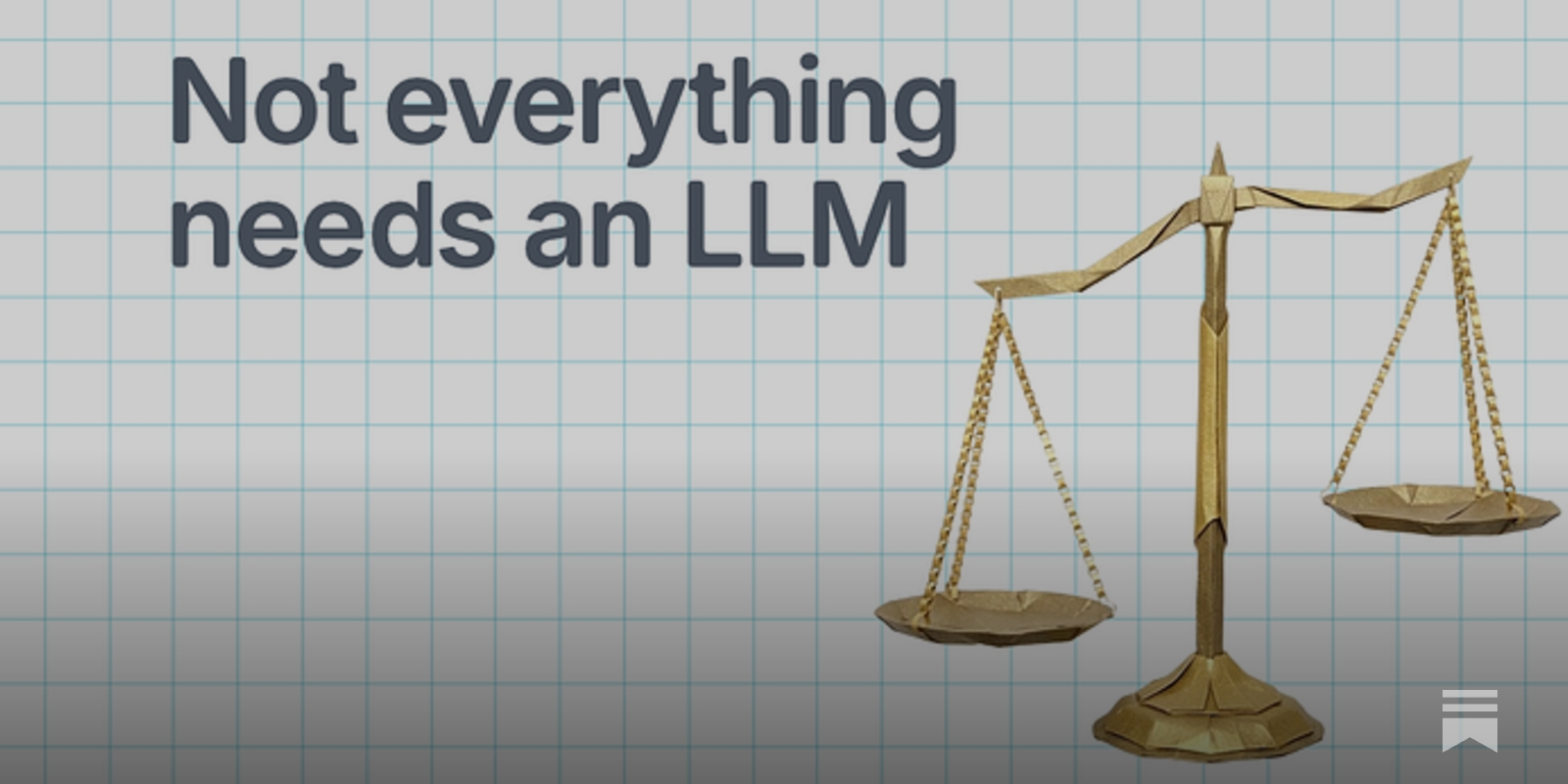
I Still Built It - Ewan’s Blog
if an LLM wrote a significant amount of the implementation, apparently the human directing it no longer counts.
Dan Shipper 📧 on Twitter / X
this is true and is a big reason why you don’t need to be a highly technical researcher to use LLMs in surprising and novel ways https://t.co/TuxNzXzToU— Dan Shipper 📧 (@danshipper) July 27, 2025
Who Needs an LLM to Program an LLM?
A rank-one weight edit built from a model’s own matched pairs and a linear program, with no language model anywhere in the loop.

Ryan Hill on Twitter / X
I’ve been thinking today about how LLM “proof solvers” compare to other recent ML tools in science like AlphaFold. I’ve seen a lot of very strong reactions today that I might label as a “first contact” attitude, and I don’t think I subscribe to it:— Ryan Hill (@RyanReedHill) October 7, 2026
Is the LLM response wrong, or have you just failed to iterate it?
Many "errors" in search-assisted LLMs are not errors at all, but the result of an investigation aborted too soon. Here's how to up your LLM-based verification game by going to round two.

Here’s how I use LLMs to help me write code
Online discussions about using Large Language Models to help write code inevitably produce comments from developers who’s experiences have been disappointing. They often ask what they’re doing wrong—how come some …
My AI Skeptic Friends Are All Nuts
My smartest friends have bananas arguments about LLM coding.

My AI Skeptic Friends Are All Nuts
My smartest friends have bananas arguments about LLM coding.

Designing a Language by Asking the Language Models — using an LLM panel as a syntax usability lab (from the kaish project)
Designing a Language by Asking the Language Models — using an LLM panel as a syntax usability lab (from the kaish project) · GitHub

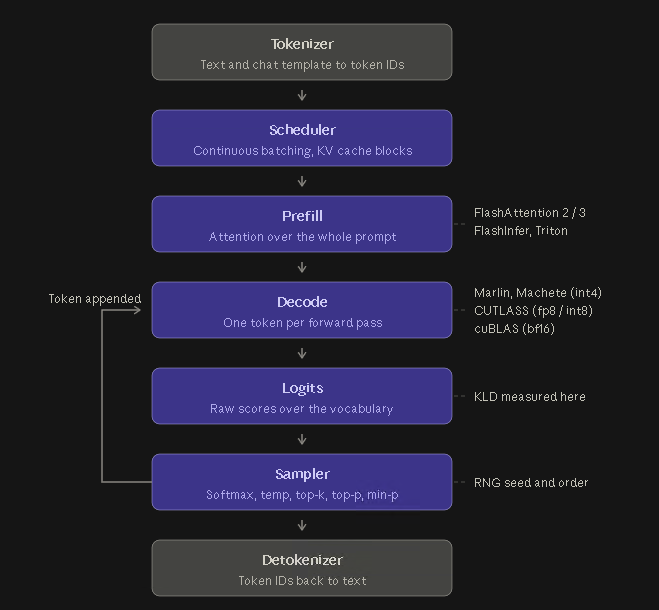
Why your local LLM feels dumber than it is
Quick Introduction We have all been on forums, chats, reddit, discord, youtube, or somewhere and heard “Oh! Model XYZ is AMAZEBALLZ!zomgwtfbbq” then downloaded it (or more likely, some quantized form of it) and said “eww… This sucks!” This post is going to be a rather technical series of experiments to demonstrate the impact of implementation-specific hazards with inference. I will be using the term “reference implementation” to describe the lab that published and offers first-party hosting of ...
I just came across this paper arxiv.org/abs/2509.22908 which coins the term "vericoding" for using LLMs to generate formally verified code, and presents benchmark results for several languages

A benchmark for vericoding: formally verified program synthesis
arxiv.org
Martin Kleppmann
New blog post! ✨ I argue that AI will make formal verification go mainstream. martin.kleppmann.com/2025/12/08/ai-formal-verifica… Three reasons for this: 1. LLMs are getting increasingly good at writing proofs using proof assistants. This will make formal verification vastly cheaper than it's been to date.
