

There is a war on, but only one side is armed: this is the essence of the technology question today.1 On the one side is private capital, scientized and subsidized, mobile and global, and now heavily armed with military-spawned command, control, and communication technologies. Empowered by the second industrial revolution, capital is moving decisively now to enlarge and consolidate the social dominance it secured in the first.
The Luddite
An anticapitalist tech blog. Embrace the technology that liberates us. Smash that which does not.
The shifting battlefield: technology, tactics, and the risk of blurring lines in warfare - Humanitarian Law & Policy Blog
The accelerating integration of emerging technologies into armed conflict is transforming not only the tools of war, but its tactics, geography, participants and impact. Technological developments – from commercial drones to artificial intelligence, electronic warfare to the military use of civilian infrastructure – risk undermining boundaries between military and civilian domains. These changes challenge long-held...
Preface | The World After Capital
Since publishing the previous version of The World After Capital, I have met with people across the political spectrum to discuss the ideas from the book. When I present these in person, I emphasize that the ideas are neither left nor right but forward (credit to Scott Santens who first used this phrase about Universal Basic Income). My writing, however, at times has alienated readers who identify as being more on the right. In this new edition, I am therefore making an extra effort to emphasize how both my diagnosis of where we are at and my suggestions for how to move forward do not map onto the existing political divides. Instead this is a new way of understanding our challenges and opportunities that can be the basis for movements and parties that are not trapped in Industrial Age ideology.
Anything That Can Be Capitalized Eventually Gets Operationalized
A structural pattern has reshaped servers, labor, and software licenses. AI is now running the same playbook — simultaneously — on software production and human capital.
When Silicon Valley’s AI warriors came to Washington
Effective altruism is increasingly described as a cult. But as the movement’s billionaire adherents pour money into D.C., its obsession with the AI apocalypse is remaking the capital’s tech policy landscape.

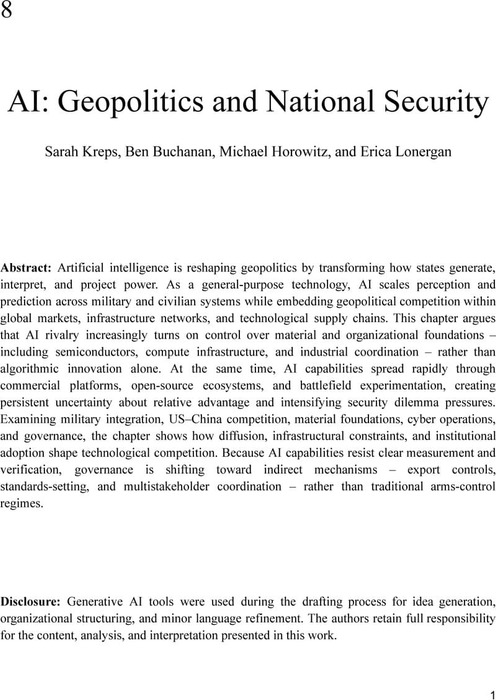
AI, Geopolitics, and National Security (Chapter 8)
Artificial intelligence is reshaping geopolitics by transforming how states generate, interpret, and project power. Rather than producing a single new weapon, AI operates as a general-purpose technology that scales perception, prediction, and decision-making across military, civilian, and informational domains. This chapter argues that AI rivalry increasingly depends on control over material and organizational foundations, including semiconductors, compute infrastructure, data centers, industrial coordination, and institutional adoption. It examines battlefield integration, U.S.–China competition, semiconductor statecraft, cyber operations, information power, and governance. The chapter shows that AI capabilities diffuse rapidly through commercial platforms, open-source ecosystems, and wartime experimentation, while frontier development remains constrained by infrastructure and supply-chain chokepoints. Because AI capability is difficult to measure or verify, governance is shifting away from traditional arms-control models toward export controls, standards, voluntary commitments, and multistakeholder coordination.
How the unholy alliance of Big Tech and the far right threatens the world
Far-right populists are the best chance for the tech oligarchs to hold onto power and wealth through the pursuit of ‘End Times Fascism’

Capital in the Twenty First Century
What are the grand dynamics that drive the accumulation…


The Authoritarian Stack: Mapping Big Tech’s Capture of State Power - Rosa-Luxemburg-Stiftung
A new project exposes the infrastructure of techno-oligarchic control — and why Europe must act

Rethinking the Luddites in the Age of A.I.
Brian Merchant’s new book, “Blood in the Machine,” argues that Luddism stood not against technology per se but for the rights of workers in the face of automation.

The end of capitalism has begun
Without us noticing, we are entering the postcapitalist era. At the heart of further change to come is information technology, new ways of working and the sharing economy. The old ways will take a long while to disappear, but it’s time to be utopian

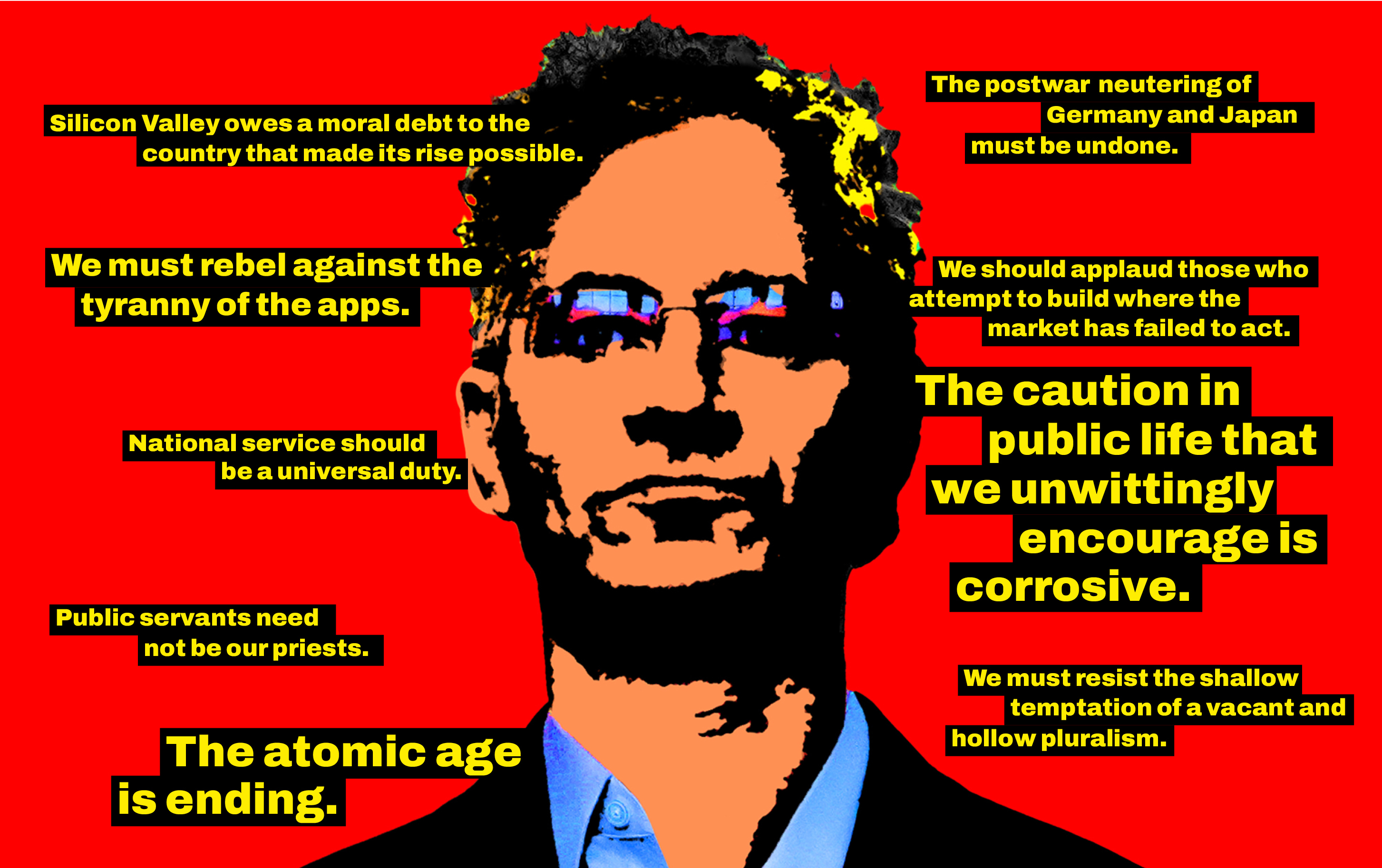
Palantir's social media manifesto is a blueprint for technofascism
The surveillance firm’s viral X post calls for hard power, conscription and the end of pluralism. AI expert and academic Mark Coeckelbergh on what happens when technology becomes the gateway to authoritarianism
The Moat or the Commons — Warman Notes
American capital financed AI on the assumption it would be the next great monopoly. Open-weight models are commoditizing the capability that monopoly was supposed to protect. The collision between the two now defines the direction of the U.S. AI industry — and the country.
AI is a bureaucratic technology. So is fighting war.
What happens when AI slop hits targeting systems and civil liberties?
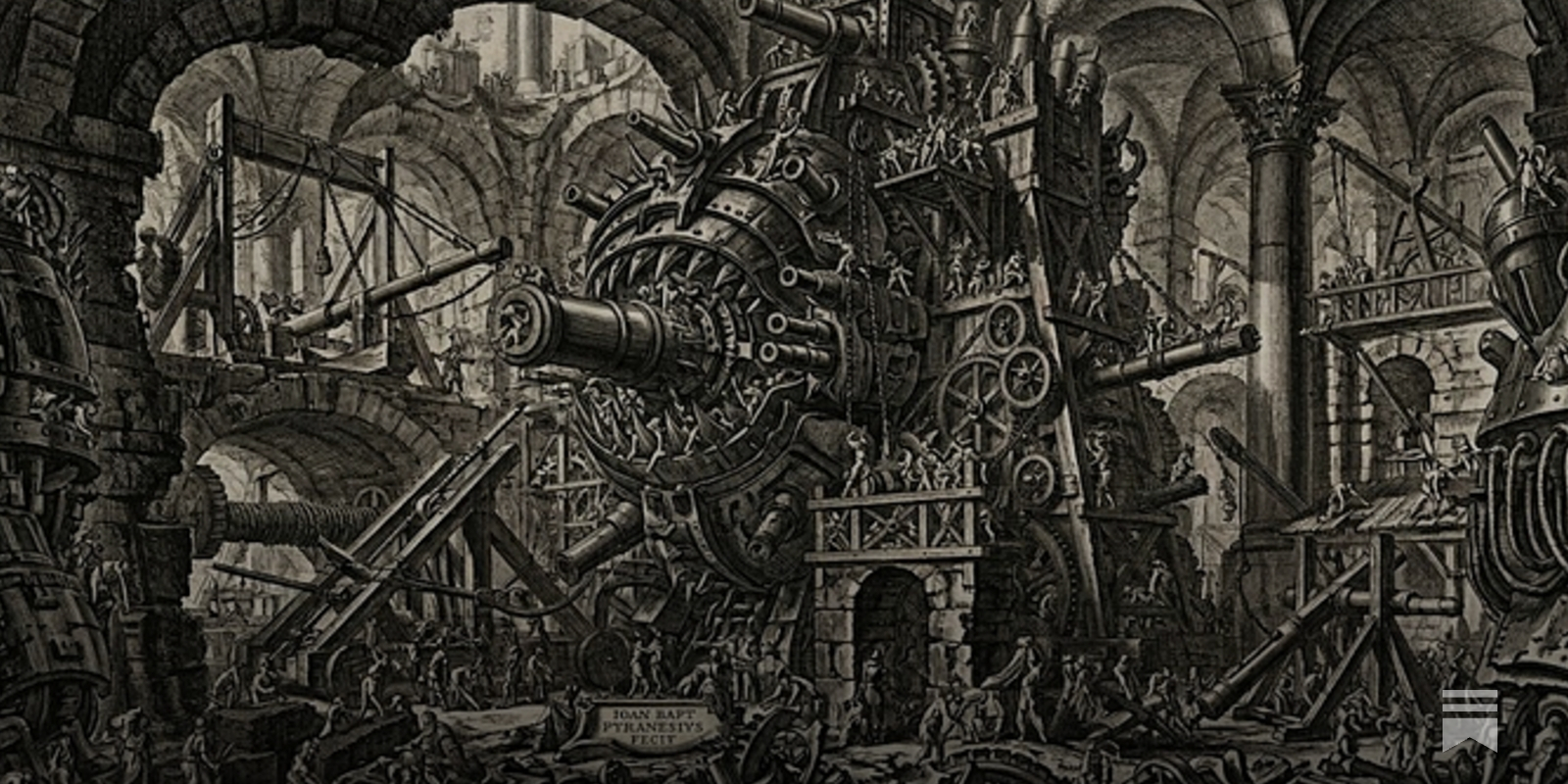
Capital and CHI: Technological Capture and How It Structures CHI Research
This paper advances a theoretical argument about the role capital plays in structuring CHI research. We introduce the concept of technological capture to theorize the mechanism by which this happens. Using this concept, we decompose the effect on CHI into four broad forms: technological capture creates market-creating, market-expanding, market-aligned, and externality-reducing CHI research. We place different CHI subcommunities into these forms -- arguing that many of their values are inherited from capital underlying the field. Rather than a disciplinary- or conference-oriented conceptualization of the field, this work theorizes CHI as tightly-coupled with capital via technological capture. The paper concludes by discussing some implications for CHI.
