

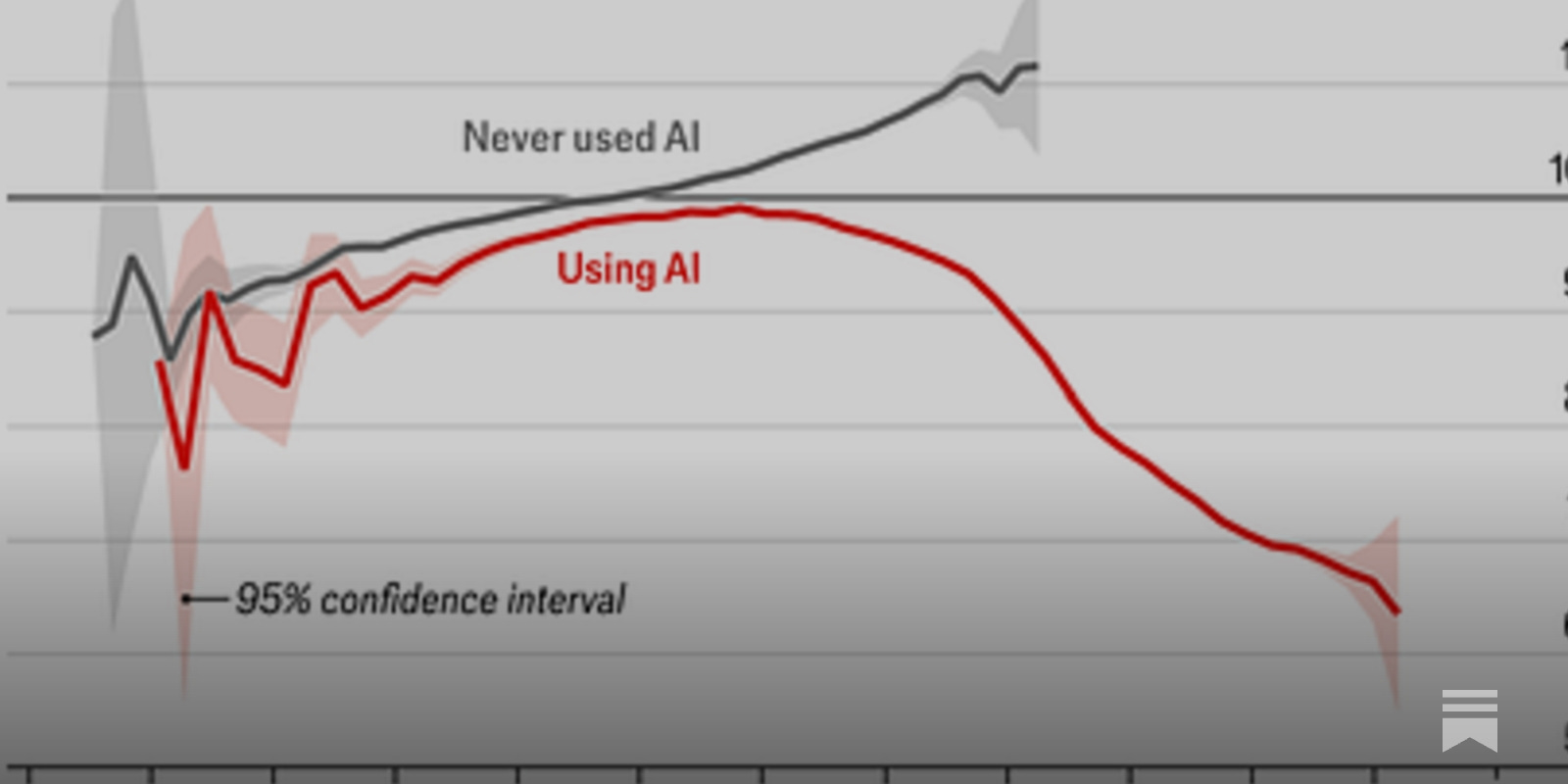
Empirical evidence of the educational harm of generative AI
The 50 Percent Problem
Empirical evidence of the educational harm of generative AI
A new direction for students in an AI world: Prosper, prepare, protect | Brookings
This report explores the potential risks generative AI poses to students and outlines what we can do now to minimize them.
Does AI stop children from learning?
New data show the peril and promise of the technology

The risks of AI in schools outweigh the benefits, report says
A new report warns that AI poses a serious threat to children's cognitive development and emotional well-being.
AI Literacy Across the Curriculum
As you have no doubt seen, AI is becoming ubiquitous in our lives and in the technologies we use every day. Generative AI is no longer an experimental tool, but a deployed technology in many of the…

From Chalkboards to Chatbots : Evaluating the Impact of Generative AI on Learning Outcomes in Nigeria
This study evaluates the impact of a program leveraging large language models for virtual tutoring in secondary education in Nigeria. Using a randomized controlled trial, .

Journal investigating paper on cognitive impact of generative AI
A paper about the effects of generative AI use on confidence in work tasks is under investigation after critics raised questions about the study design, data analysis and ethics approval for the re…
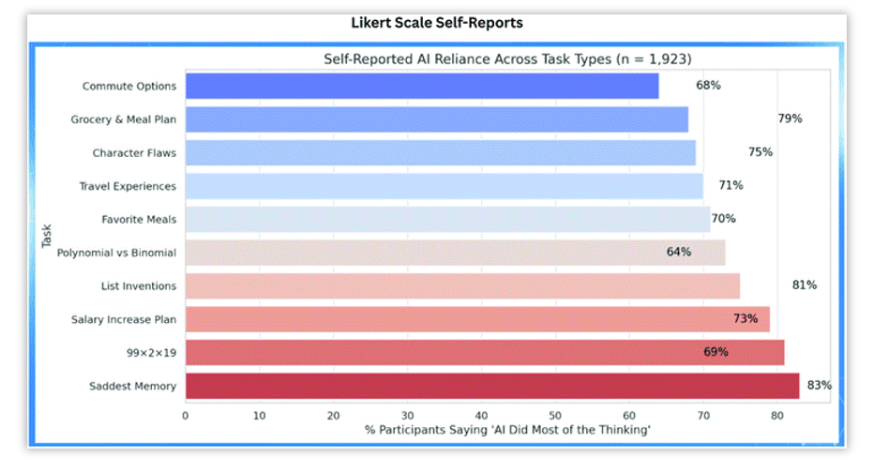
Experimental Evidence on the Learning Impact of Generative AI
We study whether access to off-the-shelf generative AI changes how much students learn in a timed assignment. In a proctored, in-person randomized experiment, undergraduates study an unfamiliar topic and write an essay with or without AI, then complete unaided assessments immediately and one week later. AI access raises test scores, and a smaller gain persists a week later. Gains remain for students who use AI as a tutor ("augmentation") and fade for students who have AI write for them ("automation"). We document two mechanisms: students shift time from writing toward reading and searching for information, and report greater learning enjoyment.

Generative AI without guardrails can harm learning: Evidence from high school mathematics
Generative AI is poised to revolutionize how humans work, and has already demonstrated promise in significantly improving human productivity. A key question is how generative AI affects learning—namely, how humans acquire new skills as they perform tasks. Learning is critical to long-term productivity, especially since generative AI is fallible and users must check its outputs. We study this question via a field experiment where we provide nearly a thousand high school math students with access to generative AI tutors. To understand the differential impact of tool design on learning, we deploy two generative AI tutors: one that mimics a standard ChatGPT interface (“GPT Base”) and one with prompts designed to safeguard learning (“GPT Tutor”). Consistent with prior work, our results show that having GPT-4 access while solving problems significantly improves performance (48% improvement in grades for GPT Base and 127% for GPT Tutor). However, we additionally find that when access is subsequently taken away, students actually perform worse than those who never had access (17% reduction in grades for GPT Base)—i.e., unfettered access to GPT-4 can harm educational outcomes. These negative learning effects are largely mitigated by the safeguards in GPT Tutor. Without guardrails, students attempt to use GPT-4 as a “crutch” during practice problem sessions, and subsequently perform worse on their own. Thus, decision-makers must be cautious about design choices underlying generative AI deployments to preserve skill learning and long-term productivity.

Mayor Mamdani and Chancellor Samuels Put Students First with Nation’s Broadest Generative AI Moratorium in Schools
NEW YORK – Mayor Zohran Kwame Mamdani and Schools Chancellor Kamar H. Samuels today announced a moratorium on student-facing generative Artificial Intelligence (AI) use in schools, alongside a new screen time policy, a decision that will impact nearly 600,000 public school students, or two-thirds of the system’s total enrollment. The policy establishes a one-year moratorium, effective in the 2026-2027 school year, on student-facing generative AI for children in 2-K through 8th grade. It also introduces twice-yearly AI critical thinking modules for high schoolers, limited AI pilots for a small number of high school classrooms and age-appropriate screen time restrictions.
Is AI ruining our skills? Early results are in — and they’re not good
Reliance on artificial-intelligence tools degrades the abilities of physicians and software engineers, studies show.

The abstraction you didn't ask for
When I say 'generative AI isn't going away,' people hear 'and you have to like it.' You don't, and you might be right not to. But the is-ought divide here is real and we should all be preparing for both outcomes.
Meet the academics refusing to use generative AI
Researchers say they have their reasons for avoiding AI tools — and they’re sick of arguing about it.
Meet the academics refusing to use generative AI
Researchers say they have their reasons for avoiding AI tools — and they’re sick of arguing about it.
The Impact of Generative AI on Critical Thinking: Self-Reported Reductions in Cognitive Effort and Confidence Effects From a Survey of Knowledge Workers
As part of the Digital Library's transition to Open Access, new features for researchers are available in the Premium Edition. Click here to learn more.

The Impact of Generative AI on Critical Thinking: Self-Reported Reductions in Cognitive Effort and Confidence Effects From a Survey of Knowledge Workers
As part of the Digital Library's transition to Open Access, new features for researchers are available in the Premium Edition. Click here to learn more.