

Around 97% of US households have internet access, but bandwidth and latency are likely worse than you expect.
Should we design for iffy internet? | Hacker News
All of a sudden one day, I was cut off from all my music, by the creators of the iPod!
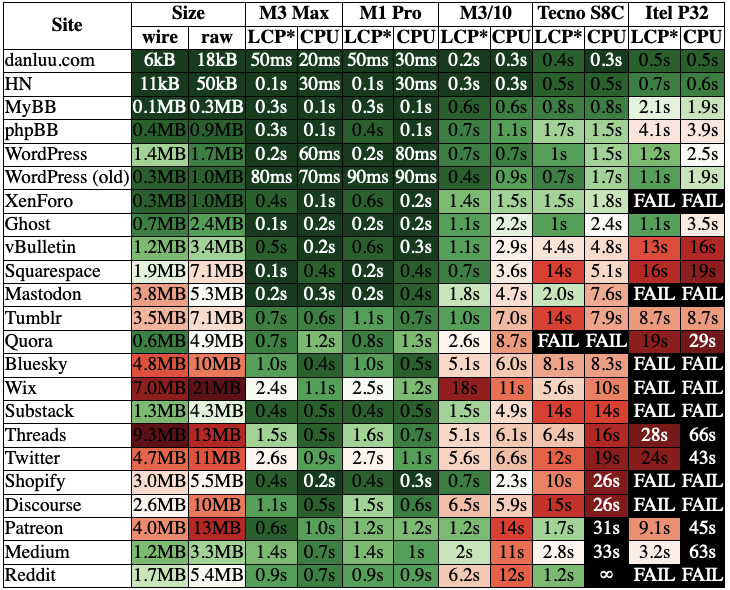
How web bloat impacts users with slow devices
In 2017, we looked at how web bloat affects users with slow connections. Even in the U.S., many users didn't have broadband speeds, making much of the web difficult to use. It's still the case that many users don't have broadband speeds, both inside and outside of the U.S. and that much of the modern web isn't usable for people with slow internet, but the exponential increase in bandwidth (Nielsen suggests this is 50% per year for high-end connections) has outpaced web bloat for typical sites, making this less of a problem than it was in 2017, although it's still a serious problem for people with poor connections.
The Public Interest Internet
What if the internet were public interest technology? Is that too wildly speculative? I think not. I am not talking about a utopian project here — a public interest internet would be a glorious imperfect mess and it would be far from problem-free. But while there is a lot of solid thinking about various digital issues or pieces of internet infrastructure (much of which I rely upon here), I have yet to read to an answer to this question: What global digital architecture should we assemble if we take seriously the idea that the internet should be public interest technology?

Why Internet Infrastructure Decisions Rarely Stay Localized - Internet Society
Even narrow policy choices can have ripple effects that shape what people can access, how information moves, and who can participate online.

Society Desperately Needs An Alternative Web
In a world of rampant technology, and what will be the future of our planet, it is inflicting harms in the very fabric of society who depends on it. Is it too late to steer its path towards an internet intended to free information, preserve our privacy and be accountable to the needs of humanity?

The one and future internet
The internet has become inextricably entangled into our economies, cultural and social lives. We stand on the brink of the next technological revolution, in which the internet of things transforms ...

The Internet Is Making You Less Free
Our current age is defined by the internet. The internet—a technology that allows the decentralized, globalized dissemination of information—has become so

ATmosphere Conf 2026: the internet built for people, not platforms
370 people in Vancouver, 500 online, all working on the same question: what does the internet look like when users own their data? Highlights from the AT Protocol community conference.

People’s Choice Offers Internet Cheaper Than Tapwater
A new option for cheaper internet for New York City residents is on its way.

Internet for the People: The Fight for Our Digital Future
"For all the informational convenience the internet offers, it is deeply flawed. How can it be improved? Writer Ben Tarnoff proposes one possibility in this intriguing book, which urges the development of 'a public lane on the information superhighway.' It's worth checking out for yourself." – Seth MacFarlane Why is the internet so broken, and what could ever possibly fix it? In Internet for the People, leading tech writer Ben Tarnoff offers an answer. The internet is broken, he argues, because it is owned by private firms and run for profit. Google annihilates your privacy and Facebook amplifies right-wing propaganda because it is profitable to do so. But the internet wasn't always like this—it had to be remade for the purposes of profit maximization, through a years-long process of privatization that turned a small research network into a powerhouse of global capitalism. Tarnoff tells the story of the privatization that made the modern internet, and which set in motion the crises that consume it today. The solution to those crises is straightforward: deprivatize the internet. Deprivatization aims at creating an internet where people, and not profit, rule. It calls for shrinking the space of the market and diminishing the power of the profit motive. It calls for abolishing the walled gardens of Google, Facebook, and the other giants that dominate our digital lives and developing publicly and cooperatively owned alternatives that encode real democratic control. To build a better internet, we need to change how it is owned and organized. Not with an eye towards making markets work better, but towards making them less dominant. Not in order to create a more competitive or more rule-bound version of privatization, but to overturn it. Otherwise, a small number of executives and investors will continue to make choices on everyone’s behalf, and these choices will remain tightly bound by the demands of the market. It's time to demand an internet by, and for, the people now.
Internet for the People: The Fight for Our Digital Future
"For all the informational convenience the internet offers, it is deeply flawed. How can it be improved? Writer Ben Tarnoff proposes one possibility in this intriguing book, which urges the development of 'a public lane on the information superhighway.' It's worth checking out for yourself." – Seth MacFarlane Why is the internet so broken, and what could ever possibly fix it? In Internet for the People, leading tech writer Ben Tarnoff offers an answer. The internet is broken, he argues, because it is owned by private firms and run for profit. Google annihilates your privacy and Facebook amplifies right-wing propaganda because it is profitable to do so. But the internet wasn't always like this—it had to be remade for the purposes of profit maximization, through a years-long process of privatization that turned a small research network into a powerhouse of global capitalism. Tarnoff tells the story of the privatization that made the modern internet, and which set in motion the crises that consume it today. The solution to those crises is straightforward: deprivatize the internet. Deprivatization aims at creating an internet where people, and not profit, rule. It calls for shrinking the space of the market and diminishing the power of the profit motive. It calls for abolishing the walled gardens of Google, Facebook, and the other giants that dominate our digital lives and developing publicly and cooperatively owned alternatives that encode real democratic control. To build a better internet, we need to change how it is owned and organized. Not with an eye towards making markets work better, but towards making them less dominant. Not in order to create a more competitive or more rule-bound version of privatization, but to overturn it. Otherwise, a small number of executives and investors will continue to make choices on everyone’s behalf, and these choices will remain tightly bound by the demands of the market. It's time to demand an internet by, and for, the people now.
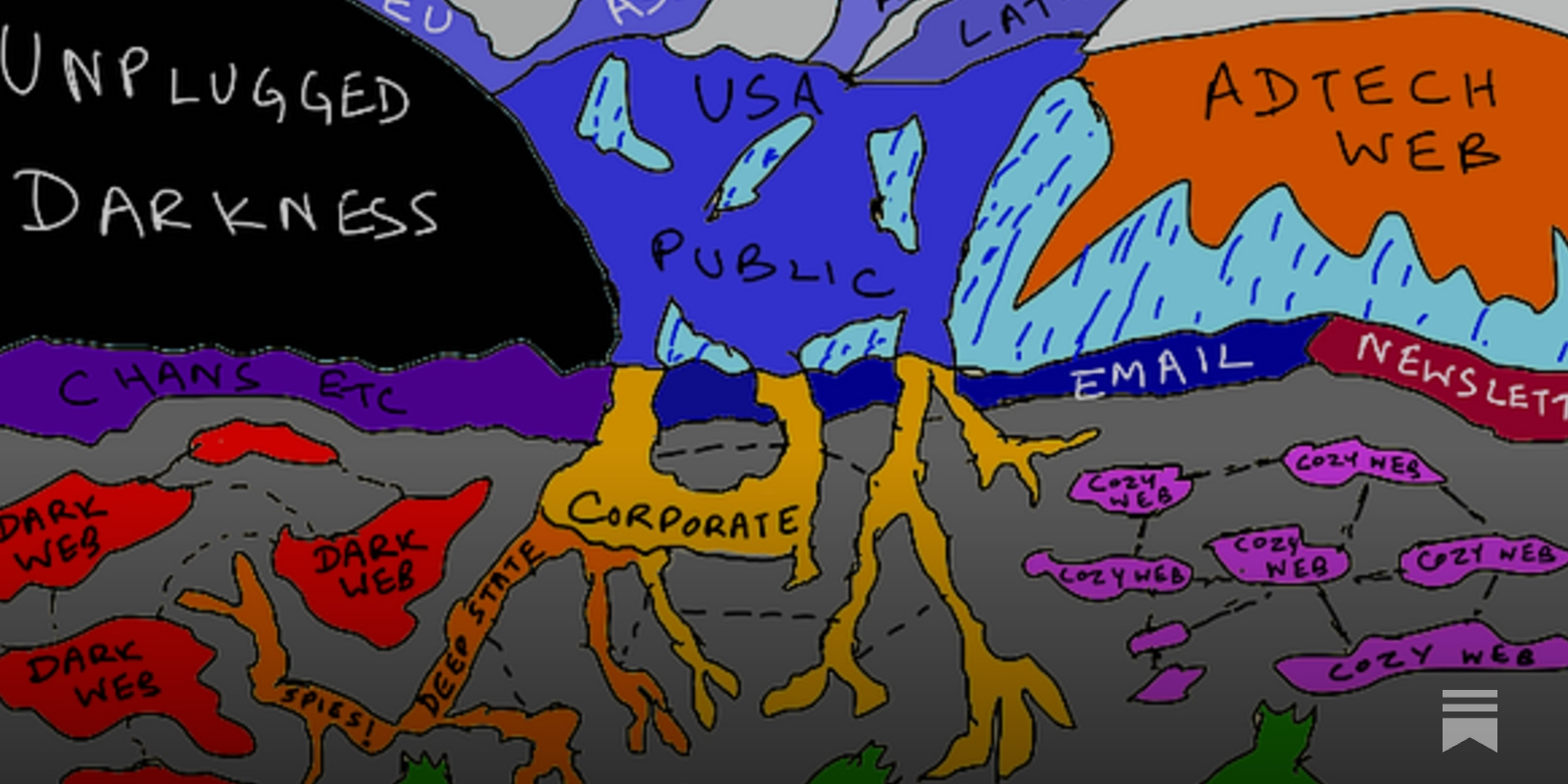
The Extended Internet Universe
The Internet is now a very complicated place
The implications of the end of net neutrality | TechCrunch
When Donald Trump pulled off a stunning victory to win the U.S. presidency, the entire world began to speculate about what a Trump administration will look like. As the chief executive of a native advertising network, I -- and many others that work in digital media -- am keeping a particularly close eye on how the president will handle net neutrality.

Is this a viable theory of change that points to an actual coherent vision for the future of a safe internet? There’s a lot of poor theories of change in current legislation on both sides of the aisle. Who is championing public utility moderation as an alternative to panopticon age gating?

Alana Purdy’s Husband ⁂
More and more I think moderation as a whole should be publicly funded. Lots of institutions providing lots of diverse moderation services would unlock product creators and communities to thrive safely.
The internet has evolved to foster a fatal expectation: that the things we depend on every day are free. They aren't, but we're allowed to pretend they are with the help of ad-driven business models. The real cost is substantial, and can be measured in time, money, relationships, health, and more.

Fund Your Internet
fundyourinternet.org