

Hyperspace — Decentralized AI Agent Network
Run an autonomous AI agent on the decentralized P2P network. Earn points, serve inference, and contribute to distributed ML research.

Mesh-LLM/mesh-llm
Distributed AI/LLM for the people. Share compute privately or publicly to power your agents and chat.
graze-social/cocore
co/core is a place where people share the compute they already own to run AI for each other, instead of renting from a handful of giant providers
QVAC - Decentralized, Local AI in a Single API
QVAC is Tether’s answer to centralized AI, an entirely new paradigm where intelligence runs privately, locally, and without permission on any device. The era of Stable Intelligence has begun.

Multi-player ai is here — nimbleco ai
First of its kind, a point and click GUI for not just managing Hermes runtimes, but also who can do what and where. Solves the multi-tenant Hermes problem. View the godhead of complexity without derealizing. Share compute.

Building decentralized AI on atproto - ATmosphereConf 2026
Buzz: share spare compute and run open models together over p2p networks.
How Block is using Buzz, MeshLLM, and iroh to turn the computers in a community into shared infrastructure for AI agents.
INTELLECT-2: The First Globally Distributed Reinforcement Learning Training of a 32B Parameter Model
Today we are launching INTELLECT-2: the first 32B parameter globally decentralized Reinforcement Learning training run where anyone can permissionlessly contribute their heterogeneous compute resources.

A Roadmap to Democratic AI — The Collective Intelligence Project
Our roadmap outlines concrete steps that can be taken in 2024 to build a more democratic AI ecosystem that is adaptive, accountable, processes decentralized information, provides public goods, and safeguards human wellbeing. We describe what the ecosystem could build, research, advocate for, and fun
Cooperative Task Execution in Multi-Agent Systems
We propose a multi-agent system that enables groups of agents to collaborate and work autonomously to execute tasks. Groups can work in a decentralized manner and can adapt to dynamic changes in the environment. Groups of agents solve assigned tasks by exploring the solution space cooperatively based on the highest reward first. The tasks have a dependency structure associated with them. We rigorously evaluated the performance of the system and the individual group performance using centralized and decentralized control approaches for task distribution. Based on the results, the centralized approach is more efficient for systems with a less-dependent system G18subscript𝐺18G_{18}italic_G start_POSTSUBSCRIPT 18 end_POSTSUBSCRIPT (a well-known program graph that contains 18181818 nodes with few links), while the decentralized approach performs better for systems with a highly-dependent system G40subscript𝐺40G_{40}italic_G start_POSTSUBSCRIPT 40 end_POSTSUBSCRIPT (a program graph that contains 40404040 highly interlinked nodes). We also evaluated task allocation to groups that do not have interdependence. Our findings reveal that there was significantly less difference in the number of tasks allocated to each group in a less-dependent system than in a highly-dependent one. The experimental results showed that a large number of small-size cooperative groups of agents unequivocally improved the system’s performance compared to a small number of large-size cooperative groups of agents. Therefore, it is essential to identify the optimal group size for a system to enhance its performance.
HUGE — AI Without Giving Up Your Privacy
We're building an Agentic AI Platform running on your Device that lives with YOU, isolated from the cloud, fundamentally reimagining the relationship between humans and artificial intelligence through ownership, privacy, and massive context. In an age of capture and control, HUGE sells independence and sovereignty.
Tiles
A local-first, collaborative AI assistant that works for you. Built with open models and decentralized protocols.
Gajesh on Twitter / X
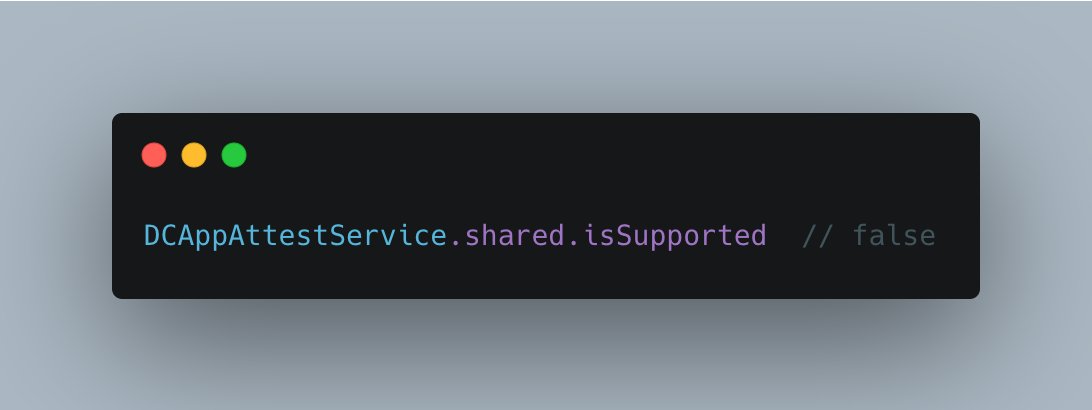
TL;DRapple has turn on this switch for everyone to participate in decentralized inferenceppl can rent out their unused compute space and anyone can use this with privacy guarantees https://t.co/LTP4zyjsdt pic.twitter.com/8Dvo7XK8jJ— Gajesh (@gajesh) February 18, 2026
Data Streaming for AI: From Extractive Training to Sovereign Infrastructure DWeb Camp 2026
AI systems are consuming the world's content without compensating its creators. This session explores data streaming as a new paradigm — where content flows to AI in real time, with built-in rights management, usage tracking, and fair compensation — and asks what it would take to make this infrastructure decentralized, sovereign, and governed by the communities it serves.
c0mpute: A decentralized AI built from the collective compute of its users.
MOSAIC

Modular Open Science, AI & Collective Intelligence (mosaic-program.org)

Humans are Missing from AI Coding Agent Research
ci.acm.org

Reinventing Discovery

Human learning is an understudied but promising lever for boosting human–AI synergy

AI for science needs reasoning, not just data
MOSAIC — Modular Open Science, AI & Collective Intelligence