

Reliable research can be complicated to create. So we made a network of essential resources to help you better understand the principles and practices of scientific rigor.Why trust us? Because we’re a team of students, post-grads, professors, and professionals who know what it’s like to be right where you are.
Why Should I Trust You?
News Commentary Podcast · Updated Weekly · Bold, unfiltered, and uncompromisingly honest, Why Should I Trust You? is a weekly podcast that looks at the breakdown in trust for science and public health. It drops every Thursday, with occasional…

Why we don’t really know what the public thinks about science
Measuring trust isn’t enough. Furthering knowledge about the institutions and norms of science is the best way to build credibility.
Empowering science communities with open, democratic, researcher-owned infrastructure.
We’re building communities and tech for publishing, curating, sharing, and discussing research online using ATProto and other decentralized protocols.
Empowering science communities with open, democratic, researcher-owned infrastructure.
We’re building communities and tech for publishing, curating, sharing, and discussing research online using ATProto and other decentralized protocols.
Can we measure trust in scientific publications? - LSE Impact
Jonathon Alexis Coates outlines how a constellation of static and dynamic indicators could provide a means for assessing the trustworthiness of published research

Building Collective Intelligence Networks for Flourishing Scientific Communities
Scientific communities are straining under mounting challenges—knowledge fragmentation, outdated publication processes, institutional erosion and funding cuts—that threaten our capacity to address urgent global problems. Traditional scientific process
The Research Nexus vision for a more connected scholarly community
Crossref envisions “a rich and reusable open network of relationships connecting research organizations, people, things, and actions; a scholarly record that the global community can build on forever, for the benefit of society”. This Research Nexus expands on the importance of research objects being persistently and uniquely identified. The scholarly community has an established practice of connecting things such as citations to others’ work and it is increasingly critical to identify relationships beyond citations, bringing together published work, unpublished work, institutions, individuals, and identifying the actions that they take e.g., funding, publishing, creating, modifying, citing, and sharing. The Research Nexus brings together metadata and relationships to build a joined-up picture of the scholarly ecosystem and helps everyone identify these relationships and how they change through time. This vision is possible if all parts of the scholarly ecosystem (and beyond) work together, including various scholarly infrastructure organizations.

Have people stopped trusting science? The data tell a surprising story
Some say there’s a global crisis of trust — but research reveals where the real problems lie.
A New Paradigm for Scientific Publishing, Peer Review, and Impact Assessment
Scientific publishing and peer review have evolved little in three centuries, while the demands placed on them have grown profoundly. The growing role of artificial intelligence has underscored deep, systemic shortcomings of an aging system that has largely evaded innovation, a system whose origins are appallingly closer to the invention of the printing press than to the internet. We can do better – much better. This article is intended as the beginning of a communal experiment: a living document that critically reviews the modern academic publishing and peer-review system and presents a concrete framework to address what bibliometrics experts¹ have characterized as "the pervasive misapplication of indicators to the evaluation of scientific performance". Building on the Leiden Manifesto, DORA, and a body of scholarship spanning many disciplines and decades, we present a community-governed, non-profit platform organized around three trust-weighted impact factors, for articles, authors, and reviewers, with full algorithmic transparency, an open development log, and structural decoupling of credibility scoring from content moderation and from monetization. We invite the community to discuss, critique, and help shape it.
Composable Trust, Part 1: Communities Without Credible Exit - Eclectic Corvine Muses
We guarantee that users aren’t subject to platforms. Yet communities are still subject to their stewards. Can we fix this?
Center for Open Science
At the Center for Open Science, our mission is to increase openness, integrity, and reproducibility of scholarly research. Promoting these practices within the research funding and publishing communities accelerates scientific progress

Hypercerts — Collective Intelligence for Funding Impact
Hypercerts create shared context—evidence, expert input, and community trust—for better resource allocation.
Identify trusted publishers for your research • Think. Check. Submit.
Tools and practical resources, aiming to educate researchers, promote integrity, and build trust in credible research and publications.

Faster science, penalties in evaluation, and concerns on quality and impact: Researchers’ use and perceptions of preprints
The preprint ecosystem has expanded rapidly over the past decade, fundamentally altering science communication. Yet, the scholarly community’s attitudes toward this shift remain underexplored. Through a large-scale survey of US and Canadian biomedical scholars, we provide a comprehensive analysis of preprint utilization, perceived impact, and integration into academic credit systems. We find robust engagement across reading, citing, and submitting preprints; however, this activity is driven primarily by a desire for rapid dissemination rather than a foundational commitment to open science. Furthermore, while preprints are valued as networking assets, perceived career penalties during formal academic evaluations stifle broader cultural adoption. Crucially, to navigate the absence of formal peer review, scholars report a heavy reliance on author reputation as a primary heuristic to evaluate a preprint’s credibility and guide their reading and citation decisions. Notably, despite acknowledging preprints’ role in accelerating knowledge sharing, scholars express significant concerns regarding fraud and misinformation, particularly amid declining public trust in science and emerging threats to scientific integrity from artificial intelligence. To resolve these tensions, the preprint ecosystem must evolve beyond prioritizing speed to foster genuine academic dialogue. Simultaneously, evaluation frameworks must adapt to the realities of preprinting, and innovative quality-control mechanisms are urgently needed to balance rapid dissemination with rigorous scientific integrity.

Launching openRxiv Labs - openRxiv
Over the last thirteen years, bioRxiv and medRxiv have grown into widely used infrastructure for rapid research sharing in biology and medicine. The reliability and researcher-first values that have defined these platforms since their founding remain central to how we operate, and building on the trust, partnerships, and community relationships researchers worldwide depend on is…
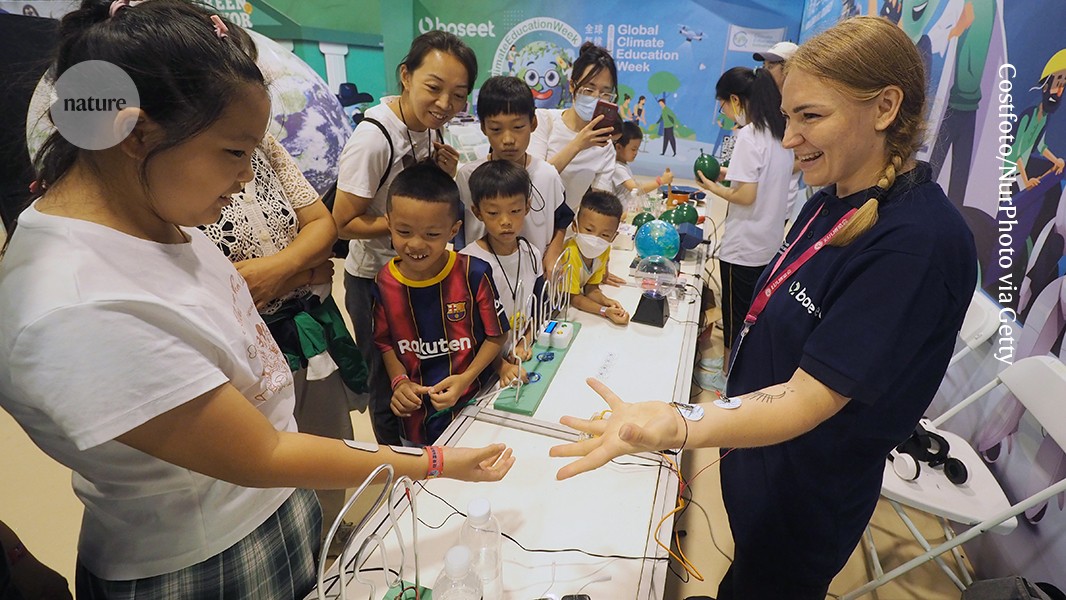
New study finds that when people help collect data or contribute to research it can build public trust by making scientists feel personally familiar and approachable, and that trust then spreads to how local and tangible the research feels. jcom.sissa.it/article/pubid/JCOM_2506_2026_…

How can citizen science reduce psychological distance to science? Insights from three projects in contested environmental contexts
jcom.sissa.it