

We live in a world of surveillance states, militarized police, and crackdowns on dissent. Meanwhile, corporate behemoths will often ally with the state to shut down dissident speech or aid and abet surveillance. In this context, it’s important for independent groups to develop and maintain encrypted communications platforms and independent web hosting. But the Trump...
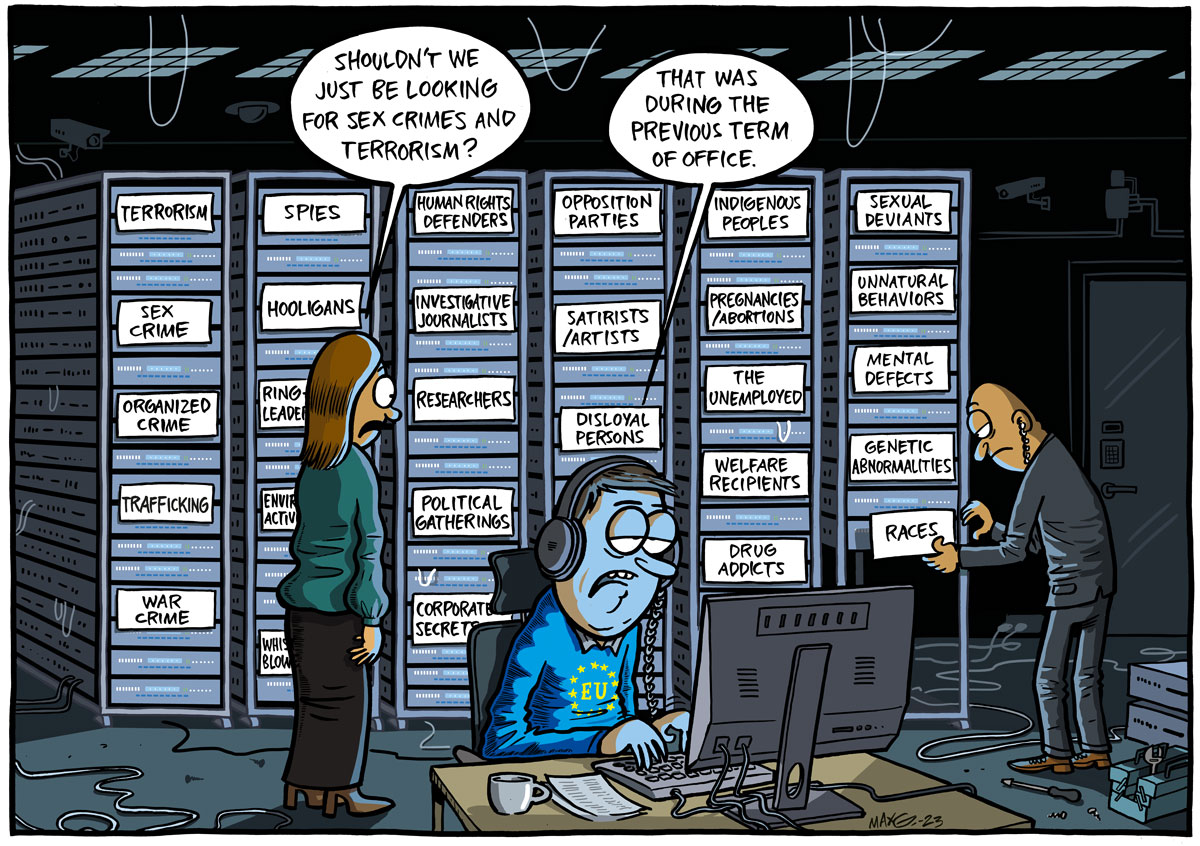
Chat Control & Going Dark: The war on encryption is on the rise. Through a shady collaboration between the US and the EU.
After Snowden’s whistleblowing in 2013, large parts of the internet became encrypted, enabling private and secure communication. Not everyone has welcomed this change. Most notably, the FBI and other U.S. government agencies have fought what is often called the “crypto wars”, the war on encryption. In recent years, they have been joined by the European Commission. Under the slogan “what about the children,” they try to introduce total mass surveillance of all EU citizens — first through the proposed Chat Control legislation, and later via the Going Dark and ProtectEU initiatives. The goal is to legally mandate spy tools on every European smartphone and computer. The forces behind these efforts have turned out to be American tech companies and intelligence agencies.
Privacy under attack: the NSA files revealed new threats to democracy
We now know the apparatus of repression has been attached to the democratic state, but our struggle for privacy is far from hopeless. By Eben Moglen
THE DEGRADATION OF HUMAN RIGHTS AND FREE PRESS THROUGH THE PEGASUS SOFTWARE IN THE ERA OF SURVEILLANCE, AS A THREAT TO INTERNATIONAL SECURITY. A DEBATE OF CIVIL LIBERTIES AND CENSORSHIP
The evolution of cyber spying technology presents new and rising dangers; coupled with the easy justification for use of the on-going terrorist crisis these dangers have now become major threats to the international security system. This article aims to provide analysis of these threats, using the new software Pegasus as a focal point of discussion. Developed by the Israeli ‘cyber-warfare’ company ‘NSO’, this spyware signals a danger not only to security but freedom of the press and journalistic integrity. This paper’s focus will centre on how this software is used for censorship rather than to combat terrorism and will examine the social and political ramifications of said use. As highlight, the case of UAE activist Ahmed Mansoor and his contemporaries who were writing against authoritarian governments will be discussed. This article will urge that strict global legislation is needed to stop the abuse of spyware as a tool of censorship.
EFFecting Change: How to Build a Decentralized Web That Truly Works for All
Decentralized Social Media for 40 Million+ Users (with Bluesky’s Jay Graber)
The Tor Project | Privacy & Freedom Online
Defend yourself against tracking and surveillance. Circumvent censorship.
The Online Tools That Fueled ‘No Kings’ and the Trump Resistance
Social media platforms, collaborative online tools, and encrypted messaging are all helping to power a massive, decentralized resistance to the Trump administration.

Bill C-22’s Groundhog Day: Why the Government’s Dismissal of Signal, Apple and the U.S. Congress Concerns Runs Back the Disastrous Online News Act Playbook - Michael Geist
Secure messaging service Signal yesterday became the latest company to warn that Bill C-22, the lawful access bill, could force it to leave the Canadian market rather than comply with provisions it says would compromise its end-to-end encryption and create new cybersecurity risks. Signal vice-president Udbhav Tiwari told the Globe and Mail that the company “would rather pull out of the country than be compelled to compromise on the privacy promises we have made to our users.” The comments are part of a steady stream of similar warnings from Apple, Meta, the Canadian Chamber of Commerce, the Cybersecurity Advisors Network, and the chairs of the U.S. House Judiciary and Foreign Affairs Committees. Despite growing concern, the government’s response has been to launch a misleading social media campaign and repeatedly insist that the experts and companies are mistaken.
The web can be weaponised – and we can't count on big tech to stop it | Tim Berners-Lee
It’s dangerous having a handful of companies control how ideas and opinions are shared. A regulator may be needed
What happened to the fight for the Internet? -- Dustycloud Brainstorms
At the moment I am writing this, bad internet bills are being proposed across the US, Canada, Europe, and the UK. They're using the usual tactics: they claim they're fighting for kids or fighting security risks, but in general, that's what surveillance and censorship bills have always claimed.
Press Release · Keep the Internet free
On August 26, 2026, the U.S. Department of the Treasury, through OFAC (Office of Foreign Assets Control – the authority responsible for managing and enforcing economic and financial sanctions) sanctioned Autistici/Inventati (A/I), an Italian collective that has been providing digital infrastructure – email, hosting, mailing lists, chat, videoconferencing, streaming, and services related to privacy and anonymity – to movements and activists since 2001. Washington designated it as a Specially Designated Global Terrorist (SDGT), alleging that it has provided financial, material or technological support to terrorism and to organizations already subjected to sanctions. A/I rejects the allegations and declares that its activities consist in providing tools for digital self-defence and infrastructure for the freedom of communication.
The Trump Administration Group Chat, Signal: The Coke of Secure Messaging, Transparency Versus Security
The Trump administration’s Signal gaffe raises fascinating questions about secure messaging and the trade-off inherent in transparency.

We’re in the middle of a perfect storm for rollback of the “open web” and burgeoning online surveillance
Looking at fallout of the KOSA hearings today — and subsequent commentary — I remain optimistic for the development of social technology & communication but I’m beginning to think the ope…

Trump’s DHS is using an obscure law to secretly snoop on journalists, non-profits and unions: ‘It’s outrageous’
Even after judges rejected the same ploy, the Trump administration is going directly to social media and telecommunications companies
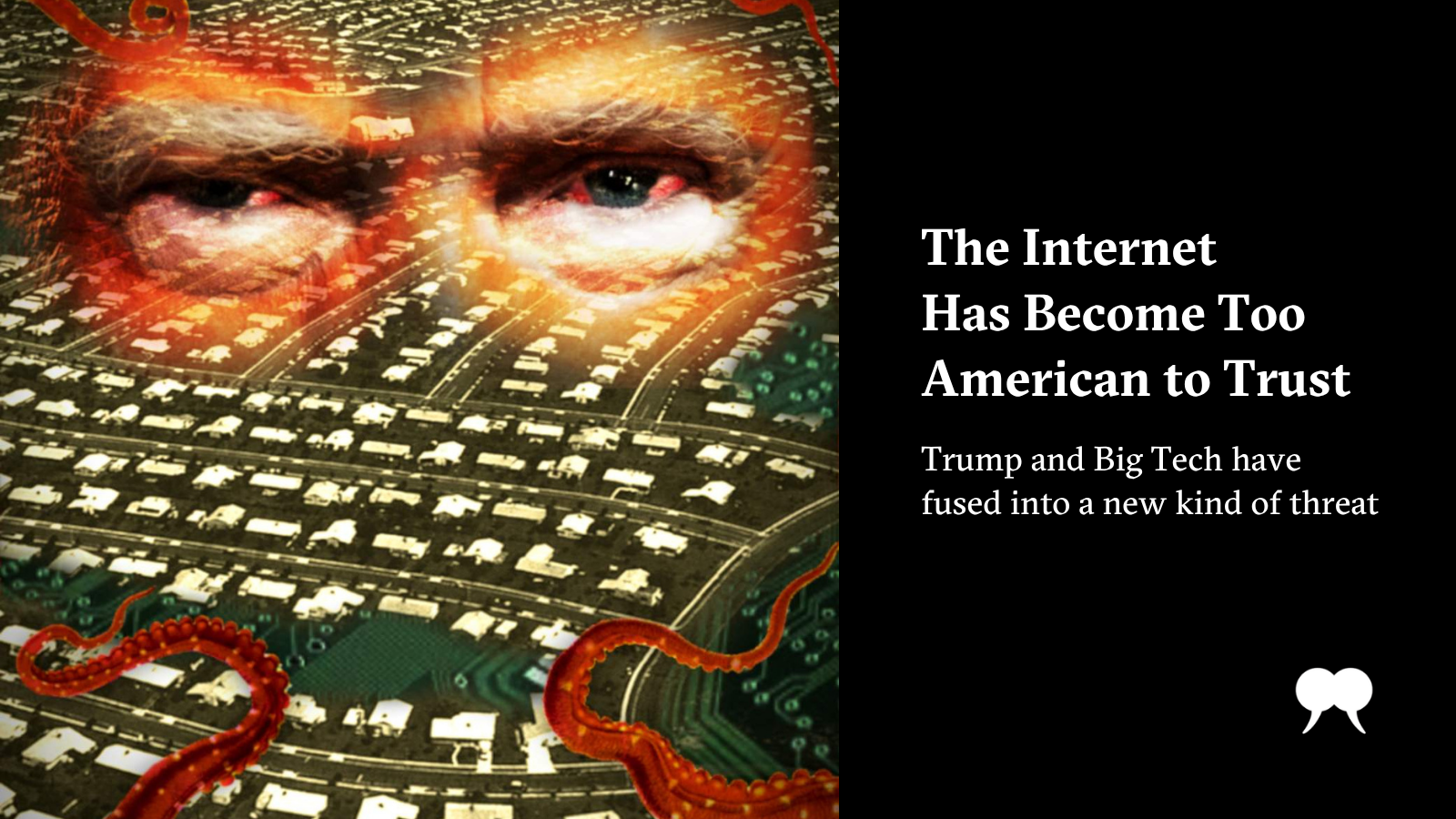
The Internet Has Become Too American to Trust | The Walrus
Trump and Big Tech have fused into a new kind of threat
Press Release · Keep the Internet free
On August 26, 2026, the U.S. Department of the Treasury, through OFAC (Office of Foreign Assets Control – the authority responsible for managing and enforcing economic and financial sanctions) sanctioned Autistici/Inventati (A/I), an Italian collective that has been providing digital infrastructure – email, hosting, mailing lists, chat, videoconferencing and other privacy-friendly online services – to movements and activists since 2001. Washington designated it as a Specially Designated Global Terrorist (SDGT), alleging that it has provided financial, material or technological support to terrorism and to organizations already subjected to sanctions. A/I rejects the allegations and declares that its activities consist in providing tools for digital self-defence and infrastructure for the freedom of communication.