


Tech's market concentration—summed up brilliantly by Tom Eastman, a New Zealand software developer, as the transformation of the Internet into "a group of five websites, each consisting of screenshots of text from the other four"—has aroused concern from regulators around the world.
About Us
Around the world, building the internet’s operating system—and a better way to work. In a world of tech companies fighting for growth at any cost, imagine one that gives away its most successful pr…

The web can be weaponised – and we can't count on big tech to stop it | Tim Berners-Lee
It’s dangerous having a handful of companies control how ideas and opinions are shared. A regulator may be needed

Reclaim the internet: Mozilla’s rebrand for the next era of tech | The Mozilla Blog
Mozilla isn’t just another tech company — we’re a global crew of activists, technologists and builders, all working to keep the internet free, op

The Internet Transition
The Internet is allowing us to build a richer, more complex society but the way in which we Internet today is failing to support the governance systems that a more complex world requires. I take a look at why these issues are related, try to develop an intuition for a way forward, and point at the emerging field that is coming together to build that future.

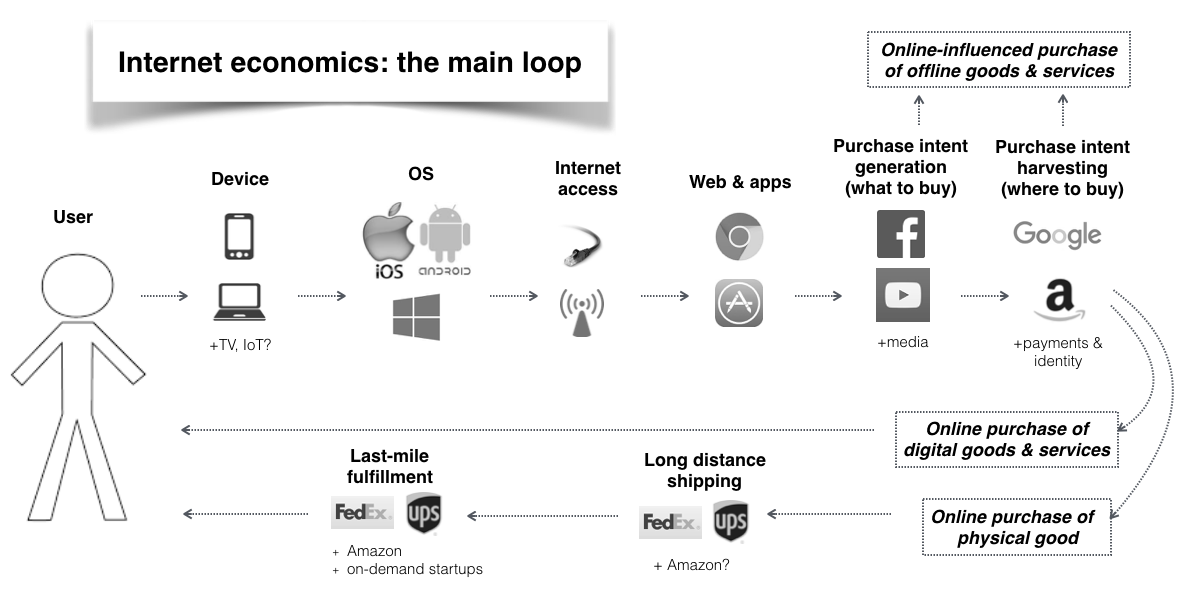
The Internet Economy
We are living in an era of bundling. The big five consumer tech companies — Google, Apple, Facebook, Amazon, and Microsoft — have moved far…
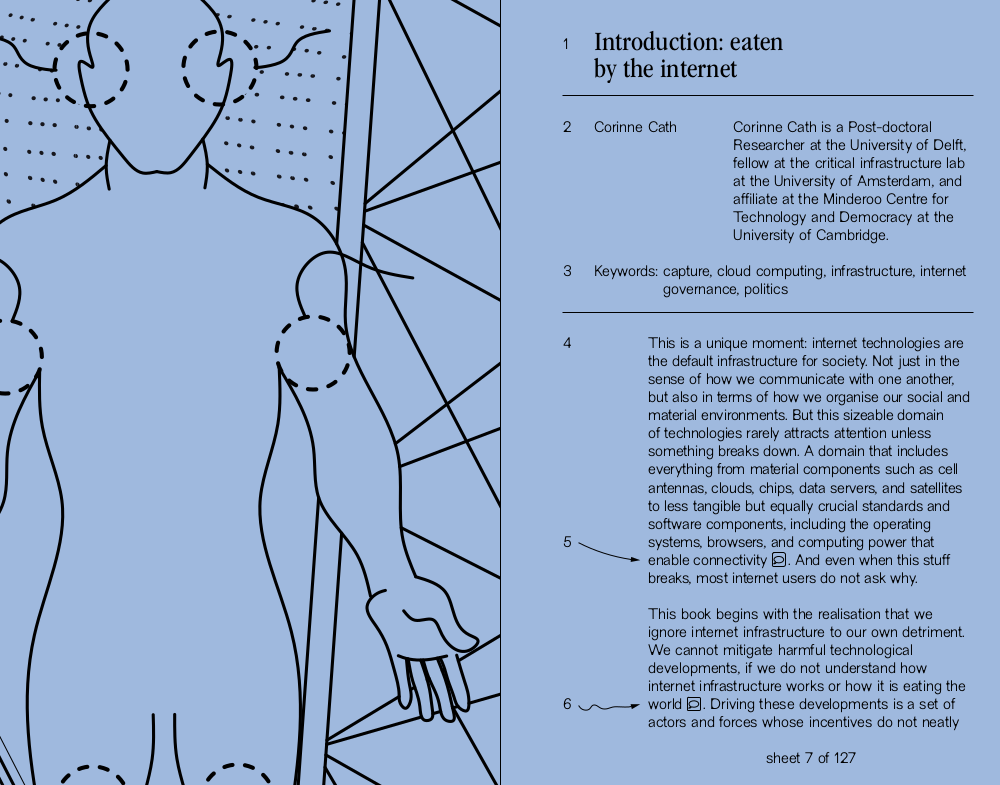
Eaten by the Internet
This book makes internet infrastructure visible as a force of political power, which is transforming the social world, from the bottom up—through fifteen chapters contributed by a global set of researchers, activists, and techies. We are living a unique moment: internet technologies are the default infrastructure for society, not just how we communicate but also how we organise our social life, politics, and economy, all the way down to our material environments, like cities. Our world is eaten by the internet. This means that those who control the internet control the bounds of public speech, economic production, social cohesion, and politics, making its infrastructure a core political terrain in the networked age. The book’s chapters cover a wide set of topics, spanning from the global politics of content moderation by internet infrastructure to the colonialism inherent in the race to plug the moon, from the harms wrought by blockchain companies in rural America to the particularities of online censorship across Asia. The chapters take on thorny topics, discussing power consolidation in the advertisement and cloud industry, the role of internet infrastructure in the war in Ukraine, and tech’s environmental impact—amongst others. In doing so, this book roots contemporary technology debates in the politics of internet infrastructure and urges us to ask how can we ensure our infrastructures sustain us, rather than consume us?
Internet for the People: The Fight for Our Digital Future
"For all the informational convenience the internet offers, it is deeply flawed. How can it be improved? Writer Ben Tarnoff proposes one possibility in this intriguing book, which urges the development of 'a public lane on the information superhighway.' It's worth checking out for yourself." – Seth MacFarlane Why is the internet so broken, and what could ever possibly fix it? In Internet for the People, leading tech writer Ben Tarnoff offers an answer. The internet is broken, he argues, because it is owned by private firms and run for profit. Google annihilates your privacy and Facebook amplifies right-wing propaganda because it is profitable to do so. But the internet wasn't always like this—it had to be remade for the purposes of profit maximization, through a years-long process of privatization that turned a small research network into a powerhouse of global capitalism. Tarnoff tells the story of the privatization that made the modern internet, and which set in motion the crises that consume it today. The solution to those crises is straightforward: deprivatize the internet. Deprivatization aims at creating an internet where people, and not profit, rule. It calls for shrinking the space of the market and diminishing the power of the profit motive. It calls for abolishing the walled gardens of Google, Facebook, and the other giants that dominate our digital lives and developing publicly and cooperatively owned alternatives that encode real democratic control. To build a better internet, we need to change how it is owned and organized. Not with an eye towards making markets work better, but towards making them less dominant. Not in order to create a more competitive or more rule-bound version of privatization, but to overturn it. Otherwise, a small number of executives and investors will continue to make choices on everyone’s behalf, and these choices will remain tightly bound by the demands of the market. It's time to demand an internet by, and for, the people now.
Internet for the People: The Fight for Our Digital Future
"For all the informational convenience the internet offers, it is deeply flawed. How can it be improved? Writer Ben Tarnoff proposes one possibility in this intriguing book, which urges the development of 'a public lane on the information superhighway.' It's worth checking out for yourself." – Seth MacFarlane Why is the internet so broken, and what could ever possibly fix it? In Internet for the People, leading tech writer Ben Tarnoff offers an answer. The internet is broken, he argues, because it is owned by private firms and run for profit. Google annihilates your privacy and Facebook amplifies right-wing propaganda because it is profitable to do so. But the internet wasn't always like this—it had to be remade for the purposes of profit maximization, through a years-long process of privatization that turned a small research network into a powerhouse of global capitalism. Tarnoff tells the story of the privatization that made the modern internet, and which set in motion the crises that consume it today. The solution to those crises is straightforward: deprivatize the internet. Deprivatization aims at creating an internet where people, and not profit, rule. It calls for shrinking the space of the market and diminishing the power of the profit motive. It calls for abolishing the walled gardens of Google, Facebook, and the other giants that dominate our digital lives and developing publicly and cooperatively owned alternatives that encode real democratic control. To build a better internet, we need to change how it is owned and organized. Not with an eye towards making markets work better, but towards making them less dominant. Not in order to create a more competitive or more rule-bound version of privatization, but to overturn it. Otherwise, a small number of executives and investors will continue to make choices on everyone’s behalf, and these choices will remain tightly bound by the demands of the market. It's time to demand an internet by, and for, the people now.

The Fathers of the Internet Revolution Urge Today’s Software Engineers to Reinvent the Web
Tim Berners-Lee, Vint Cerf, and other Internet pioneers issue a challenge on a day that just might go down in tech history

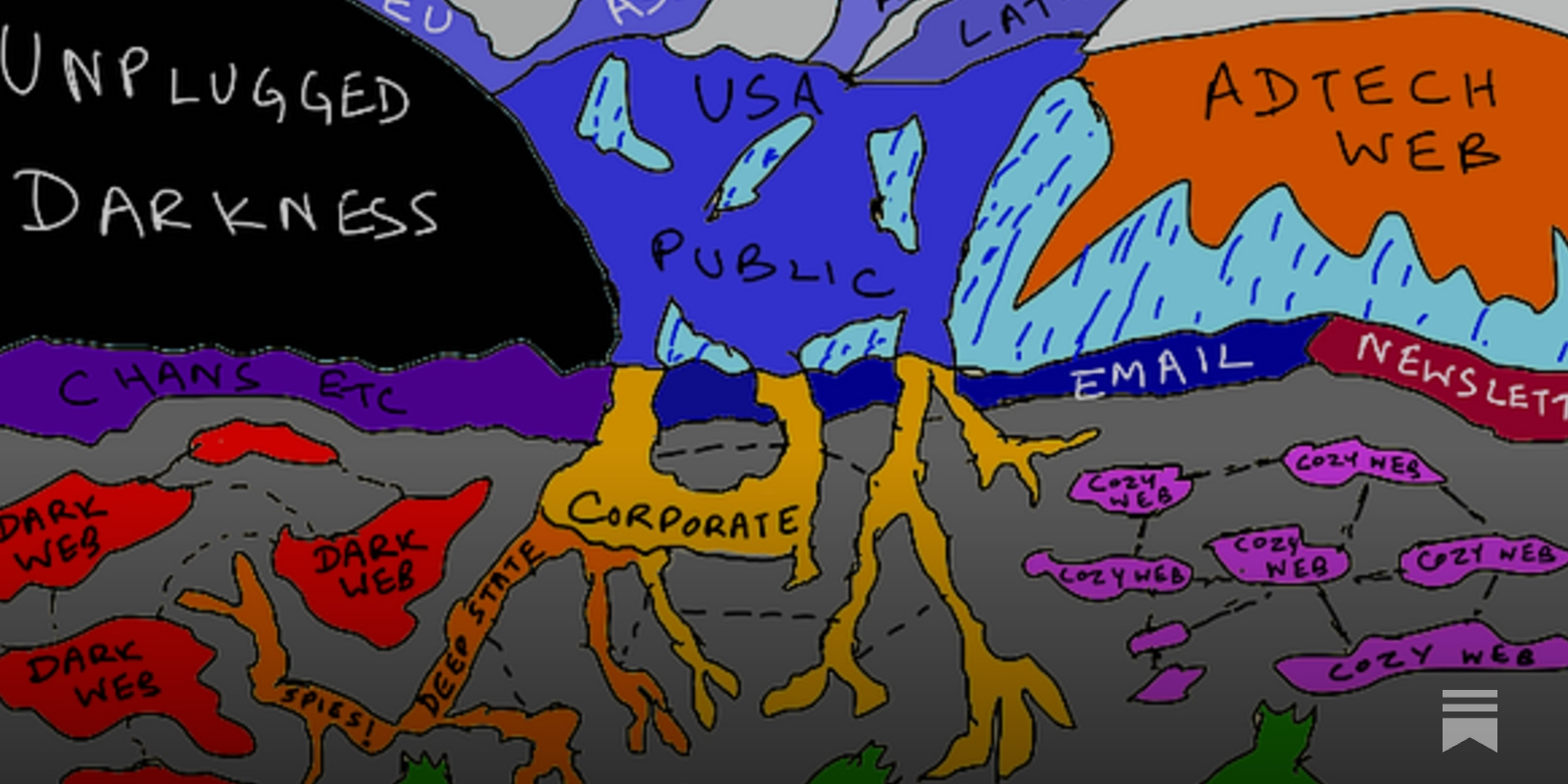
The Extended Internet Universe
The Internet is now a very complicated place
Seize the Means of Computation - ProMarket
To regain internet autonomy from Big Tech companies, lower switching costs with legislation that allows new services to subvert network effects and encourage adversarial interoperability. Too often, our discussion of Big Tech’s dominance starts and ends with a simplistic account of network-effects-driven inevitability, as though the winner-take-all market we have today could not have been […]

What Was the Internet?
As AI overtakes the web, five writers reflect on how far it’s fallen and what comes next.

What Was the Internet?
As AI overtakes the web, five writers reflect on how far it’s fallen and what comes next.