Last week in this newsletter, I summarized some interesting results from a study that analyzed the behavior of 164,000 knowledge workers. It found that introducing ... Read more
Why Hasn’t AI Made Work Easier? - Cal Newport
I’ve been studying the intersection of digital technology and office work for quite some time. (I find it hard to believe that my book, Deep ... Read more

Study Hacks - Decoding Patterns of Success - Cal Newport
The Study Hacks blog by author and professor Cal Newport - on deep work, success, productivity, work-life balance.
Has AI Changed Work Forever? Not Really... | Cal Newport
More! More! More! Tech Workers Max Out Their A.I. Use.
At a number of companies, employees compete on leaderboards to show how much A.I. they’re using. They’re racking up big bills along the way.

See what you think
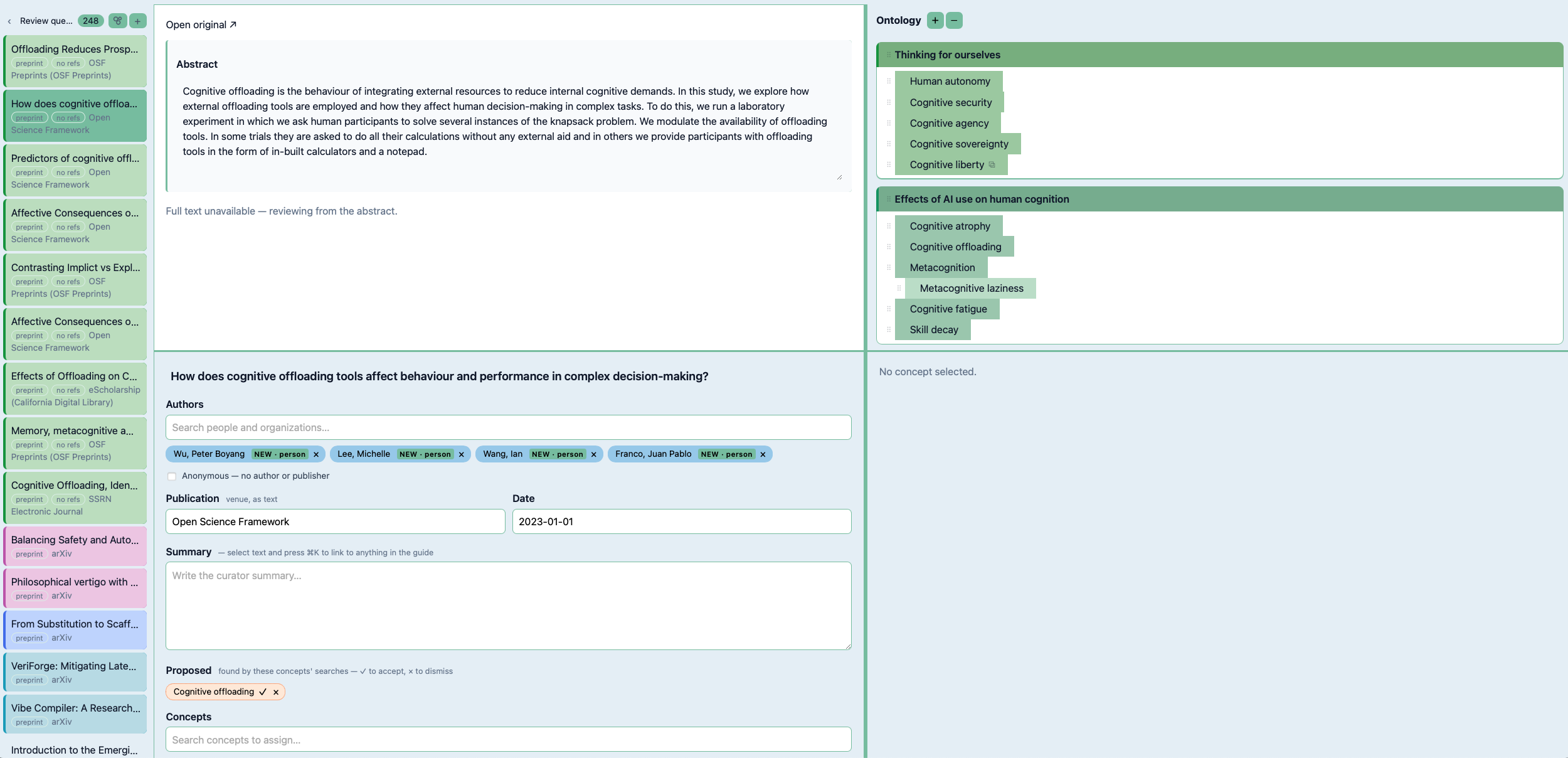
Allegra A. Beal Cohen's blog about knowledge curation, new interfaces, and large-scale qualitative data.
21 Productivity Hacks I’ve Picked Up Over the Years
A thorough list of practical productivity methods I've used and refined over the last 16 years.
Prompting Science Report 4: Playing Pretend: Expert Personas Don't Improve Factual Accuracy
<span> <p><span>This is the fourth in a series of short reports that help business, education, and policy leaders understand the technical details of working w

Prompting Science Report 4: Playing Pretend: Expert Personas Don't Improve Factual Accuracy
<span> <p><span>This is the fourth in a series of short reports that help business, education, and policy leaders understand the technical details of working w
2026 State of the Workplace
Get the latest insights from state of the workplace report spanning more than 443 million hours of work activity across 1,111 organizations and 163,638 employees over three years.
Notion’s Knowledge Board
Evaluating how models perform across a range of knowledge work tasks, using live anonymized traffic and judged by models from Anthropic, OpenAI, and Google. An ongoing experiment.

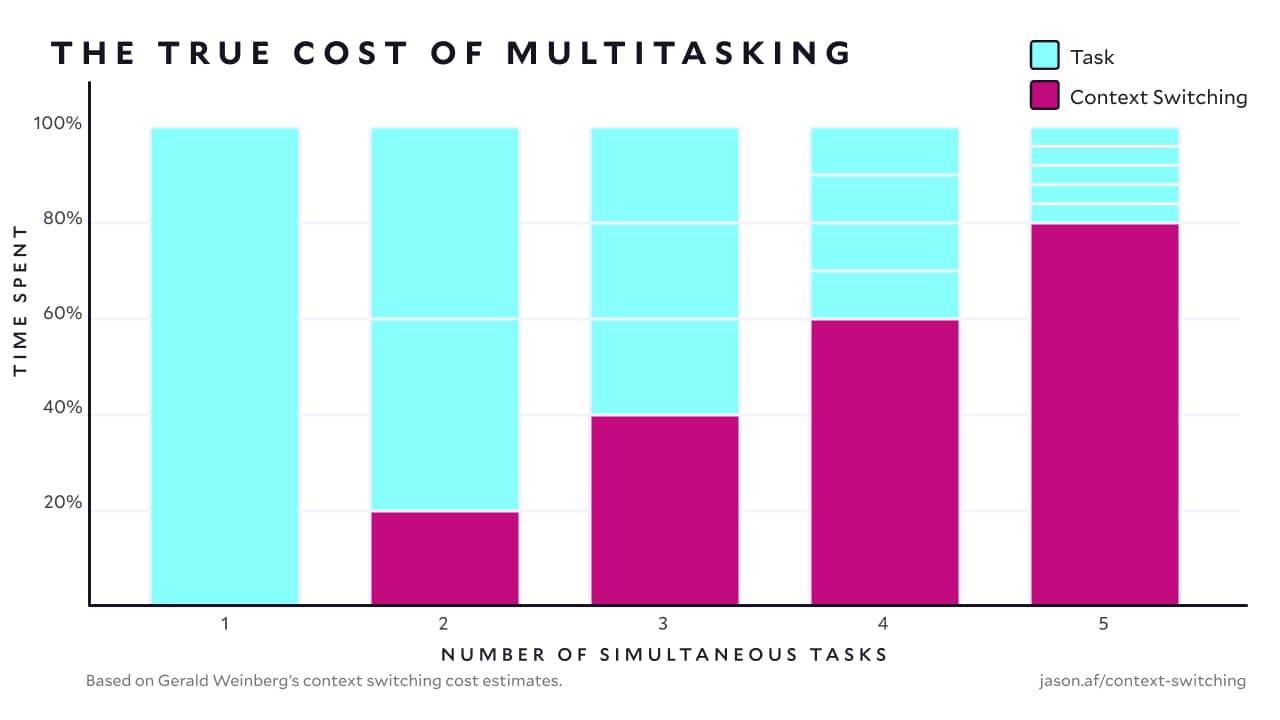
Please stop multitasking. I’m begging you. Please.
The greatest trick we ever pulled on ourselves as knowledge workers was convincing ourselves we could juggle multiple projects with no consequences.
"AI" and Productivity
[I keep bringing these up on Bluesky, so I think it’s time to gather them up and make a post out of them.] This is a collection of articles...
How tech workers are feeling in 2026: a workforce splitting in two
Results from our second annual tech worker sentiment survey
Microsoft reports are exposing AI's real cost problem: Using the tech is more expensive than paying human employees | Fortune
Companies are racing to incentivize employees to use AI. But as some companies are finding, the more employees that use the technology, the heavier the bill.

Stack Overflow Developer Survey 2026
More than 30K technologists from 169 countries have shared their thoughts with us, and now it’s time to share everything we’ve learned with you. So let’s dive into this year’s Annual Developer Survey.

How NASA is Using Graph Technology and LLMs to Build a People Knowledge Graph
Missed NASA’s People Graph webinar? Catch the recap and see how graph technology and AI are shaping the future of workforce intelligence.