

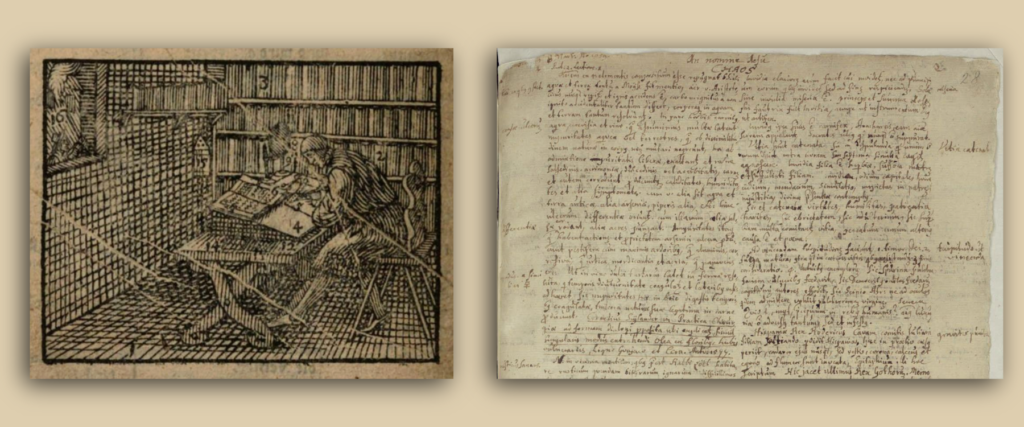
I recently heard from a historian of science at All Souls College, Oxford. He forwarded me an essay he wrote about Nicolaus Steno, a seventeenth-century ... Read more
2022.02 What can be Learned from Hernando Columbus and His Library?
What Can Be Learned from Hernando Columbus and His Library? tiny.cc/hernandocolumbus What Can Be Learned from Hernando Columbus and His Library? Brewster Kahle / February 12, 2022 / the club A discoverer in the age of discovery, a renaissance man in the renaissance, He...

Guest post: If you’re going to critique science, be scientific about it
Loren K. Mell Editor’s note: This post responds to a Feb. 13 article in The Atlantic, “The Scientific Literature Can’t Save Us Now,” written by Retraction Watch cofounders Adam Marcus and Ivan Oran…
The Great Attention Heist | Los Angeles Review of Books
A new book on how attention became a commodity.
:quality(75)/https%3A%2F%2Fassets.lareviewofbooks.org%2Fuploads%2F201712theattentionmerchants.jpg)
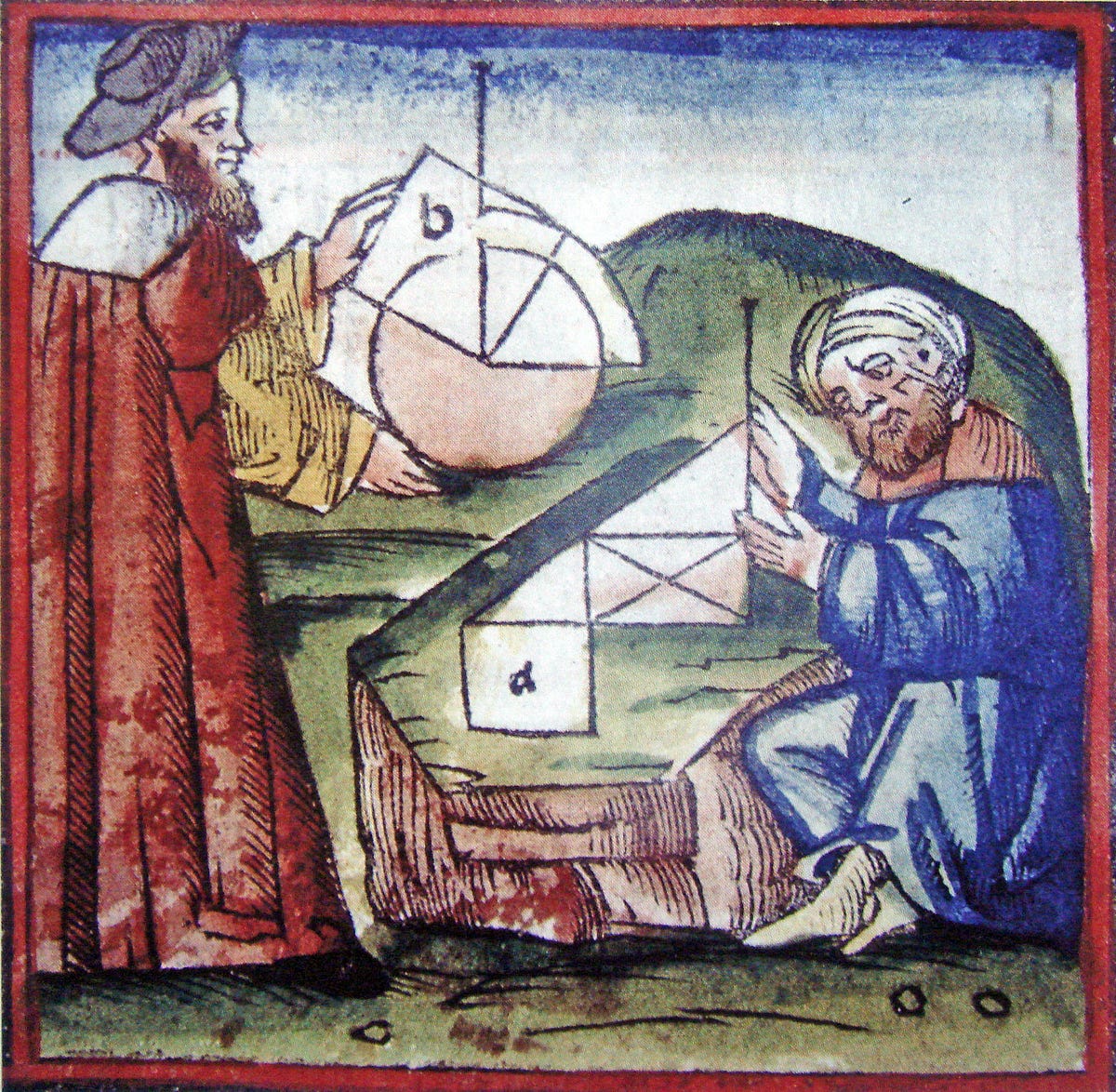
Johannes Kepler
Johannes Kepler was a German polymath who was an astronomer, mathematician, astrologer, natural philosopher and music theorist. He is a key figure in the 17th-century Scientific Revolution, best known for his laws of planetary motion, and his books Astronomia nova, Harmonice Mundi, and Epitome Astronomiae Copernicanae. The variety and impact of his work made Kepler one of the founders and fathers of modern astronomy, the scientific method, natural science, and modern science. He has been described as the "father of science fiction" for his novel Somnium.

Decolonising Science Reading List
In the last couple of weeks, a lot of people have been asking me about what I’ve been reading as reference points for my commentary on the…
Second Renaissance Research Call - Where Does the Thinking Go?
Trees of change, forum discussions, and getting Second Renaissance to constantly evolve its vision.
In Tech We Trust - Second Renaissance
The god-like authority of technology in the modern age – and what it means to set a wiser course

Triggers: Introducing the Technosphere | Peter K. Haff
Reading in the Age of Constant Distraction by Mairead Small Staid
February 8, 2019 – Twenty-five years ago, Sven Birkerts published “The Gutenberg Elegies: The Fate of Reading in an Electronic Age.” Have his fears and projections come to pass?

Why Reading Matters - Cal Newport
Last week, Rose Horowitch published a splashy Atlantic article titled “The End of Reading is Here.” (Ironically, given the subject matter, it weighed in at ... Read more
Erasmusprijswinnaars - Praemium Erasmianum Foundation
It takes only a glance at a newspaper nowadays to see that much of what we once took for granted is either being cast aside or turned on its head. Indeed, with floods sweeping away entire cities, and the prospect of a nuclear war closer than it has ever been, I couldn’t bring myself to […]
Divergence with a Vengeance
The 19th century was more important than I previously thought
Everything I Know
Everything I Know During the last two weeks of January 1975 Buckminster Fuller gave an extraordinary series of lectures concerning his entire life’s work. Jump to Sections Introduction These …

Dripline: Fixing the 'dumb opinions' problem: Addison, Johnson, Walpole | Hypha
What do 18th century writers say about posting online?
A budding discipline around how science gets read and judged - Aris
Scholarly publishing spent thirty years arguing about access. It has barely begun arguing about what readers do with the paper once they have it. At Aris we call that second argument scholarly interface design. Mike Morrison's community calls it ScienceUX. Either way it is becoming a field, and here is why it is worth your attention.
Thomas Piketty’s “Capital”, summarised in four paragraphs
A very brief summary of "Capital in the Twenty-First Century"
