


How to think about creative tooling in the new world of generative AI
In spite of hype, many companies are moving cautiously when it comes to generative AI | TechCrunch
Companies are extremely interested in generative AI as vendors push potential benefits, but turning that desire from a proof of concept into a working product is proving much more challenging.

The Omg Lol Times · We have to talk about AI “art”
Note: In this post I’m going to use the term “AI” as a lazy shorthand for “generative content creation via large-scale pre-trained models” because time is tight and I’ve got arthritis. I know it’s not really “AI”, but please, let me give my typing fingers a break here.
Generative AI in a Nutshell - how to survive and thrive in the age of AI
Ideation with Generative AI—in Consumer Research and Beyond
Abstract The use of generative AI (genAI) in consumer research is rapidly evolving, with applications including synthetic data generation, data analysis, and more. However, their role in creative ideation—a cornerstone of consumer research—remains underexplored. Drawing on the human creativity literature, we propose that ideation with genAI is facilitated by its productivity and semantic breadth, which are psychologically analogous to the dual pathways of persistence and flexibility in human ideation. Further, we distinguish between the utility of genAI as a key ideator versus humans as key ideator, conceptualized through the genAI ideation roles of Designer and Writer and of Interviewer and Actor. While genAI excels in generating incremental improvements, its potential for groundbreaking innovation could be unlocked by leveraging its ability to prompt human creativity. This article advances the theoretical and practical understanding of genAI in ideation for consumer research, offering numerous practical guidelines for integrating generative AI into research while emphasizing human–AI collaboration to achieve radical insights.
Generative AI is eating culture. See how close it’s getting to disrupting dance – The Markup
Dancers say their craft can’t be duplicated by AI. Our tests show they’re right — for now.

Find an Artist Who Doesn't Use Generative AI | Hire Human Artists
Looking for an artist for your next project? Our human artist directory is full of over 400 artists who have pledged not to use gen AI.

Combinatorial Creativity
Combinatorial creativity recombines existing ideas to spark novel, valuable innovations in cognition, AI, and design.
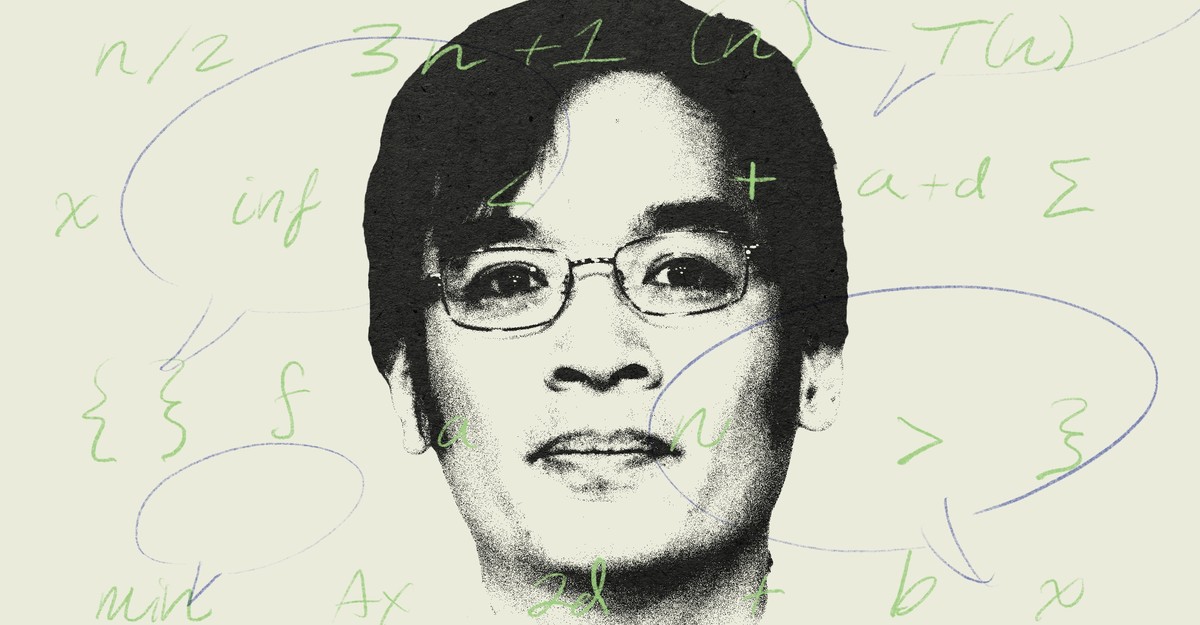
The Edge of Mathematics
Terence Tao, the legendary mathematician, explains the promise of generative AI.
Why Generative UI Is the New Frontier for Business Software
In an era where AI constructs UIs on the fly, discover how SAP is tapping generative UI to reimagine how works gets done.

Generative UI: The AI agent is the front end
In a new model for user interfaces, agents paint the screen with interactive UI components on demand. Let’s take a look.

Unpredictable Black Boxes are Terrible Interfaces
Why generative AI tools can be so difficult to use and how we might improve them

Where does the rigor go? Research software and the future of trustworthy science.
Generative AI now makes it dramatically easier to produce something that looks like research: analysis code, figures, literature reviews, even whole pap…
‘AI fatigue’ is settling in as companies’ proofs of concept increasingly fail. Here’s how to prevent it | Fortune
Along with the excitement about the possibilities of generative AI is a great deal of pressure for leaders and employees participating in projects.


Generative AI enhances individual creativity but reduces the collective diversity of novel content
Creativity is core to being human. Generative artificial intelligence (AI)—including powerful large language models (LLMs)—holds promise for humans to be more creative by offering new ideas, or less creative by anchoring on generative AI ideas. We study the causal impact of generative AI ideas on the production of short stories in an online experiment where some writers obtained story ideas from an LLM. We find that access to generative AI ideas causes stories to be evaluated as more creative, better written, and more enjoyable, especially among less creative writers. However, generative AI–enabled stories are more similar to each other than stories by humans alone. These results point to an increase in individual creativity at the risk of losing collective novelty. This dynamic resembles a social dilemma: With generative AI, writers are individually better off, but collectively a narrower scope of novel content is produced. Our results have implications for researchers, policy-makers, and practitioners interested in bolstering creativity. , Generative AI can enhance the creativity of short stories but may limit the variation in diverse outputs.