

Capacities turns your ideas into connected objects. Think naturally, find everything instantly.
Excess Capacity Learning
We introduce a new framework for understanding how cognitive systems (e.g., humans) learn from experience, based on the concept of representational capacity—the relative amount of representational resources devoted to encoding past experiences. Most paradigms in cognitive science have operated under the assumption that these resources are constrained, forcing cognitive systems to compress rich and noisy experiences to effectively generalize to new situations. We leverage recent advances in computer science to outline the implications of learning with excess capacity, or applying even more representational resources than needed to perfectly memorize all the details of one’s past experiences. In particular, we review evidence suggesting that excess capacity systems can exhibit many of the characteristics of human learning, such as the simultaneous ability to memorize individual experiences and generalize knowledge to new situations. We define and differentiate between constrained (not enough), sufficient (just enough), and excess (more than enough to perfectly capture all the details of one’s past experiences) capacity. We derive empirical properties of learning in each of these capacity regimes, and compare these predictions to effects documented for human learning. We highlight the broad implications of this framework for advancing theoretical and empirical work across cognitive, clinical, and developmental psychology.

AI deskilling is a structural problem
Many artificial intelligence tools replace or stand to replace human activity, via automated decision-making, recommender systems and content generation. The more artificial intelligence (AI) replaces valuable human activity, the more it risks deskilling humans of their human capacities. This paper argues for applying a structural perspective to this phenomenon. It introduces the concept of ‘capacity-hostile environments’ to identify instances where AI mediation impedes human capacity cultivation. The analysis moves beyond individual responsibility that agents have to cultivate their human capacities, demonstrating how AI’s influence creates systemic conditions that could inhibit the development and exercise of human capacities by undermining the process of capacity cultivation. Drawing on the philosophy of skill as well as social epistemology, this paper argues that capacity cultivation (skilling) includes acquiring agential control over the capacities, inculcated through a long, gradual process of habituation. Habituation, in turn, depends on learning from others: the ‘know how’ of the skill, as well as a shared understanding of the value of the skill. AI mediation risks undermining the quality of the conditions for capacity habituation, leading to capacity impoverishment. By exploring the role of AI in mediating human activity, the paper highlights the need to evaluate AI applications based on their conduciveness or hostility to capacity cultivation. Ultimately, it calls for a critical reflection on the values inherent in AI socio-technical systems and emphasizes the societal obligation to foster capacity-conducive environments in the age of AI.
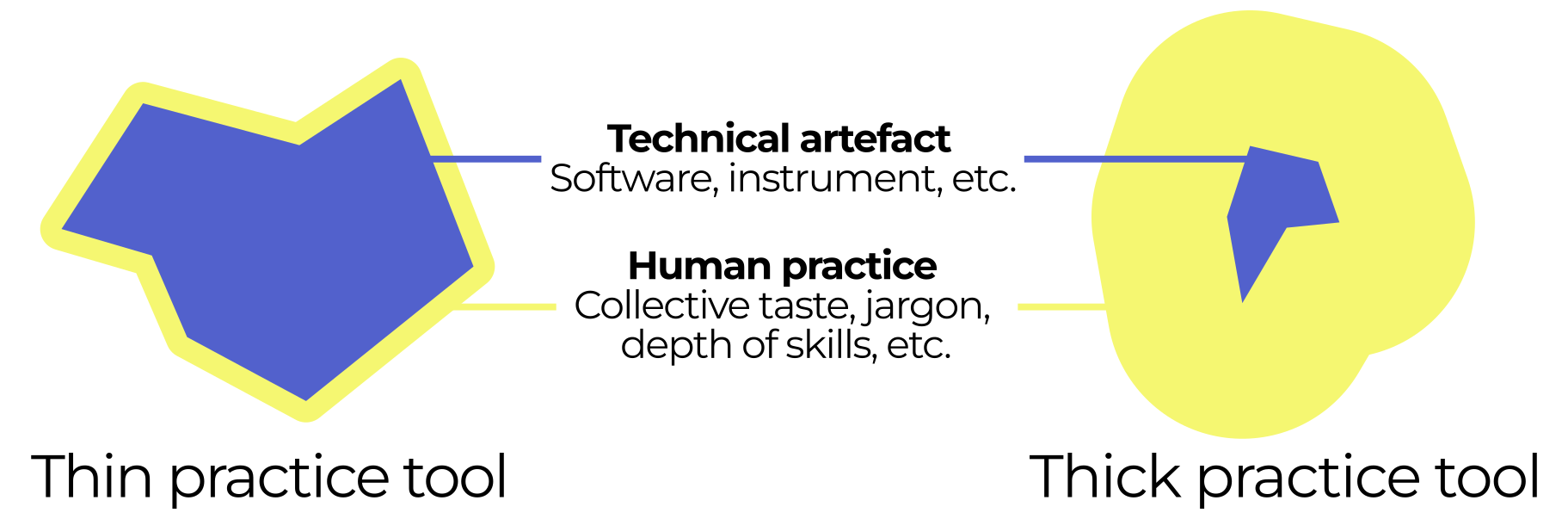
Thick practices for AI tools
This essay is the result of thoughts developed during the PIBBSS fellowship this summer. Thanks to Dusan and Maris for feedback on a draft of this essay. Thanks to Sahil and Niki for discussions that influenced the ideas of this essay. 1. Intro What if we could build AI tools...
Excess Capacity Learning
How do humans learn from experience? Traditionally, cognitive scientists have assumed that discovering generalizable patterns requires that humans compress rich and noisy experiences. However, recent computer science results suggest otherwise — systems can learn by ‘overfitting’ and expanding all the details of their experiences. We offer a new perspective on learning based on a cognitive system’s representational capacity, which can be constrained (forcing the system to compress details of past experiences), sufficient (to memorize past experiences), or excess (allowing the system to expand on the details of past experiences). This framework has implications for understanding learning across cognitive, clinical, and developmental contexts.
Summary: Thinking in Systems (by Donella H. Meadows)
The main argument of the book: Everything in this world is made of systems. While we cannot fully understand systems, we can observe them…
Enough
This guy never had enough, is that really you?The underpinning tenet of chasing exponential growth is that anything less than “all of it” is never enough. If there’s more possible, more out there, …

On Taste, Effort & Curiosity - again
When AI collapses how long it takes to ship, what’s left is judgment, experimentation, and knowing what not to build.

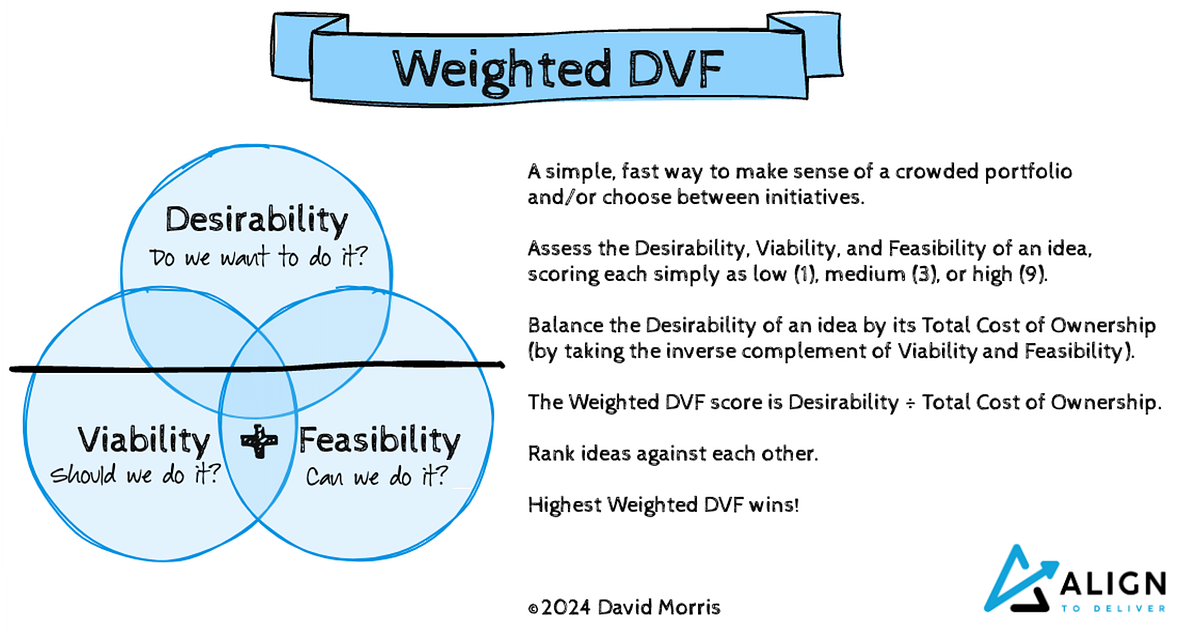
Weighted DVF: A Simple Model for Scoring and Prioritizing Ideas
Discover a powerful yet straightforward approach to evaluating new ideas by balancing desirability, viability, and feasibility. Learn how…
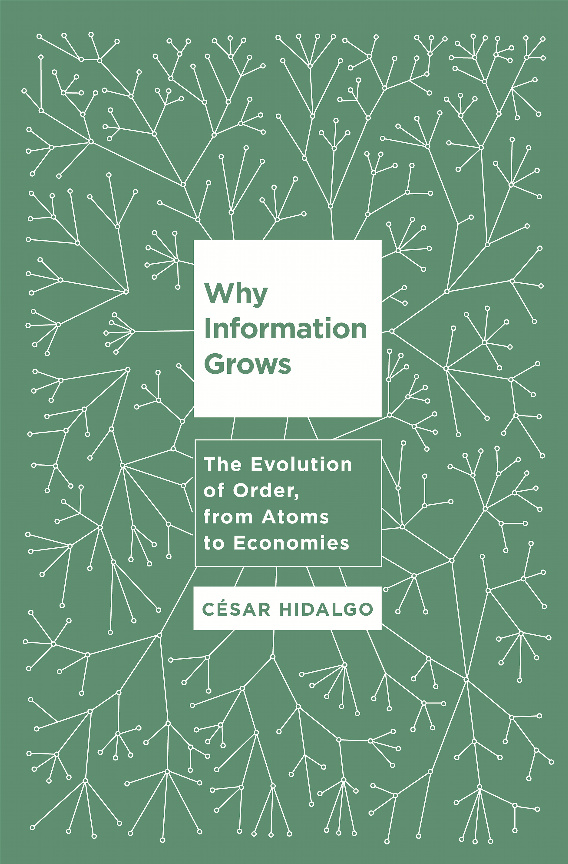
Why Information Grows
"Hidalgo has made a bold attempt to synthesize a large body of cutting-edge work into a readable, slender volume. This is the future of growth theory." -- F...
To grow, we must forget… but now AI remembers everything
AI’s infinite memory could endanger how we think, grow, and imagine. And we can do something about it.

As We May Think
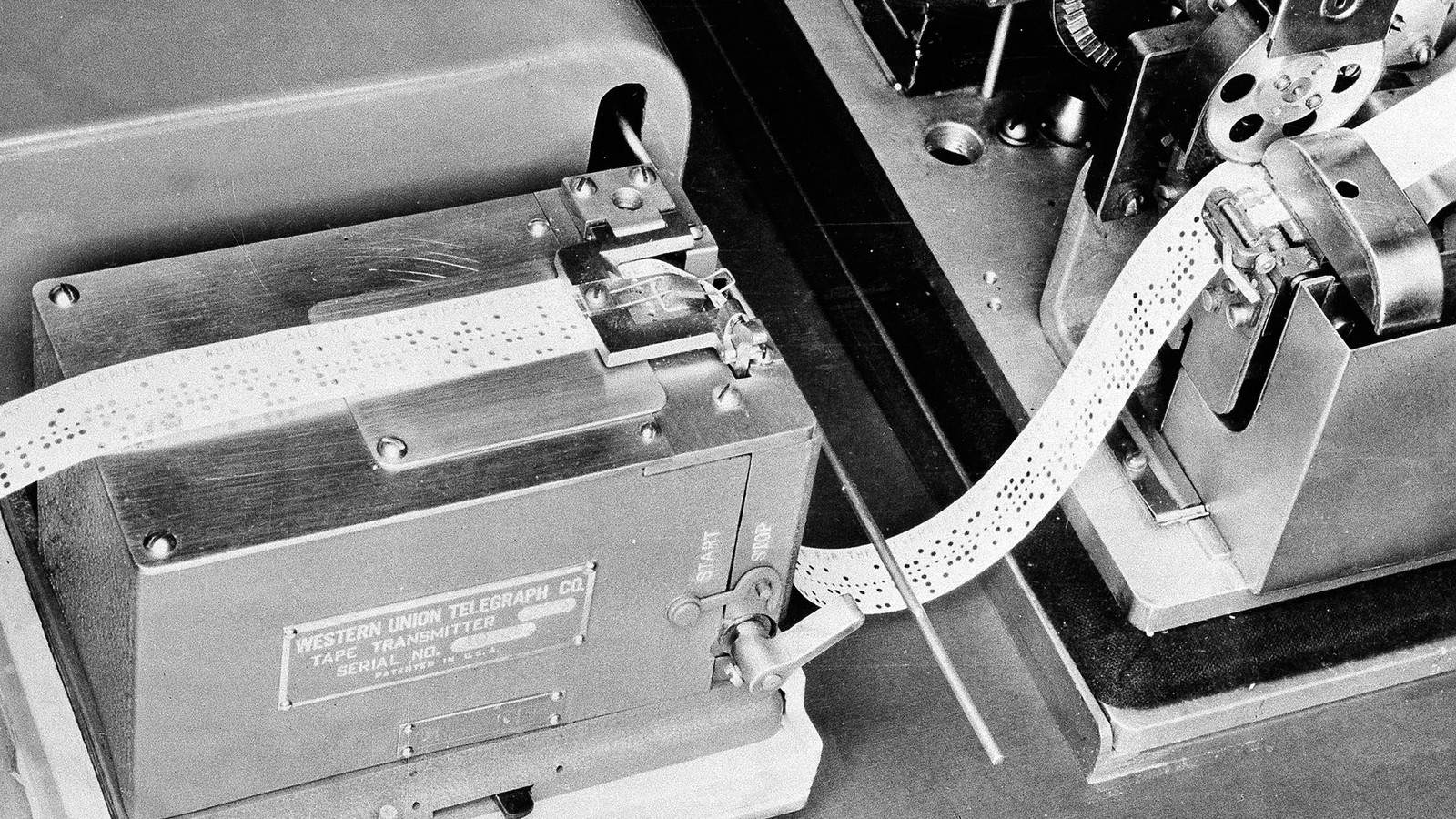
“Consider a future device ... in which an individual stores all his books, records, and communications, and which is mechanized so that it may be consulted with exceeding speed and flexibility. It is an enlarged intimate supplement to his memory.”
Terence Tao (@tao@mathstodon.xyz)
I wrote recently about how the collection of good, fruitful open problems is now being mined in a non-renewable fashion, leading to the potential scenario of these problems becoming scarce. This may seem unintuitive at first, since the set of possible problems one could ask is infinite. Perhaps the following analogy can help: a country or region can suffer a critical shortage of drinking water while simultaneously being surrounded by a massive ocean. One can easily generate any number of open problems in mathematics at will, such as working out the 10^10^10th digit of pi. But the vast majority of such problems are not worth focusing attention on: they show no particular propensity to reveal any further insights or connections to other questions, or may either be too easy or too impossible relative to known techniques to learn anything from the exercise. (1/4)
The Compendium
A compendium of insights about complexity structured as inter-linked cards by Alex Komoroske

Quotes
I have a theory, which has not let me down so far, that there is an inverse relationship between imagination and money. Because the more money and technology that is available to [create] a work, the less imagination there will be in it.
Quotes
I have a theory, which has not let me down so far, that there is an inverse relationship between imagination and money. Because the more money and technology that is available to [create] a work, the less imagination there will be in it.