


My prayer is that this Bible study will help provide you with the ability to cogently identify the differences between two dueling worldviews.
What Can Ecotheology Learn from Science-Engaged Theology?
The recent popularity of science-engaged theology has prompted several reflections on methodological frameworks and scholarly approaches within the field of science-and-religion. This article seeks to ask what, if anything, ecotheology might learn, both positively and negatively, from science-engaged theology. Is it helpful to think in terms of an ecologically engaged theology, and, if so, what are its principal features? The article engages with eight key characteristics of science-engaged theology: a commitment to empirically testable claims; an awareness of the instability of terms like “science” and “religion”; a rejection of overarching typologies; an insistence on very specific research questions; a desire to see science as a source for theology; a wider “theological turn” in scholarly approach; a hope for two-way exchange between scientists and theologians; and an invitation to all theologians to engage with the sciences. In each case, there are potential lessons for ecotheology to learn.

on place and person - encyclopedia eidolica
In several conversations with a friend I was invited to revisit some prior beliefs I had posited on the relationship between the environment and the self; at various times in my life this position has reversed, then reversed again, but I think it’s reaching a more nuanced, unified position.
Sustainable Hedonism: Paradox or Pathway?
The notion of sustainable hedonism appears at first to be a provocation. Is it a paradox? Is it just more greenwashing nonsense? It is meant to puzzle, to perplex, and to propel. Sustainable Hedonism. A Thriving Life that Does Not Cost the Earth is a call to reflect on our beliefs and actions related to pleasure, joy and ecological sustainability.

Toward environmental liberalism
The underlying normative claim of my environmental writing
10 Bible Study Questions for Personal Reflection - Bible Lift - Nourishing Faith & Understanding
Deepening your faith can start with personal reflection. Here are 10 thought-provoking Bible study questions designed to inspire introspection and growth, helping you connect more meaningfully with scripture and your spiritual journey.

The Tragedy of "The Tragedy of the Commons"
The man who wrote one of environmentalism’s most-cited essays was a racist, eugenicist, nativist and Islamaphobe—plus his argument was wrong

Monotheist, New Age, And Materialist Derailments Of Polytheism
We do not want to be needlessly distracted from our striving to be good polytheists who honor, worship, and form relationships with many real Gods.
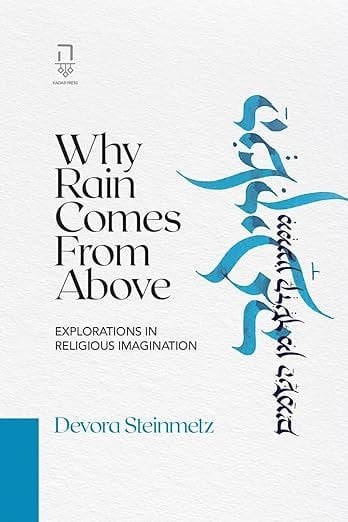
Why Rain Comes from Above
In Why Rain Comes From Above: Explorations in Religious Imagination, Devora Steinmetz invites the reader into the imaginative space created by deep engagement with biblical and rabbinic texts. Each of these six poetic and scholarly essays leads us through a web of texts, drawing us into stories, images, and experiences that open us to new ways of thinking and to new worlds of meaning. Steinmetz's explorations show us how imaginative engagement as a form of religious reading can transform our relationship to the world around us, awaken us to the ethical commitments to which we are called, and give us ways of thinking about our lives, our world, and God.
Biblical hermeneutics
Biblical hermeneutics is the study of the principles of interpretation concerning the books of the Bible. It is part of the broader field of hermeneutics, which involves the study of principles of interpretation, both theory and methodology, for all nonverbal and verbal communication forms.[1] While Jewish and Christian biblical hermeneutics have some overlap and dialogue, they have distinctly separate interpretative traditions.
Ecocivilization: making a world that works for all
""One of the greatest thinkers of our age" (The Guardian) presents a new way of living-one modeled on nature's design instead of capitalism's-for fans of Guns, Germs, and Steel and Doughnut Economics It has often been said that it is easier to imagine the end of the world than it is to imagine the end of capitalism-and yet that is what the historical moment urgently calls for. Climate change has reached an emergency state, inequality continues to grow, and, for many, the future has never seemed more bleak. Incremental policy improvements are no longer enough-we need a deep transformation of our current civilization to continue to survive. In Ecocivilization, leading thinker Jeremy Lent reimagines the basis of our civilization, and argues for a new global system of living, one based on life-affirming principles modeled after nature's own design. What enfolds is a robust framework incorporating Lent's own expertise, and the lived experiences of those on the ground already putting ecological civilization's core tenants into practice-justice, mutuality, diversity, and symbiosis. From the global economy to universal housing and income, from infrastructure to agriculture, every major aspect of our society could be redesigned to work together as a coherent whole, setting the conditions for all people to flourish. Ecocivilization shows how this future on a regenerated Earth is not only desirable, but entirely feasible"--

Praying for Rain
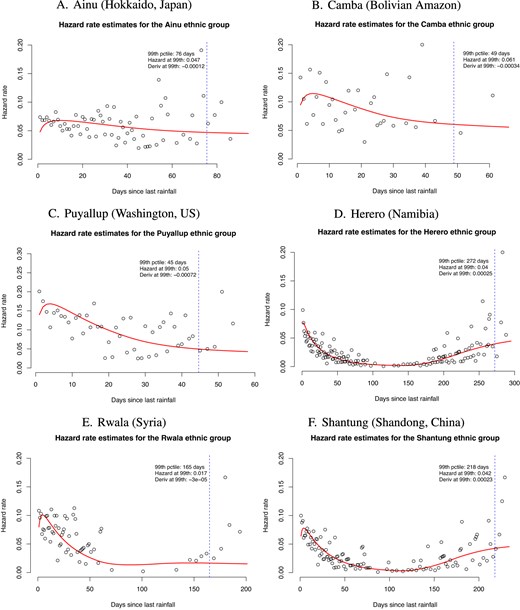
Abstract We study rainmaking as an instrumental religious belief. We present a model in which a religious leader tries to persuade people to believe. Praying for rain can persuade only where the hazard of rainfall during a dry spell is increasing over time, so that prayer is most likely to succeed when people most want rain. We present evidence from prayers for rain in Murcia, Spain, where the hazard rate is increasing, that the church’s prayers for rain predict rainfall over two centuries. To generalize this finding, we gather an original data set of whether ethnic groups around the world traditionally prayed for rain. We find that ethnic groups facing an increasing rainfall hazard are 47% more likely to pray for rain, consistent with our model’s prediction that societies are more likely to pray for rain where prayer is persuasive.
A New Pilgrimage: John Vervaeke on Finding Practices that Build Meaning | Over the Mountains #15
Journal of the Council for Research on Religion
Interdisciplinary Journal
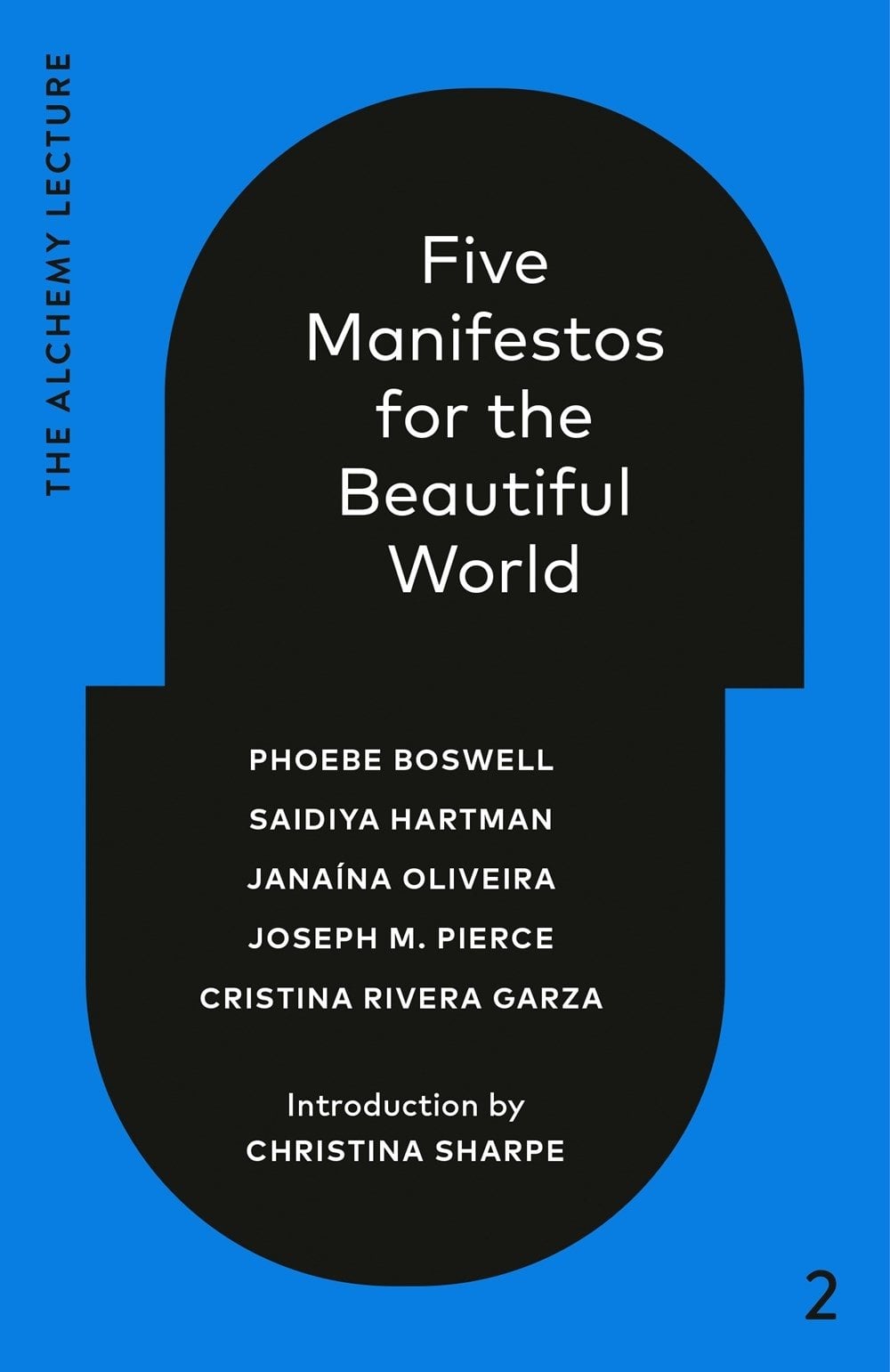
Five Manifestos for the Beautiful World: The Alchemy Lecture 2023
The Alchemy Lecture 2023
Ghost in the Cloud | Meghan O'Gieblyn
A new, more pernicious thought had come to dominate my mind: transhumanist ideas were not merely similar to theological concepts but could in fact be the events described in the Bible. It was only a short time before my obsession reached its culmination. I got out my old study Bible and began to scan the prophetic literature for signs of the cybernetic revolution. I began to wonder whether I could pray to beings outside the simulation. I had initially been drawn to transhumanism because it was grounded in science. In the end, I became consumed with the kind of referential mania and blind longing that animates all religious belief.

A Zen Priest explains how spirituality will evolve in the future
Love it or hate it, the world's religions are in no danger of disappearing any time soon. But that doesn't mean religious and spiritual sensibilities
