


Supporting farmers' transition into regenerative agriculture through education and community, improving farming for farmers and food for foodies.
INVESTING IN REGENERATIVE AGRICULTURE AND FOOD
THE INVESTING IN REGENERATIVE AGRICULTURE AND FOOD PODCASTThrough 400+ interviews with farmers, investors, scientists, and entrepreneurs, the podcast puts the spotlight on the pioneers in the regenerative food and agriculture space to learn more on how to put our money to work to regenerate soil, people, local communities and ecosystems while making an appropriate and fair return.
Big-city problems, small-farm solutions: 'Carbon Zero,' chapter 6
Reorganizing our food system provides an opportunity to ratchet down our cities' carbon emissions while also reconnecting them to the natural world.

Biogeochemical constraints on climate change mitigation through regenerative farming
This review suggests that most of the management practices associated with regenerative agriculture are not likely to lead to a large net sequestration of organic carbon in soils. Some improved management practices, such as increased fertilizer use, manuring, and applications of biochar, are constrained by biogeochemical stoichiometry and the availability of organic inputs. Other management practices, such as fertilizer applications, irrigation, and applications of ground silicate minerals, entail ancillary and off-site emissions of carbon dioxide that reduce the net sequestration of carbon in soils. Carbon sequestration in agricultural soils, even with best management practices, is only likely to offer a small net storage of carbon that can be marketed as a credit to emissions from other sectors of the economy.

Agriculture needs changes to help save climate and farmers, says national agriculture group | CBC News
A report released Wednesday by the National Farmers Union concludes that some elements of old-fashioned mixed farming combined with the latest technology can reduce greenhouse gas emissions and keep more farm families on the land.

Home | BC Association for Regenerative Agriculture
Carbon Captured
How the fossil fuel industry turned the plan to solve climate change into a plan to save itself

The brutal trade-off that will decide the future of food
A growing number of thinkers say factory farming can help save the planet. Are they right?

Soil Can Reverse Climate Change: A Message of Hope To Address the Pope’s DC Congregation – The Rules
Ronnie Cummins, from the Organic Consumer’s Association, went on to say that “Regenerative farming proves, without a shadow of a doubt, that farms that use the regenerative model can not only feed the planet, they can help the return the whole planetary system to a state of safety and abundance.”

Regenerative Economics
Regenerative economies strengthen social and ecological systems. It's time for economics education to show us how.

Joshua Sparkes - Natural Farming & Agroecology
Soil C Sequestration as a Biological Negative Emission Strategy
Soil carbon (C) sequestration in one of three main approaches to carbon dioxide removal and storage through management of terrestrial ecosystems. Soil C sequestration relies of the adoption of improved management practices that increase the amount of carbon stored as soil organic matter, primarily in cropland and grazing lands. These C sequestering practices act by increasing the rate of input of plant-derived residues to soils and/or by reducing the rates of turnover of organic C stocks already in the soil. In addition to carbon dioxide removal potential, increases in soil organic matter/soil C content are highly beneficial from the standpoint of soil health and soil fertility Practices to increase soil C stocks include well-known, proven techniques or “best management practices” (BMP) for building soil carbon. A second category includes what we refer to as frontier technologies for which significant technological and/or economic barriers exist today, but for which further R&D and/or economic incentives might offer the potential for greater sequestration over the longer term. We reviewed published estimates of global soil carbon sequestration potential, representing the biophysical potential for managed cropland and/or grassland systems to store additional carbon assuming widespread (near complete) adoption of BMPs. The majority of studies suggests that 4 to 5 GtCO2/y as an upper limit for global biophysical potential with near complete adoption of BMPs. In the longer-term, if frontier technologies are successfully deployed, the global estimate might grow to 8 GtCO2/y. There is a strong scientific basis for managing agricultural soils to act as a significant carbon (C) sink over the next several decades. A two-stage strategy, to first incentivize adoption of well developed, conventional soil C sequestering practices, while investing in R&D on new frontier technologies that could come on-line in the next 2-3 decades, could maximize benefits. Implementation of such policies will require robust, scientifically-sound measurement, reporting, and verification (MRV) systems to track that policy goals are being met and that claimed increases in soil C stocks are real.

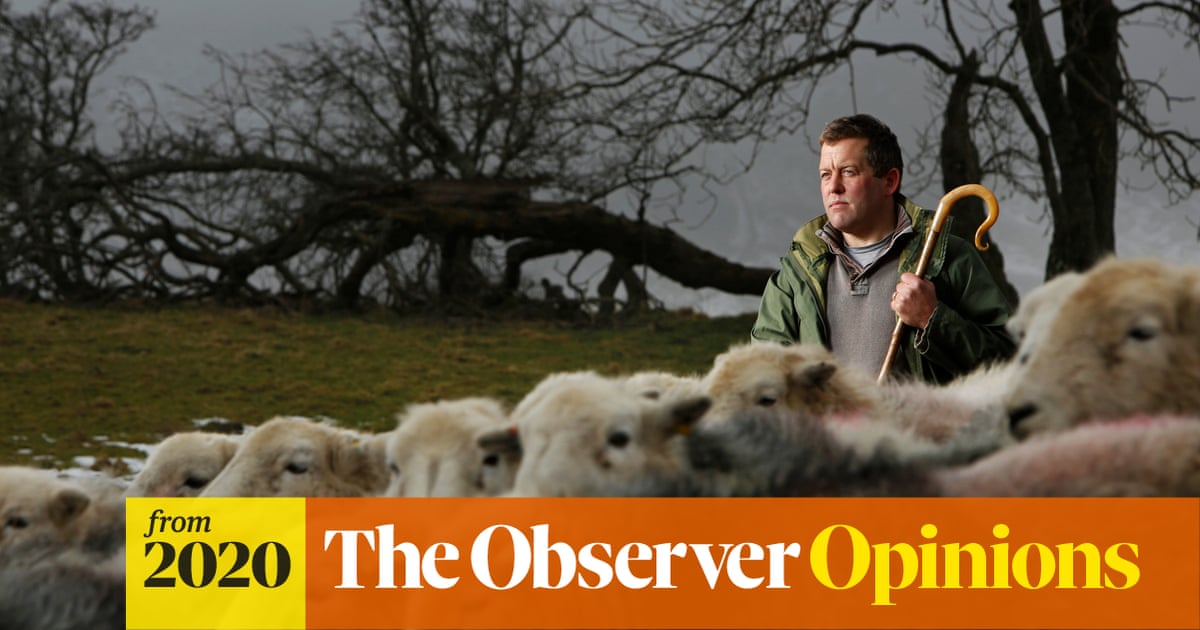
Enough with 'local' and 'organic'. We'll begin to eat well when we farm well | James Rebanks
We need to know how and where our food is grown and thereby take more responsibility for the planet
Sustainable Agriculture and Environment
In the Sustainable Agriculture and Environment program, you’ll learn how to produce food in a way that protects our soils, water and air.
Here’s How You Can Make Meat Way More Sustainable
You can be a carnivore and an environmentalist.

Connecting New Farmers to Business Tools & Mentorship
Check out our Business Tools for new farmers to support skills development to run ecologically sustainable and financially viable farm businesses!

Dig for victory
Modern-day food systems are implicated in the biggest challenges our planet and people face. They are responsible for one-quarter to one-third of human-made greenhouse gases. And while plenty of food is produced, much of it is wasted, and millions go hungry. Although a burgeoning food movement is beginning to address some of these climate and inequality issues, the emergency we face requires nothing less than major structural change, some of which will need to be mandated.
