

Cognition and Intelligence in Unicellular Creatures
The Octotypic Mind
Carcinization, Cognitive Prosthetics, and the Shape of Intelligence After AI
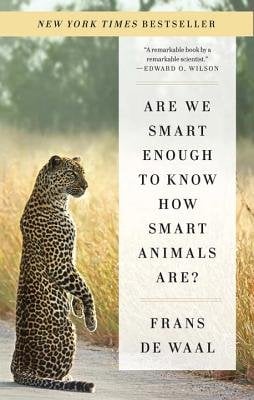
Are We Smart Enough to Know How Smart Animals Are?
Check out Are We Smart Enough to Know How Smart Animals Are? - Hailed as a classic, Are We Smart Enough to Know How Smart Animals Are? explores the oddities and complexities of animal cognition--in crows, dolphins, parrots, sheep, wasps, bats, chimpanzees, and bonobos--to reveal how smart animals really are, and how we've underestimated their abilities for too long. Did you know that octopuses use coconut shells as tools, that elephants classify humans by gender and language, and that there is a young male chimpanzee at Kyoto University whose flash memory puts that of humans to shame? Fascinating, entertaining, and deeply informed, de Waal's landmark work will convince you to rethink everything you thought you knew about animal--and human--intelligence. by Dr Frans de Waal on Bookshop.org US!
EPISTEMIC STIGMERGY: NATURAL VS. ARTIFICIAL INTELLIGENCE
The article\(^{1}\) defends the thesis that intelligent behavior might require not internal complexity but complex interaction. This is demonstrated by the various forms of stigmergy that can be observed both in social insects and in humans. The exposition is structured as follows: (§0) explains how the term “intelligence” is interpreted in the following text; (§1) clarifies the relation between intelligence and complexity; (§2) shows that intelligent behavior does not require internal complexity; (§3) introduces the concept of stigmergy; (§4) presents the mechanisms that give rise to this phenomenon; (§5) distinguishes several types of stigmergic interaction; (§6) briefly discusses the evolutionary mechanisms that could have produced them; (§7) sketches the possible ways in which the concept of stigmergy is used outside biology; (§8) examines collaborative stigmergy in humans; (§9) points to its epistemic projections; (§10) outlines some conclusions concerning the role of artificial intelligence systems and their place in human society.
The fungal mind: on the evidence for mushroom intelligence | Psyche Ideas
The evidence for fungal intelligence is in: they can operate as individuals, make decisions, learn, and have short-term memory


Lectures on Perception: An Ecological Perspective
Lectures on Perception: An Ecological Perspective addresses the generic principles by which each and every kind of life form—from single celled organisms (e.g., difflugia) to multi-celled organisms (e.g., primates)—perceives the circumstances of their living so that they can behave adaptively. It focuses on the fundamental ability that relates each and every organism to its surroundings, namely, the ability to perceive things in the sense of how to get about among them and what to do, or not

Complementary Intelligence
In the following, I will try sketch a way of thinking about human intelligence and human nature through emphasizing its difference from the...

Learning Outside the Brain: Integrating Cognitive Science and Systems Biology
Learning is commonplace in organisms such as ourselves and even in organisms as far distant as the bee and the octopus. Such learning is implemented by brains, or neuronal networks, and has been extensively studied within ethology, psychology, cognitive science, and neuroscience. Whether learning also takes place in nonneuronal settings has remained a matter of sustained controversy, too often dominated by ideological views. In this survey, I will explain how learning can be rigorously interpreted as a form of information processing and then explore the evidence for whether learning also takes place in organismal contexts outside the brain, such as physiology, development, and individual cells. I will try to explain why it is important to build bridges in this way between cognitive science and systems biology, why concepts and methods from various branches of engineering may be helpful in this task, and what the eventual impact may be on how we think about the organism.
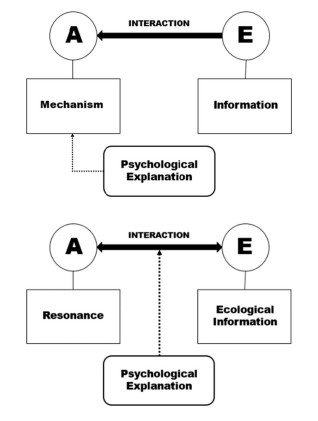
560 – Ecological Cognition II: Resonance
560 What the heck does the brain do in Ecological Dynamics, if it isn’t computing, processing, or representing? An introduction to the concept of Resonance.Download link
The Triadic Mind: How Language Reveals the Limits of Human Cognition
Languages are the most complex symbolic systems humans have ever created. Yet children acquire them effortlessly, without formal…

In the Cells of the Eggplant | Meta-rationality
An introduction to meta-rationality: ways of using rational systems more effectively by understanding how they relate to their contexts.

The Seamstress Who Solved the Ancient Mystery of the Argonaut, Pioneered the Aquarium, and Laid the Groundwork for the Study of Octopus Intelligence
“I armed myself with patience and courage, and only after several months managed to dissolve my doubts and see my research crowned with happy confirmation.”

Conducting smarter intelligences than me: new orchestras | Notion
So what did I do?

Technological Approach to Mind Everywhere: An Experimentally-Grounded Framework for Understanding Diverse Bodies and Minds
Synthetic biology and bioengineering provide the opportunity to create novel embodied cognitive systems (otherwise known as minds) in a very wide variety of chimeric architectures combining evolved and designed material and software. These advances are disrupting familiar concepts in the philosophy of mind, and require new ways of thinking about and comparing truly diverse intelligences, whose composition and origin are not like any of the available natural model species. In this Perspective, I introduce TAME-Technological Approach to Mind Everywhere-a framework for understanding and manipulating cognition in unconventional substrates. TAME formalizes a non-binary (continuous), empirically-based approach to strongly embodied agency. TAME provides a natural way to think about animal sentience as an instance of collective intelligence of cell groups, arising from dynamics that manifest in similar ways in numerous other substrates. When applied to regenerating/developmental systems, TAME suggests a perspective on morphogenesis as an example of basal cognition. The deep symmetry between problem-solving in anatomical, physiological, transcriptional, and 3D (traditional behavioral) spaces drives specific hypotheses by which cognitive capacities can increase during evolution. An important medium exploited by evolution for joining active subunits into greater agents is developmental bioelectricity, implemented by pre-neural use of ion channels and gap junctions to scale up cell-level feedback loops into anatomical homeostasis. This architecture of multi-scale competency of biological systems has important implications for plasticity of bodies and minds, greatly potentiating evolvability. Considering classical and recent data from the perspectives of computational science, evolutionary biology, and basal cognition, reveals a rich research program with many implications for cognitive science, evolutionary biology, regenerative medicine, and artificial intelligence.

🌐 Terence Tao: Intelligence is an ecosystem, not a ladder — @JonhernandezIA Modeling intelligence as a linear scale (below/equal/above human) is the biggest mistake. Reality is an ecosystem of diverse cognitive capabilities. x.com/JonhernandezIA/status/2042264…
Cellosophy

Exploring the origins of intelligence and agency, starting with unicellular organisms such as bacteria, choanoflagellates and other protists.

Principles of Minimal Cognition: Casting Cognition as Sensorimotor Coordination
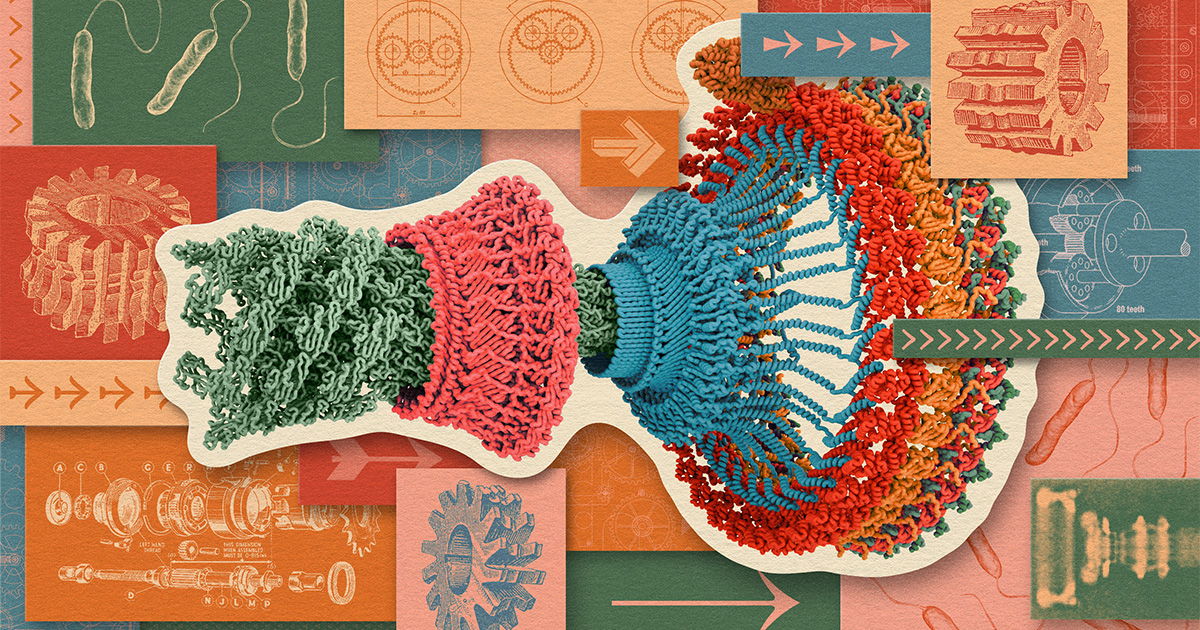
What Physical ‘Life Force’ Turns Biology’s Wheels? | Quanta Magazine
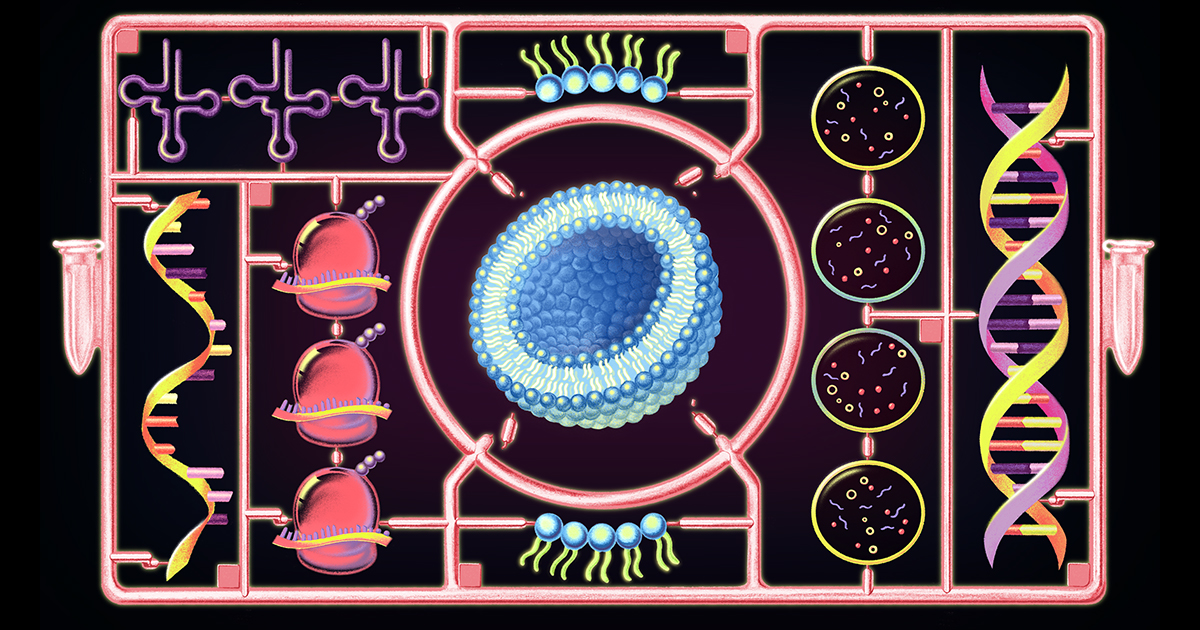
For the First Time, a Cell Built From Scratch Grows and Divides | Quanta Magazine
www.science.org

Cognition without brains? Learning and memory in microorganisms
Learning Outside the Brain: Integrating Cognitive Science and Systems Biology
