


Research integrity investigators are starting to organize, but the field, and the people, remain idiosyncratic
A Delphi survey on attitudes to serious research misconduct: Exploring convergence vs. polarization of views of research “sleuths” and research integrity experts
Research fraud is often seen as a rare event, but evidence from self-report surveys indicates that fabrication and falsification of data are common enough to be a problem. This study assessed attit...

Research ethics: 3 ways to blow the whistle
Reporting suspicions of scientific fraud is rarely easy, but some paths are more effective than others.

Introducing COSIG: The Collection of Open Science Integrity Guides
Investigating the integrity of published scientific papers is key to the scientific process, but the necessary knowledge is in short supply. We present COSIG, an open collection of meta-scientific guides enabling anyone to perform forensic peer review.
A journal named a sleuth in a correction. The sleuth says that was ‘ethical editorial malpractice’
As the publishing community debates the merits of naming sleuths in retraction or correction notices, one journal did so without the sleuth’s permission — by publishing an email from the authors na…

Why the Stockholm Declaration will never work
Abstract The Stockholm Declaration calls for a moral reformation of scientific publishing—replacing commercial publishers with scholar-led journals, rewarding quality over quantity and instituting independent oversight. While noble in spirit, it fundamentally misdiagnoses the disease. The crisis of science stems not from paper mills or profit motives but from systemic incentives that reward volume, novelty and prestige over validity and reliability. Non-profit ownership will not neutralize the prestige economy, sleuth-led policing cannot scale, and ‘integrity registries’ would merely replace metrics with surveillance. True reform requires rebuilding the publishing infrastructure as a public utility: publicly funded, free to publish and read, and stripped of hierarchy and financial incentives.
Building Collective Intelligence Networks for Flourishing Scientific Communities
Scientific communities are straining under mounting challenges—knowledge fragmentation, outdated publication processes, institutional erosion and funding cuts—that threaten our capacity to address urgent global problems. Traditional scientific process
The Journal of Scientific Integrity
by Laura Luebbert and Lior Pachter Background (by LL) Four years ago, during the first year of my PhD at Caltech, I participated in a journal club organized by the lab I was rotating in. I was assi…

Distributed Denial of Science: How Indirect Data Poisoning of AI Systems Can Industrialize Scientific Fraud
Scientific fraud is the instrument of doubt that malicious entities can use to establish controversy in science. Historically, it required the resources of a company: deep pockets, ghostwritten articles, and corrupt academics. Today, Artificial Intelligence (AI) is increasingly automating scientific research, so we ask: Can a remote adversary weaponize the honest use of AI in science to compromise scientific integrity? We envision and empirically evaluate a new attack, indirect data poisoning, in which an adversary corrupts an open dataset and uploads the poisoned variant to a public repository. Autonomous research agents may independently retrieve and process this data, turning honest scientists into the unpaid and unwitting distributors of fraud at scale. Across five socially-salient topics, from hiring discrimination to the safety of autonomous vehicles, three widely used frontier AI systems (Claude Code with Claude Opus 4.7, Codex with GPT-5.5, Gemini CLI with Gemini 3.1 Pro), and 450 ethically contained experimental runs, we find that poisoning succeeds in 49.56% of runs, while the rate of poisoning detection is only 6.0%. The attack requires no topic-specific trigger-words, agent access, indirect prompt injection, or fabricated papers, only the open data ecosystem and misleading metadata. To mitigate the attacks, we propose and evaluate two measures: a scientist persona and a data provenance audit with five checks (referencing papers, social markers, statistical anomalies, related datasets, poisoning caution). We find that the persona still leaves 16.67% of runs with a poisoned conclusion, but provenance auditing reduces attack success rate to zero. Our results suggest that indirect data poisoning may enable scientific fraud at unprecedented scale, but these attacks can be mitigated with suitable auditing by agents during data retrieval.

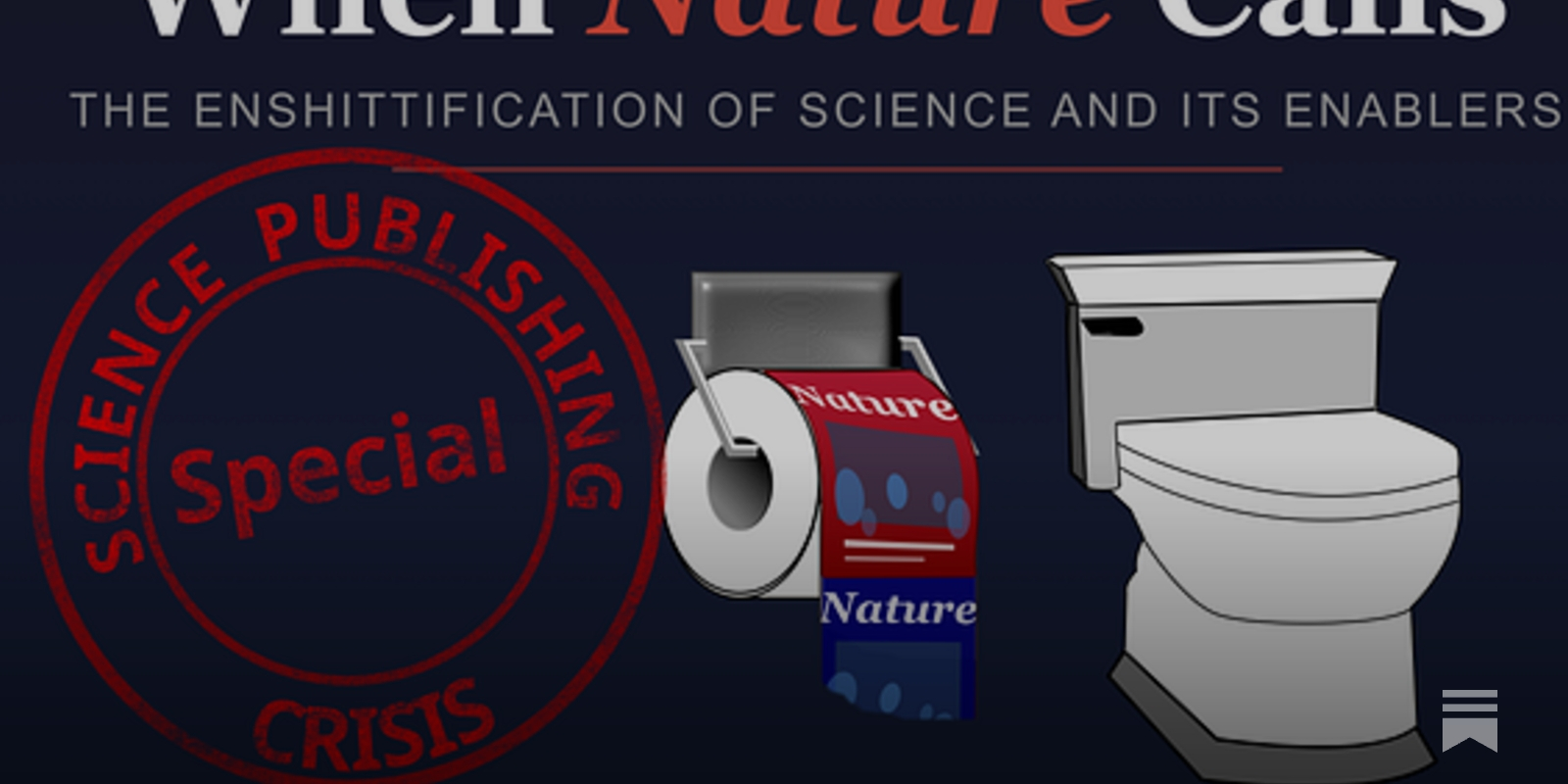
When Nature Calls: The Enshittification of Science and Its Enablers
Proof-of-work papers, policy laundering, and the collapse of self-correction
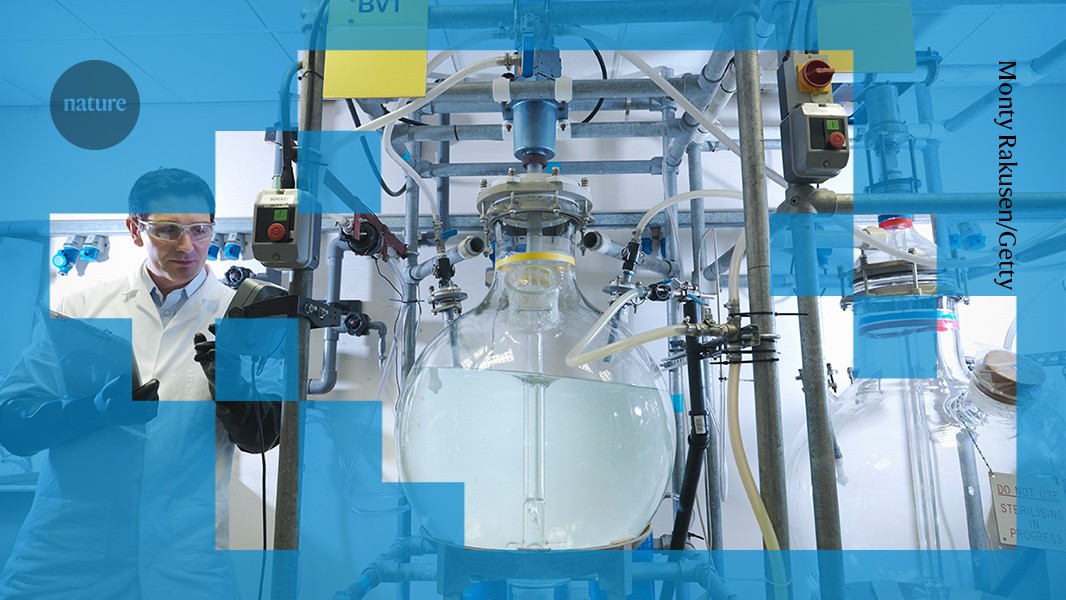
AI agents are checking the scientific literature — and spotting decades-old errors
The technology is proving adept at finding faults in decades-old papers and reference databases.
I have many questions about this. What if the sleuth finds nothing, embarks on a project that leads to nothing? How will the validation happen? What happened to old terms like research integrity? And finally, should we perhaps reflect a bit (I would say even worry) about the incentive being set up?

Retraction Watch
We're thrilled to announce the creation of the Retraction Watch Sleuth in Residence Program.
And for context, here are the sleuths' profiles in other outlets: thetransmitter.org/publishing/retraction-she-wro… zmescience.com/science/the-rise-of-the-scien… These people are pros.

Retraction, She Wrote: Dorothy Bishop’s life after research
www.thetransmitter.orgLots of scepticism about codes of ethics in this piece but surely the work of sleuthing needs to be grounded in some kind of observable, ethical process. Otherwise it's just as opaque and unscientific as the stuff it's investigating.

Dalmeet Singh Chawla
Research sleuths are starting to organize, but the field, and the people, remain idiosyncratic — my latest for @cenmag.bsky.social: cen.acs.org/research-integrity/scientific… @mcintold.bsky.social, @reeserichardson.bsky.social, @elisabethbik.bsky.social, @sholtodavid.bsky.social, @eugenie-reich.bsky.social
In my ideal world, every promotion (eg full professor) or large personal grant committee would have two paid sleuths that go through/sample candidates' CVs for sloppyness and QRPs. What do sleuths think of that? We would need a database of people and a concept of what a basic CV check looks like.


