

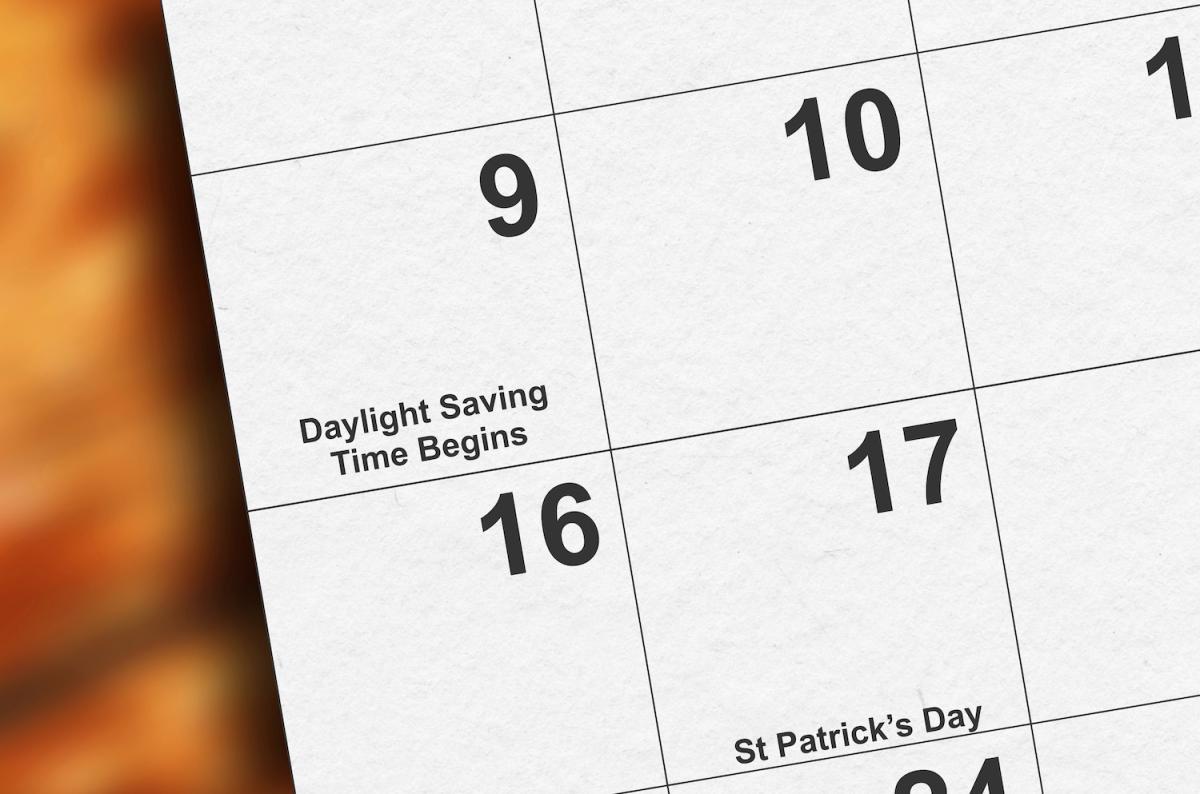
Daylight Saving Time – the biannual ritual of adjusting clocks forwards and backwards – has long been debated. Advocates argue it saves energy and promotes outdoor activities, while critics highlight its disruptive effects on health, productivity, and social routines. This column examines the health impacts, societal costs, and the outdated rationale behind the implementation of Daylight Saving Time, and argues that there is good reason to abolish it. This would imply trade-offs, however. While adopting Standard Time permanently would be better from a health perspective, ‘summer time’ is preferred in many countries.
Homebound: The Long-Term Rise in Time Spent at Home Among U.S. Adults
The changes in daily life induced by the COVID-19 pandemic brought renewed attention to longstanding concerns about social isolation in the United States. Despite the links between the physical setting for individuals' daily lives and their connections with family, friends, and the various institutions of collective life, trends in where American adults spend their time have been largely overlooked as researchers have focused on how and with whom they spend their time. This article analyzes data from the American Time Use Survey over a timeframe spanning nineteen years and argues that the changes in Americans' daily routines induced by the COVID era should be seen as an acceleration of a longer-term trend: the rise of time spent at home. Results show that from 2003 to 2022, average time spent at home among American adults has risen by one hour and 39 minutes in a typical day. Time at home has risen for every subset of the population and for virtually all activities. Preliminary analysis indicates that time at home is associated with lower levels of happiness and less meaning, suggesting the need for enhanced empirical attention to this major shift in the setting of American life.

Homebound: The Long-Term Rise in Time Spent at Home Among U.S. Adults
The changes in daily life induced by the COVID-19 pandemic brought renewed attention to longstanding concerns about social isolation in the United States. Despite the links between the physical setting for individuals' daily lives and their connections with family, friends, and the various institutions of collective life, trends in where American adults spend their time have been largely overlooked as researchers have focused on how and with whom they spend their time. This article analyzes data from the American Time Use Survey over a timeframe spanning nineteen years and argues that the changes in Americans' daily routines induced by the COVID era should be seen as an acceleration of a longer-term trend: the rise of time spent at home. Results show that from 2003 to 2022, average time spent at home among American adults has risen by one hour and 39 minutes in a typical day. Time at home has risen for every subset of the population and for virtually all activities. Preliminary analysis indicates that time at home is associated with lower levels of happiness and less meaning, suggesting the need for enhanced empirical attention to this major shift in the setting of American life.
Living with two clocks
Staying with unbearable thoughts, and searching for a politics that’s equal to these times.

Overcoming Salience Bias: How Real-Time Feedback Fosters Resource Conservation
Inattention and imperfect information bias behavior toward the salient and immediately visible. This distortion creates costs for individuals, the organizations in which they work, and society at large. We show that an effective way to overcome this bias is by making the implications of one’s behavior salient in real time, while individuals can directly adapt. In a large-scale field experiment, we gave participants real-time feedback on the resource consumption of a daily, energy-intensive activity (showering). We find that real-time feedback reduced resource consumption for the target behavior by 22%. At the household level, this led to much larger conservation gains in absolute terms than conventional policy interventions that provide aggregate feedback on resource use. High baseline users displayed a larger conservation effect, in line with the notion that real-time feedback helps eliminate “slack” in resource use. The approach is cost effective, is technically applicable to the vast majority of households, and generated savings of 1.2 kWh per day and household, which exceeds the average energy use for lighting. The intervention also shows how digitalization in our everyday lives makes information available that can help individuals overcome salience bias and act more in line with their preferences. This paper was accepted by Uri Gneezy, behavioral economics.

Safeguarding human health in the Anthropocene epoch: report of The Rockefeller Foundation–Lancet Commission on planetary health
Far-reaching changes to the structure and function of the Earth's natural systems represent a growing threat to human health. And yet, global health has mainly improved as these changes have gathered pace. What is the explanation? As a Commission, we are deeply concerned that the explanation is straightforward and sobering: we have been mortgaging the health of future generations to realise economic and development gains in the present. By unsustainably exploiting nature's resources, human civilisation has flourished but now risks substantial health effects from the degradation of nature's life support systems in the future.

Using ChatGPT is not bad for the environment - a cheat sheet
The numbers clearly show this is a pointless distraction for the climate movement
Oil and Gas=Peril and Poverty/ Solar and Wind=Prosperity and Protection
2026 has changed the psychological meaning of energy forever

Appropriate Measures — Real Life
Changing the tech we use is not enough to mitigate the environmental and social harm of mass technology
Avoidable mortality, risk factors and policies for tackling noncommunicable diseases – leveraging data for impact: monitoring commitments in the WHO European Region ahead of the Fourth United Nations High-Level Meeting
The report notes that, in order to tackle NCDs and address the commercial, social, environmental and digital determinants of health, there is a need for accelerated multisectoral whole-of-government and whole-of-society action, integrated policies, enhanced preventive measures and strengthened health systems.

Appropriate Technology, Permacomputing, Post Growth, and Ecomodernism.
To adapt to the changing climate, we need to radically rethink how and why we do the things we do. From technology, to social movements, to economics. The world is at stake. And we can change it.
The Daily Planet #121: Timefulness - The Daily Planet
Summer’s new normal is a hazard that’s testing Europe’s climate resilience
As people across Europe are having to acclimatise to an unprecedented heatwave, coordinated responses for tackling extreme heat need to come from the top, and there’s no time to lose.

Ten Brighter Ideas? An Explorable Explanation
As with many areas of public interest, the common wisdom surrounding energy conservation consists of myths and legends, rules of thumb and superstitions. We're given guidelines as soundbites, catchy but insubstantial. We trust them blindly, not knowing whether our actions make any significant impact.
The Anti-Social Century
Americans are now spending more time alone than ever. It’s changing our personalities, our politics, and even our relationship to reality.

Daylight
Daylight Computer (DC1) is a new kind of calm computer, designed for deep work and health.

🌡️🔥Climate change isn't a distant threat—it's a public health crisis now. Our study shows heat-related deaths in many cities could surpass annual COVID-19 deaths in just 5–10 years at 3°C warming. Urgent action is needed! 👉 rdcu.be/d5rnL @natureportfolio.bsky.social #scientificreports

Rapid climate action is needed: comparing heat vs. COVID-19-related mortality
rdcu.be