


Large wars destroy not only lives and infrastructure but also the human capital that fuels long-term economic progress. This column presents new evidence from Britain that shows that communities that lost many young men in World War I experienced persistent declines in subsequent innovation. The losses were particularly detrimental for frontier technologies and breakthrough inventions, highlighting how war can leave long-lasting scars on a country’s capacity to generate new ideas.
We used to get excited about technology. What happened?
Innovation that truly serves us all is in scarce supply. That’s a problem.

Technology without Industry
A home for poorly researched ideas that I find myself repeating a lot anyway
The Golden Age Is Behind Us: How the Status Quo Impacts the Evaluation of Technology
New technology invariably provokes concerns over potential societal impacts. Even as risks often fail to materialize, the fear continues. The current research explored the psychological underpinnings of this pattern. Across four studies ( N = 2,454 adults recruited via Amazon Mechanical Turk), we found evidence for the role of status quo thinking in evaluating technology. In Study 1, we experimentally manipulated the reported age of unfamiliar technology and found that people evaluate it more favorably when it is described as originating before (vs. after) their birth. In Studies 2 through 4, participants’ age at the time of invention strongly predicts attitudes toward a wide range of real-world technologies. Finally, we found that individual differences in status-quo-based decision-making moderated evaluations of technology. These studies provide insight into how people respond to the rapidly changing technological landscape.

The Myth of Allied Technological Inferiority
World War II, The Free Press, and the Problematic Use of History in Contemporary Media

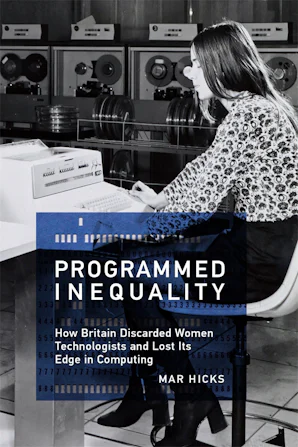
Programmed Inequality
In 1944, Britain led the world in electronic computing. By 1974, the British computer industry was all but extinct. What happened in the intervening thirty y...
Bringing experiments down to earth - Jack Stilgoe, 2026
A commentary on Thao Phan’s ‘Testing-in-the-wild: innovation nationalism and the colonial dynamics of new technology testbeds’.
Technology and Below-the-Line Labor in the Copyfight over Intellectual Property
Andrew Ross, Technology and Below-the-Line Labor in the Copyfight over Intellectual Property, American Quarterly, Vol. 58, No. 3, Rewiring the "Nation": The Place of Technology in American Studies (Sep., 2006), pp. 743-766
100 years of whatever this will be
What if all these weird tech trends actually add up to something? Last time, we explored why various bits of trendy technology are, in my o...
A People’s History of Tech
A collective storytelling project to build a more representative history that reflects the human impacts of technology.

The Matrix of Convivial Technology – Assessing technologies for degrowth
This article introduces the notion of convivial technology as a conceptual framework for technologies suitable for degrowth societies. This paper is i…
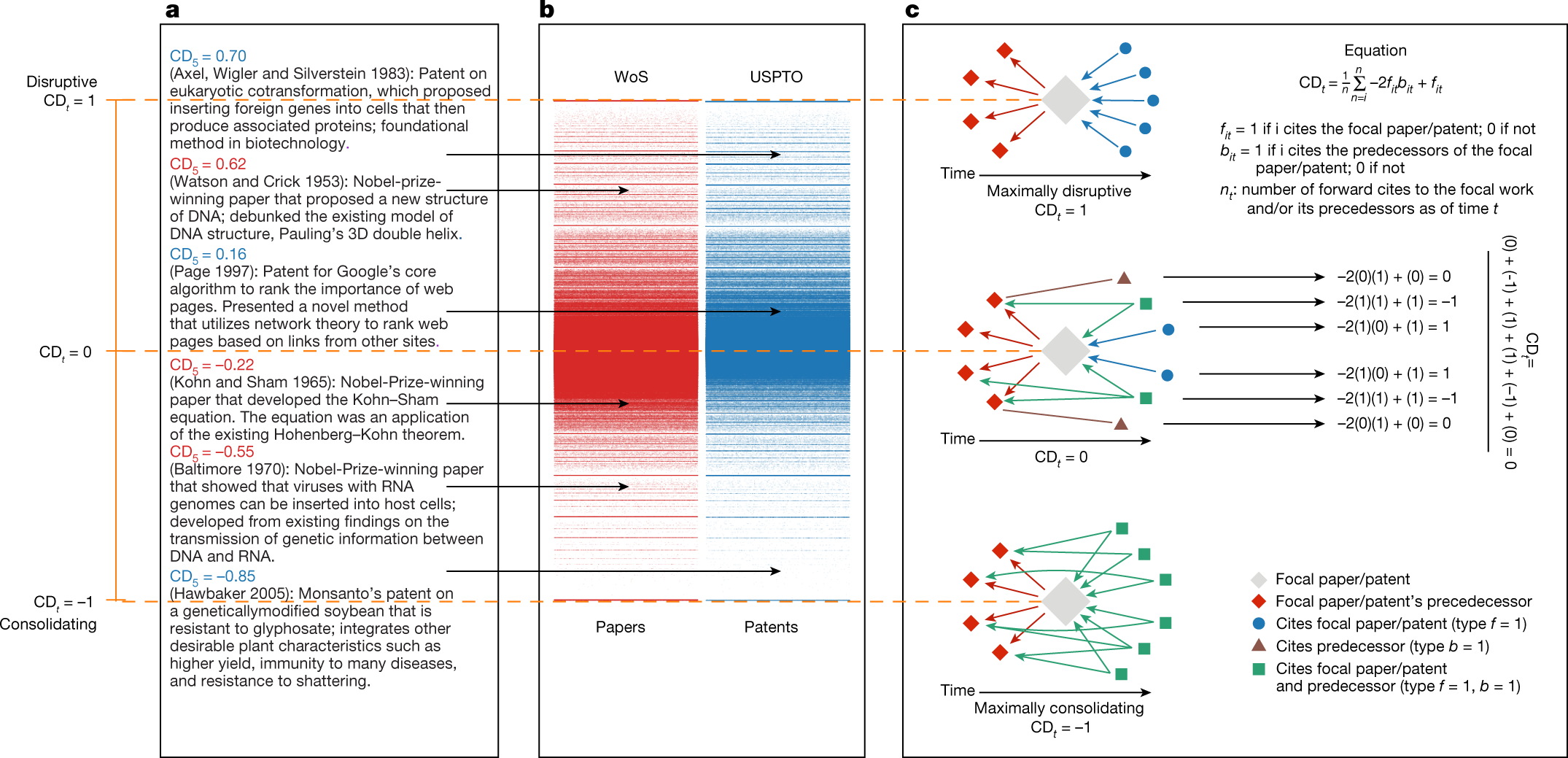
Papers and patents are becoming less disruptive over time
Theories of scientific and technological change view discovery and invention as endogenous processes1,2, wherein previous accumulated knowledge enables future progress by allowing researchers to, in Newton’s words, ‘stand on the shoulders of giants’3–7. Recent decades have witnessed exponential growth in the volume of new scientific and technological knowledge, thereby creating conditions that should be ripe for major advances8,9. Yet contrary to this view, studies suggest that progress is slowing in several major fields10,11. Here, we analyse these claims at scale across six decades, using data on 45 million papers and 3.9 million patents from six large-scale datasets, together with a new quantitative metric—the CD index12—that characterizes how papers and patents change networks of citations in science and technology. We find that papers and patents are increasingly less likely to break with the past in ways that push science and technology in new directions. This pattern holds universally across fields and is robust across multiple different citation- and text-based metrics1,13–17. Subsequently, we link this decline in disruptiveness to a narrowing in the use of previous knowledge, allowing us to reconcile the patterns we observe with the ‘shoulders of giants’ view. We find that the observed declines are unlikely to be driven by changes in the quality of published science, citation practices or field-specific factors. Overall, our results suggest that slowing rates of disruption may reflect a fundamental shift in the nature of science and technology.
Disaster, doubt, and the origins of hypertext
Hypertext and the World Wide Web are built on a complex network of ideas that originate in the military and ecological disasters of the short 20 th Century, 1914--1989, and in a world-spanning intellectual effort to prevent their recurrence. Though that effort now appears to have failed, and though the tragic story of the 20 th Century has not, it seems, concluded, we may learn profit by examining the concepts and ideals on which hypertext was built.
Disaster, doubt, and the origins of hypertext
Hypertext and the World Wide Web are built on a complex network of ideas that originate in the military and ecological disasters of the short 20 th Century, 1914--1989, and in a world-spanning intellectual effort to prevent their recurrence. Though that effort now appears to have failed, and though the tragic story of the 20 th Century has not, it seems, concluded, we may learn profit by examining the concepts and ideals on which hypertext was built.

The Rise of Industrial AI in America: Microfoundations of the Productivity J-curve(s)
Early AI adoption in U.S. manufacturing produced a J-curve pattern of short term productivity loss followed by medium term growth – though quite unevenly.

After Forty Years, Still No Silver Bullet
As always, technology can help with production. What’s scarce is orientation.

@lrepetto.bsky.social, Davide Cipullo, Edward Pinchbeck, & @jbietenbeck.bsky.social show that communities that lost many young men in WWI experienced persistent declines in subsequent innovation, especially in frontier technologies. cepr.org/voxeu/columns/war-and-lost-ge… #EconSky
