

With the use of video games as social spaces being observed for several years and the increased focus put on virtual social spaces due to the scarceness of physical social spaces in the last months, the concept of “spatial interfaces” is once again at the center of discussions. I want to add an alternative perspective to this, looking at the properties of physical spaces as metaphors, rather than models, for interfaces and exploring seven of them in more detail.
Screen As Room: An Architectural Perspective on User Interfaces — Christoph Locher · Interaction Designer
With the use of video games as social spaces being observed for several years and the increased focus put on virtual social spaces due to the scarceness of physical social spaces in the last months, the concept of “spatial interfaces” is once again at the center of discussions. I want to add an alternative perspective to this, looking at the properties of physical spaces as metaphors, rather than models, for interfaces and exploring seven of them in more detail.
Architecture and the Internet: Designing places in cyberspace
Cyberspace, as the information space is called, has become accessible in the past decade through the World Wide Web. And although it can only be experienced through the mediation of computers, it is quickly becoming an alternative stage for everyday economic, cultural, and other human activities. As such, there is a potential and a need to design it according to place–like principles. Making places for human inhabitation is, of course, what architects, landscape architects, and town planners have been doing in physical space for thousands of years. It is curious, therefore, that Cyberspace designers have not capitalized on the theories, experiences, and practices that have been guiding physical place–making. While most 3D environments closely mimic physical spaces, they are, by and large, devoid of the essential characteristics that differentiate a ‘place’ from mere ‘space.’ And only rarely are they sensitive to, and take advantage of, the peculiarities of Cyberspace. We believe that this state of affairs is temporary, characteristic of early adoption stages of new technologies. As the Web matures, and as it assumes more fully its role as a destination rather than as means of communication, there will be a growing need to design it according to place–making principles. By looking at physical architecture as a case study and metaphor for organizing space into meaningful places, this paper explores the possibility of organizing Cyberspace into spatial settings that not only afford social interaction, but, like physical places, also embody and express cultural values. At the same time, because Cyberspace lacks materiality, is free from physical constraints, and because it can only be ‘inhabited’ by proxy, these ‘places’ may not necessarily resemble their physical counterparts.
Make It So: Interaction Design Lessons from Science Fiction
Many designers enjoy the interfaces seen in science fiction films and television shows. Freed from the rigorous constraints of designing for real users, sci-fi production designers develop blue-sky interfaces that are inspiring, humorous, and even instructive. By carefully studying these “outsider” user interfaces, designers can derive lessons that make their real-world designs more cutting edge and successful

Spatial Communication in Level Design

History of The Graphical User Interface (GUI): A Wonderful Curse
Structural Analogies of User Interfaces with Belidor
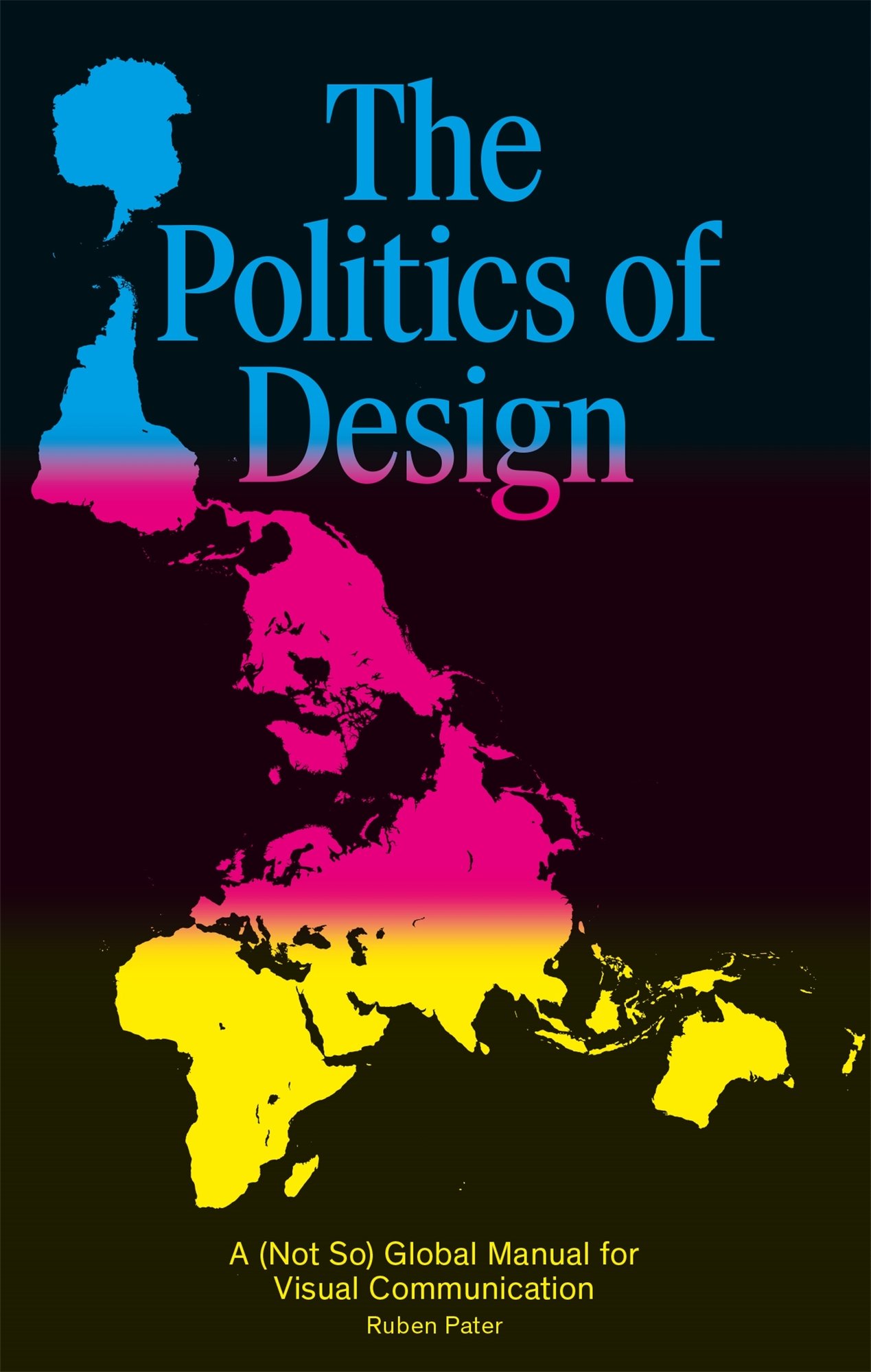
The Politics of Design: A (Not So) Global Design Manual for Visual Communication
A (Not So) Global Design Manual for Visual Communication
Resonite
A novel digital universe with infinite possibilities. Whether you resonate with people around the world in a casual conversation, playing games and socializing. Or you riff off each other when creating anything from art to programming complex games, you'll find your place here.
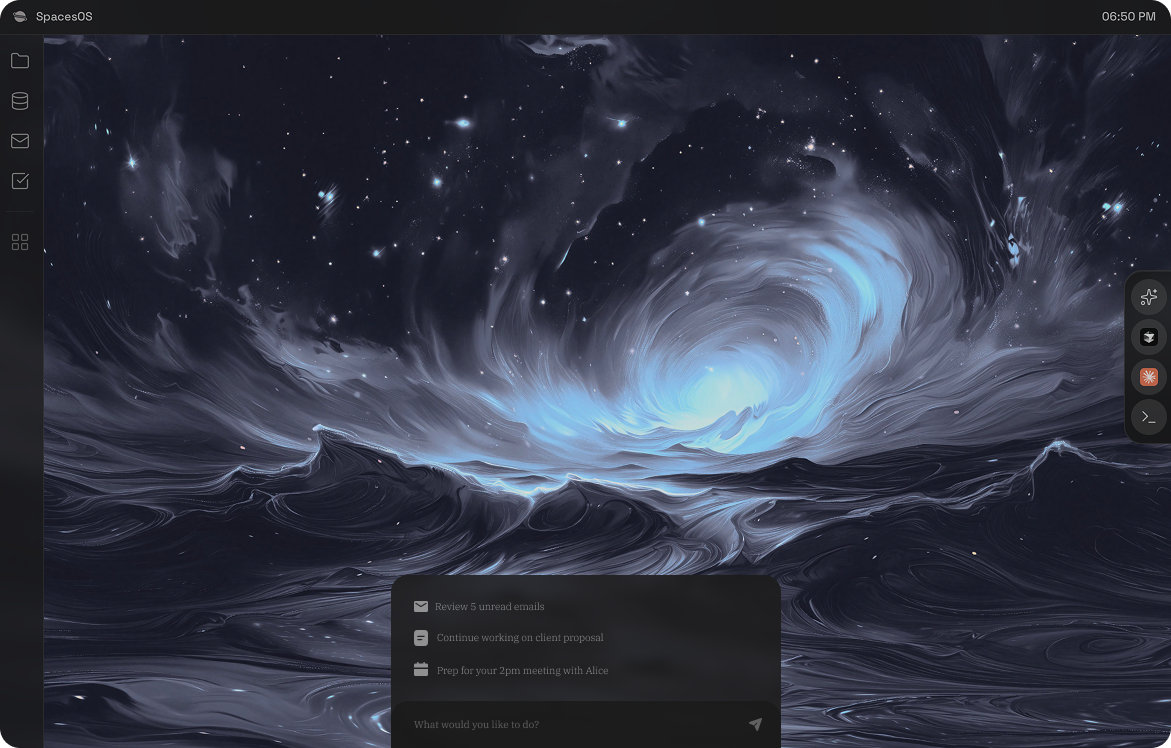
Spaces — Your Personal AI OS
A desktop where AI agents are first-class citizens. Local-first. AI-native.
Human-computer intra-action: a relational approach to digital media and technologies
The growing pervasiveness of digital technologies has exposed the entanglements of Human-Computer Interaction (HCI) with its surrounding context, from the immediate vicinity of interfaces to global issues. While often providing solutions to societal issues, interactive technologies also many times contribute to them. They impact and are impacted by the world, in a process of continuous mutual influence and co-constitution that raises important implications not only to user experience, effectiveness and efficiency, but also to ethics, social responsibility and environmental health. In this article, I draw on the new materialism notion of intra-action to propose a conceptual shift to a relational approach for HCI, which I refer to as Human-Computer Intra-Action (HCIA), capable of capturing from the outset the inherent relationships with the world that inform the design of interactive technology. To that end, I propose the notion of relationalities to reflect the synergies and antagonisms around those relationships, and discuss emerging notions of spatiality and temporality by considering the increasing hybridity of socio-technical engagements both in space (local versus remote) and in time (immediate versus stretched). Based on that, I propose a preliminary method for mapping intra-actions associated to interactive technologies, envisaged as a starting point to a relational take on their design process.

“The Door Problem”
Game design is one of those nebulous terms to people outside the game industry that’s about as clear as the “astrophysicist” job title is to me. It’s also my job, so I find myself explaining what game design means to a lot of people from different backgrounds, some of whom don’t know anything about games.
Digital Placemaking

What does it mean to make a digital space into a place?

Urp: a luminous-tangible workbench for urban planning and design
The Death of DeviantArt and the art-site shaped hole haunting the Internet - Multi-hyphenate

Building Digital Public Parks with Deepti Doshi

Thoughts on Cyberpositionality: The Construction of Digital Communities in Digital Spaces, Damien Patrick Williams
All Our Selves In One Basket
everest-pipkin.com