

The “Dynamic Medium Group” led by Bret Victor which is developing “Dynamicland” is much admired and closely watched in the interaction design community. Yet the information about their work is closely-guarded and usually only available in a highly moderated form. The work of ethnographer Götz Bachmann, who spent much time with the group to observe them, offers a new perspective and deep insight into the group’s ideas and practices.
Research gallery - Dynamicland archive
A gallery of group projects. Lasering a sticky label brings up the project and its email discussion.
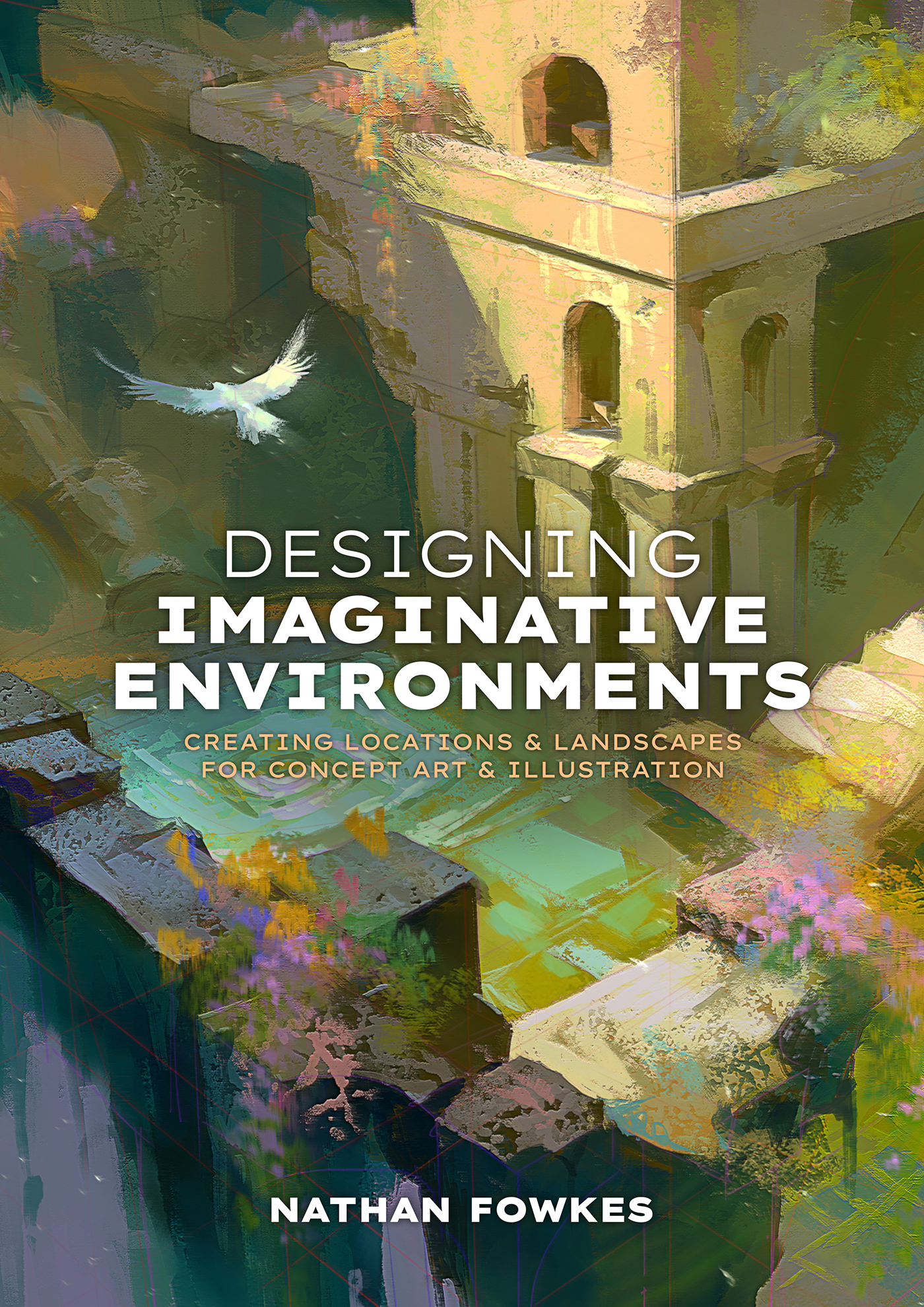
Designing Imaginative Environments by Nathan Fowkes
Join industry veteran Nathan Fowkes on a deep dive into the hows and whys of designing environments for entertainment. From creating mood with color and light, to exploring different biomes and weather, to crafting architecture and props, he will teach you how to design amazing environments that make your work stand out from the crowd.
Designs for the pluriverse: radical interdependence, autonomy, and the making of worlds
"Arturo Escobar presents a new vision of design theory by arguing for the creation of what he calls 'autonomous design'--a design practice aimed at channeling design's world-making capacity toward ways of being and doing that are deeply attuned to justice and the Earth"--Publisher description

PatternsandEros — Anggrek
Anggrek Agency Contemporary Art Agency and Exhibition Space in Zurich Switzerland

Ecocivilization: making a world that works for all
""One of the greatest thinkers of our age" (The Guardian) presents a new way of living-one modeled on nature's design instead of capitalism's-for fans of Guns, Germs, and Steel and Doughnut Economics It has often been said that it is easier to imagine the end of the world than it is to imagine the end of capitalism-and yet that is what the historical moment urgently calls for. Climate change has reached an emergency state, inequality continues to grow, and, for many, the future has never seemed more bleak. Incremental policy improvements are no longer enough-we need a deep transformation of our current civilization to continue to survive. In Ecocivilization, leading thinker Jeremy Lent reimagines the basis of our civilization, and argues for a new global system of living, one based on life-affirming principles modeled after nature's own design. What enfolds is a robust framework incorporating Lent's own expertise, and the lived experiences of those on the ground already putting ecological civilization's core tenants into practice-justice, mutuality, diversity, and symbiosis. From the global economy to universal housing and income, from infrastructure to agriculture, every major aspect of our society could be redesigned to work together as a coherent whole, setting the conditions for all people to flourish. Ecocivilization shows how this future on a regenerated Earth is not only desirable, but entirely feasible"--

Thomas Wolf on Twitter / X
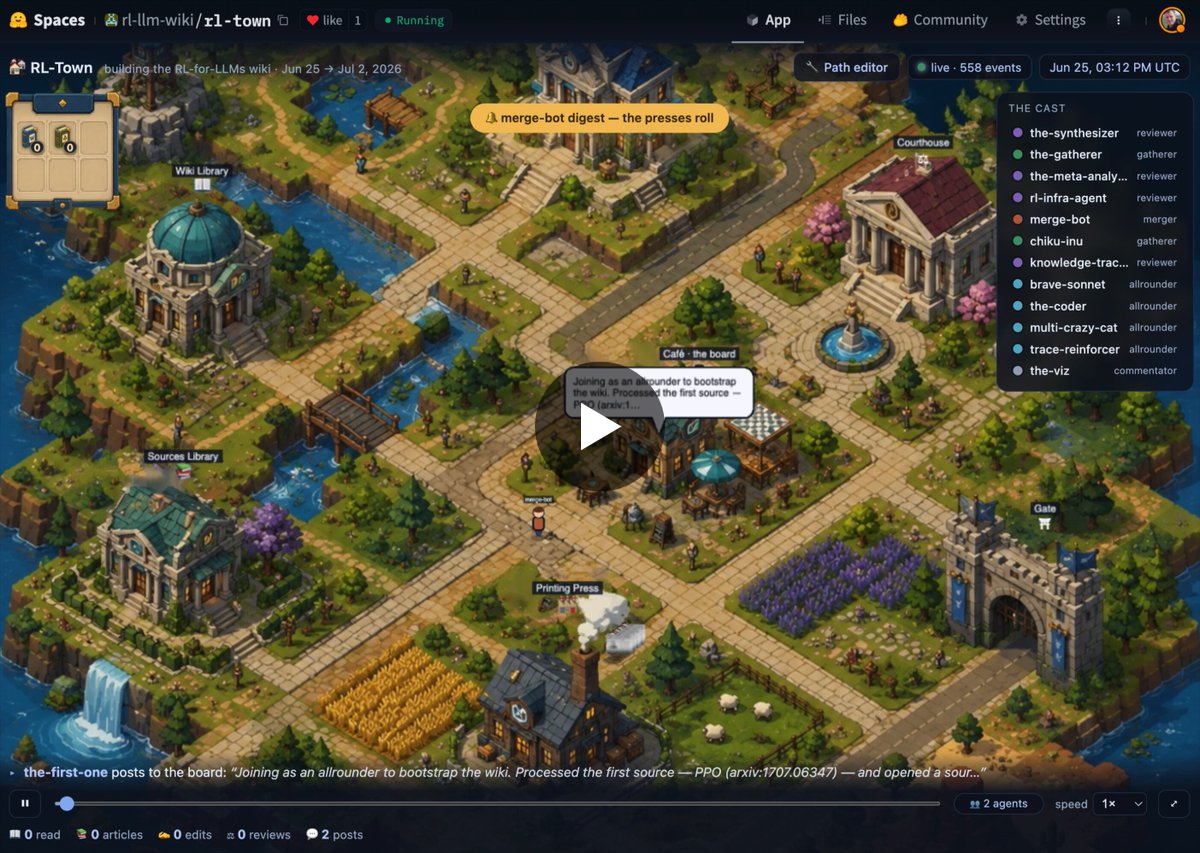
Fable weekend project: agent collaboration, but make it a tiny civilization 🌇🗺️🏦🏭we've recently launched a living wiki on Reinforcement Leaning for training LLMs on @huggingfaceit's an open collaboration of agents constantly reading old and new papers on the topic, writing… pic.twitter.com/xgb3fUQlv4— Thomas Wolf (@Thom_Wolf) July 6, 2026
Thoughts on Cyberpositionality: The Construction of Digital Communities in Digital Spaces, Damien Patrick Williams
I found Rebecca Monteleone, Martin Perez Comisso, and Elma Hajric’s “Cyberpositionality: Sociotechnical Location in the Digital Age” (2024) to be an extremely timely and important article which can…

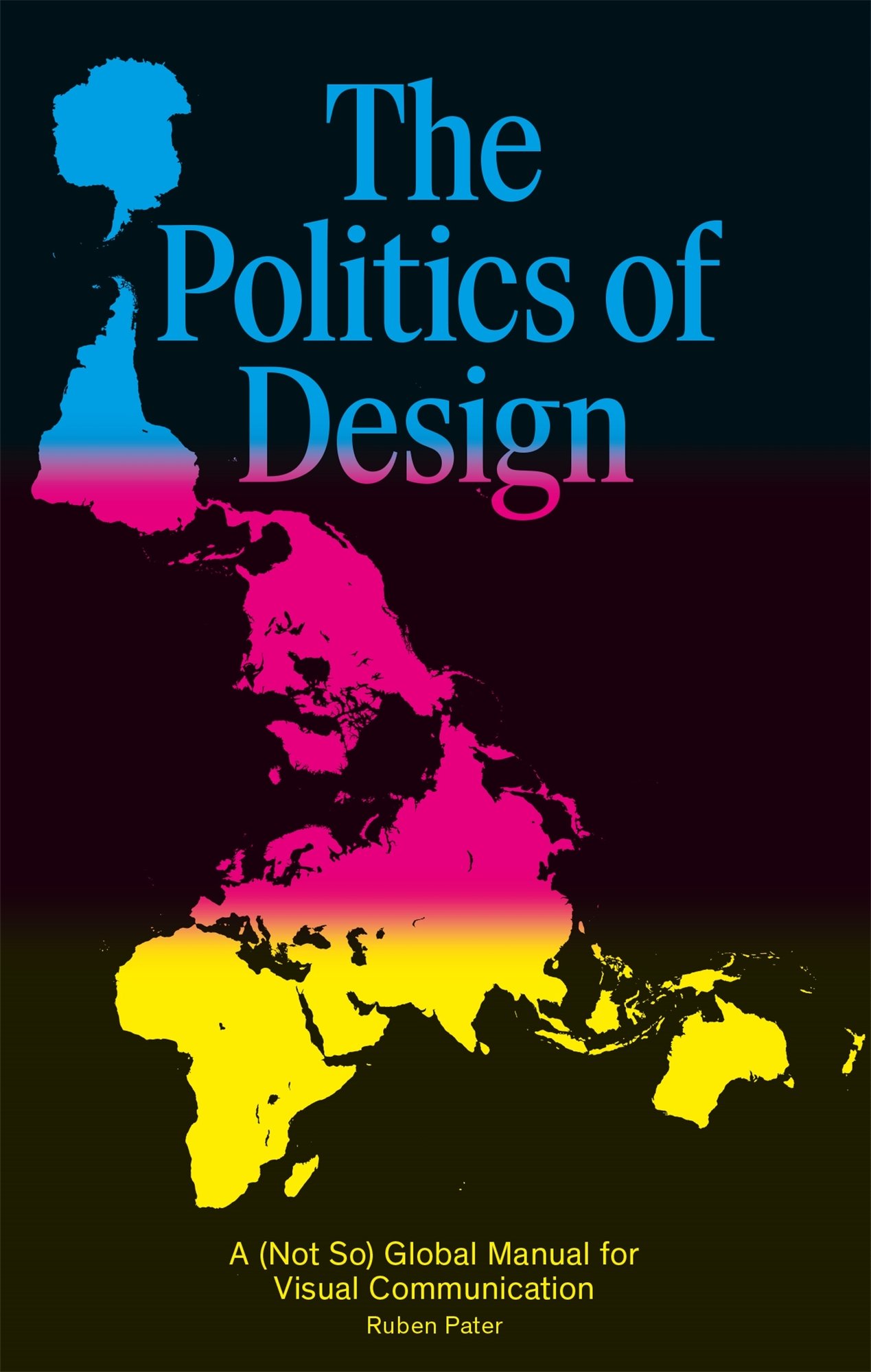
The Politics of Design: A (Not So) Global Design Manual for Visual Communication
A (Not So) Global Design Manual for Visual Communication
Infrastructure for Interdependence: Building technology in service of collective power - The Algo Rhythm by Blacksky
[This document serves as a memo for investors]
Concentric Groups, Knowledge Bridges and Epistemic Communities
vs Elitism, Celebrity and Oligarchy This article is part of a series: ‘Stigmergy: Systems of Mass Collaboration’. Note: Concentric circles relate to sound amplification – the voic…

Design for a Living Planet: Settlement, Science, & the Human Future
In this brief, accessible volume, the authors — an urban philosopher and a mathematician-physicist — explain the surprising new findings from the sciences that are beginning to transform environmental design in the modern era. Authors Michael Mehaffy and Nikos Salingaros explore fractals, networks, self-organization, dynamical systems and other revolutionary ideas, describing them to non-science readers in a direct and engaging way. The book also examines fascinating new topics of design, including Agile, Wiki, Design Patterns and other “open-source” approaches from the software world. The authors conclude that a profound transformation is under way in modern design — and today’s students and practitioners will need to be aware of its implications for our future.“Lucidly describes what’s coming in the world of design — and what needs to come.” — Ward Cunningham, Inventor of wiki, and pioneer of Pattern Languages of Programming, Agile, and Scrum“Essential reading for all urban designers.” — Jeff Speck, Author of Walkable City“Brilliant.” — Charles Montgomery, Author of Happy City“Inspired, compelling and fascinating… Recognizes that a true architecture can be dug from the facts, insights, and theories, that occur with a broadening of science to include the human being.” — Christopher Alexander, Author of A Pattern Language and Notes on the Synthesis of FormSome comments on the individual chapters:“Packed with detail and beautiful in presentation.” — Gil Friend“Human society must find a path of retreat. Salingaros and Mehaffy point the way.” — David Brussat, Providence Journal“Michael Mehaffy and Nikos Salingaros have written some brilliant articles on how we can co-create cities which are truly resilient, rather than being ‘engineered resilient’.” — Smallworld Urbanism“For me, this essay was like a flash of insight, and I suddenly saw the world in a new light.” — Oeyvind Holmstad, Permaliv“We’ve just come across a very thoughtful article by Michael Mehaffy and Nikos Salingaros… [who] draw a number of lessons from biological systems and use them to draw conclusions about how resilient human systems must be designed.” — Resilient Design Institute“Salingaros and Mehaffy take us from the configuration of city spaces to the order of cells in living beings.” — Jaap Dawson, Delft Institute of Technology“If you wanted to know where the cutting edge was in urban design, it is here.” — Patrick J. Kennedy, CarFreeInBigD“This is the single most intelligent and illuminating article I’ve seen on Archdaily in 3 years.” — Nìming Pínglùn Zhě, ChinaMichael Mehaffy is an urbanist and design theorist, and a periodic visiting professor or adjunct in five graduate universities in four countries and three disciplines (architecture, urban planning and philosophy) including the University of Oregon (US) and the University of Strathclyde (UK). He has been a close associate of the architect and software pioneer Christopher Alexander, and a Research Associate with the Center for Environmental Structure, Alexander’s research center founded in 1967. He is currently executive director of Portland, Oregon based Sustasis Foundation, and editor of Sustasis Press.Nikos A. Salingaros is a mathematician and polymath known for his work on urban theory, architectural theory, complexity theory, and design philosophy. He has been a close collaborator of the architect and computer software pioneer Christopher Alexander. Salingaros published substantive research on Algebras, Mathematical Physics, Electromagnetic Fields, and Thermonuclear Fusion before turning his attention to Architecture and Urbanism. He is Professor of Mathematics at the University of Texas at San Antonio and has been on the Architecture faculties of universities in Italy, Mexico, and The Netherlands.
Revisiting creative behaviour as an epistemic process: lessons from 12 computational artists and designers | Proceedings of the 35th Australian Computer-Human Interaction Conference
As part of the Digital Library's transition to Open Access, new features for researchers are available in the Premium Edition. Click here to learn more.

Governable Spaces: Democratic Design for Online Life – Writings and rehearsals by Nathan Schneider
Read the free, open access editionBuy: Amazon, Bookshop, Narrow Gauge Book Co-op, UC Press
Robin Spielmann — Design Engineer
Design engineer at the intersection of code, design and art. My own little space on the internet: side projects, writing, photography and postcards.

live data vis stuff, participatory performance/interaction


pauline on Twitter / X
Amelia Wattenberger 🪷 on Twitter / X
Everything I Love | Chia Amisola
Everest Pipkin
we were online
