

I don’t want to criticize people who seem to like the situation… Instead I’ll focus on people who are trying to do something other than be a number, even as they are subsumed by the new reality of number supremacy.
Kill Math
The power to understand and predict the quantities of the world should not be restricted to those with a freakish knack for manipulating abstract symbols.
Mathematicians still don’t know the fastest way to multiply numbers
A 23-year-old student overturned an ancient conjecture about one of math’s simplest operations


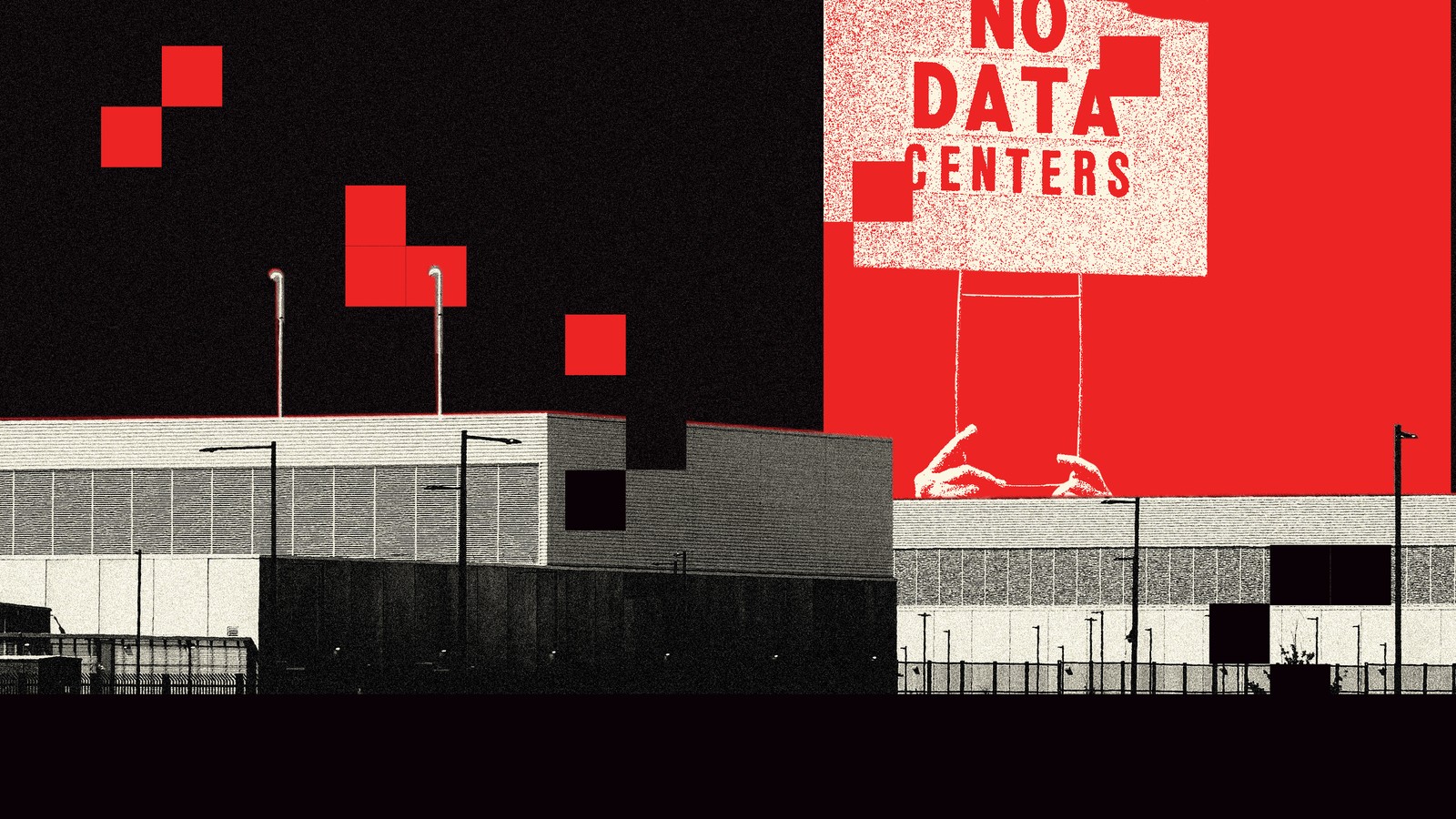
The Data-Center Debate Is Divorced From the Facts
All those scary numbers aren’t what they seem.
Grade 3 » Operations & Algebraic Thinking » Represent and solve problems involving multiplication and division. » 1 | Common Core State Standards Initiative
Interpret products of whole numbers, e.g., interpret 5 × 7 as the total number of objects in 5 groups of 7 objects each. For example, describe a context in which a total number of objects can be expressed as 5 × 7.
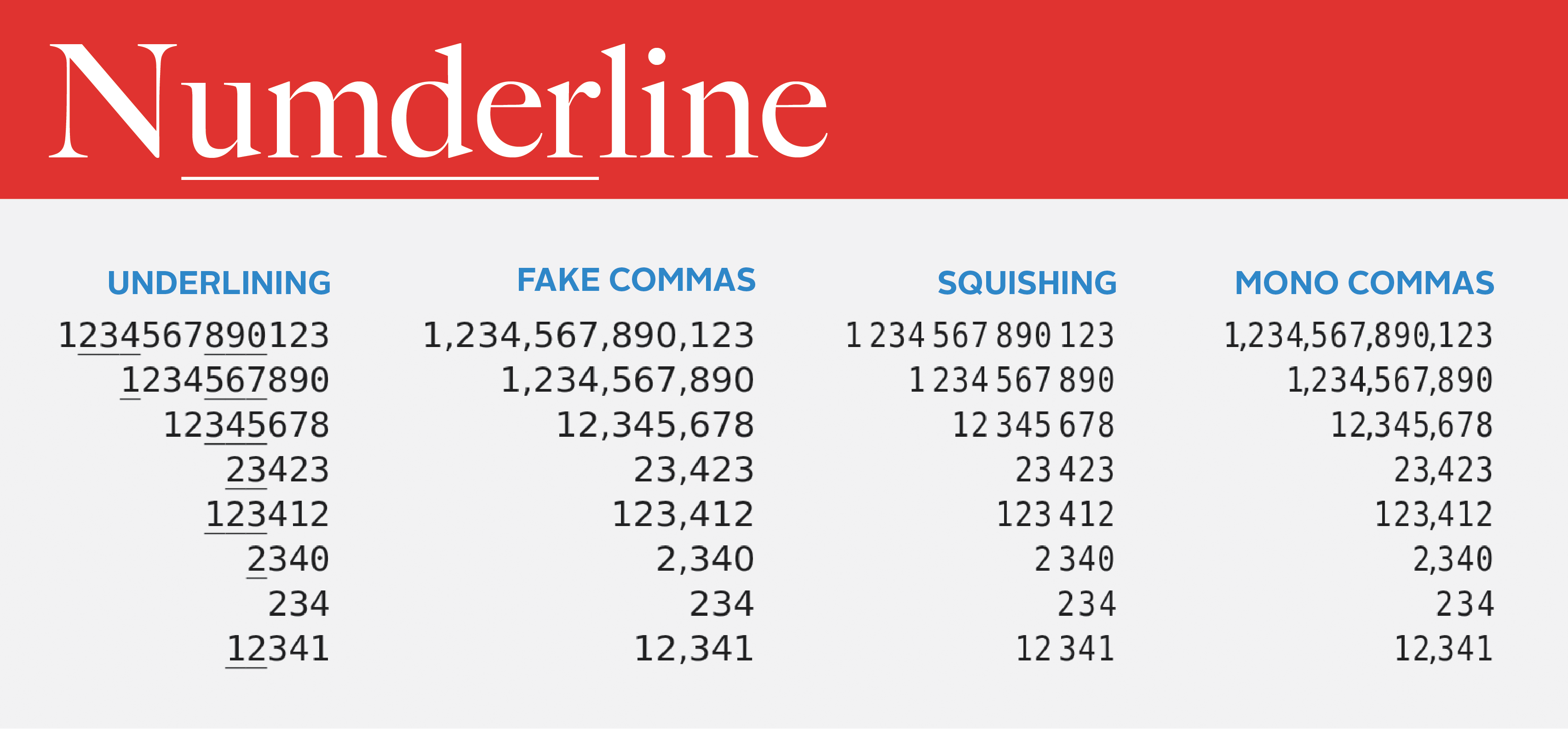
Commas in big numbers everywhere: An OpenType adventure
My job involves a lot of staring at large numbers, mostly latencies innanoseconds, and picking out magnitudes like microseconds. I noticedmyself constantly c...
Narcissistic number
In number theory, a narcissistic number[1][2] (also known as a pluperfect digital invariant (PPDI),[3] an Armstrong number[4] (after Michael F. Armstrong)[5] or a plus perfect number)[6] in a given number base b {\displaystyle b} is a number that is the sum of its own digits each raised to the power of the number of digits.
Misperception of Exponential Growth: Are People Aware of Their Errors?
Previous research shows that individuals make systematic errors when judging exponential growth, which has harmful effects for their financial well-being. This study analyzes how far individuals are aware of their errors and how these errors are shaped by arithmetic and conceptual problems. Whereas arithmetic problems could be overcome using computational assistance like a pocket calculator, this is not the case for conceptual problems, a term we use to subsume other error drivers like a general misunderstanding of exponential growth or overwhelming task complexity. In an incentivized experiment, we find that participants strongly overestimate the accuracy of their intuitive judgment. At the same time, their willingness to pay for arithmetic assistance is too high on average, often much above the actual benefits a calculator provides. Using a multitier system of task complexity we can show that the willingness to pay for arithmetic assistance is hardly related to its benefits, indicating that participants do not really understand how the interplay of arithmetic and conceptual problems shape their errors in exponential growth tasks. Our findings are relevant for policymaking and financial advisory practice and can help to design effective approaches to mitigate the detrimental effects of misperceived exponential growth.

Stop the AI Build-Out, Start the Fight
Across the country, working-class communities are rising up against Big Tech’s data center boom. A moratorium isn’t the end goal — it’s the only leverage we have to force real democratic control over artificial intelligence.

Implicit Feudalism — Rushkoff Archive
Too many of us think it doesn’t matter when a platform like X/Twitter has a single, all-powerful owner. Most of our online worlds are simply run by what we hope are benevolent dictators. After all, we figure, if we don’t like what they’re doing or allowing, we can just leave, right? But in most cases we’re just jumping from one rich dude’s idea for how the world should be to another rich dude’s idea for how the world should be.
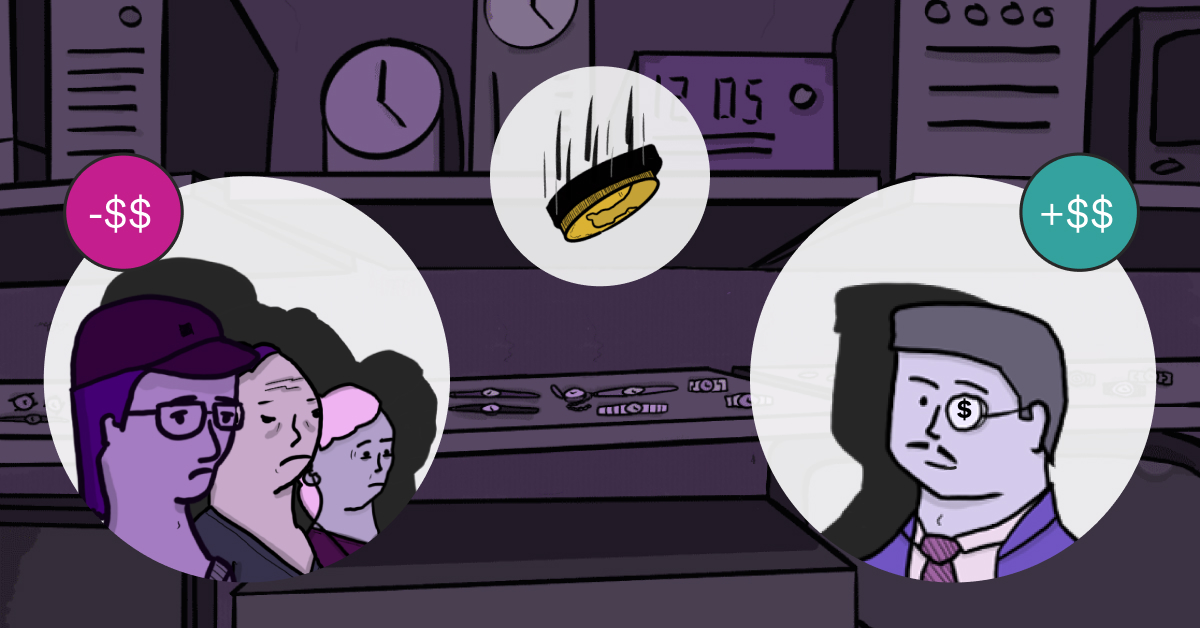
Why the super rich are inevitable
Why some mathematicians argue the economy is designed to create a few super rich people – unless we stop it.
Akin's Laws of Spacecraft Design
1. Engineering is done with numbers. Analysis without numbers is only an opinion.
Subscribe to Strength In Numbers
Independent, data-driven analysis of politics, public opinion polls, and elections. From author, journalist, and pollster G. Elliott Morris. Click to read Strength In Numbers, by G. Elliott Morris, a Substack publication with tens of thousands of subscribers.
when everyone has a different explanation of why the bad numbers are not that bad or why the small number is still very important, the simplest explanation is that the bad number is actually just indeed very bad

Christopher Mims
So I guess either Bluesky becomes a nonprofit or we all start sharing our Threads handles on here…?
I know we care about numbers, and it's not that they're not worth looking at, but maybe Bluesky not having explosive growth is good for the Atmosphere that's building beyond it, and patience is more important than the first attempt gathering every community possible in its early years. Long game.

Anuj Ahooja
The open social web is the long game
Black people aren't monolithic nor should one's impression of where they reside on the Internet. Here, I make the case that focusing on numbers is a failure to put quality over quantity and ignores benefits for more curated online Black communities.

'There's More Black People Over There': False Equivalences in Platform Distribution and Gimmicks of Platform Capitalism
www.jacky.wtf
