


When Humans Are No Longer Born Human by Zhu Yixuan
Clarkesworld Magazine - Science Fiction & Fantasy
The Animator and the Glazer by Ju Chu, translated by S. Qiouyi Lu

Clarkesworld Magazine - Science Fiction & Fantasy
To Walk This Distant Shore with You by A.D. Sui
Clarkesworld Magazine - Science Fiction & Fantasy
Better Living Through Algorithms by Naomi Kritzer

《X+Y: A Brilliant Young Mind》 Review
A story about self-discovery and the wider world.
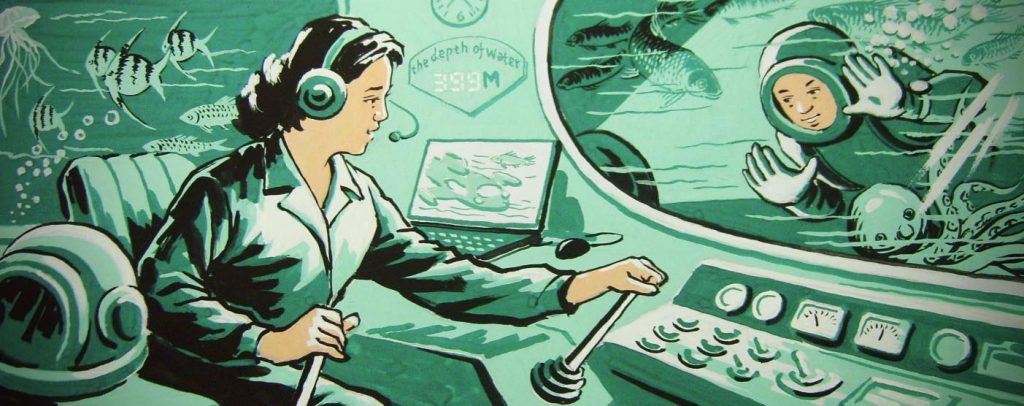
The strange, secretive world of North Korean science fiction
Unusual and often breathtaking, the genre is relatively unknown in the West.
The Secret of Our Success: How Culture Is Driving Human Evolution, Domesticating Our Species, and Making Us Smarter
How our collective intelligence has helped us to evolve and prosperHumans are a puzzling species. On the one hand, we struggle to survive on our own in the wild, often failing to overcome even basic challenges, like obtaining food, building shelters, or avoiding predators. On the other hand, human groups have produced ingenious technologies, sophisticated languages, and complex institutions that have permitted us to successfully expand into a vast range of diverse environments. What has enabled us to dominate the globe, more than any other species, while remaining virtually helpless as lone individuals? This book shows that the secret of our success lies not in our innate intelligence, but in our collective brains—on the ability of human groups to socially interconnect and learn from one another over generations.Drawing insights from lost European explorers, clever chimpanzees, mobile hunter-gatherers, neuroscientific findings, ancient bones, and the human genome, Joseph Henrich demonstrates how our collective brains have propelled our species' genetic evolution and shaped our biology. Our early capacities for learning from others produced many cultural innovations, such as fire, cooking, water containers, plant knowledge, and projectile weapons, which in turn drove the expansion of our brains and altered our physiology, anatomy, and psychology in crucial ways. Later on, some collective brains generated and recombined powerful concepts, such as the lever, wheel, screw, and writing, while also creating the institutions that continue to alter our motivations and perceptions. Henrich shows how our genetics and biology are inextricably interwoven with cultural evolution, and how culture-gene interactions launched our species on an extraordinary evolutionary trajectory.Tracking clues from our ancient past to the present, The Secret of Our Success explores how the evolution of both our cultural and social natures produce a collective intelligence that explains both our species' immense success and the origins of human uniqueness.
How are we writing the future of humanity?
Consciousness spinning

Geoff Shullenberger on Twitter / X
Günther Anders's "The Obsolescence of the Human," which was finally translated into English last year, is one of the books I most often recommend these days. Robert Bellafiore has written a lucid introduction to Anders's ever more relevant thought: https://t.co/MWiwSMeq6u— Geoff Shullenberger (@g_shullenberger) September 10, 2026
The Transformative Potential of Asian Philosophies | Epoché Magazine
A free online philosophy magazine, delivered monthly
David Mitchell on Earthsea – a rival to Tolkien and George RR Martin
In A Wizard of Earthsea, published in 1968, Usula K Le Guin created one of literature’s most fully formed fantasy worlds. The author of Cloud Atlas and The Bone Clocks recalls how he fell under its spell

Review: ‘Chaos Monkeys’ Is a Guide to the Spirit of Silicon Valley (Published 2016)
Underneath the braggadocio and evisceration of professional nemeses in Antonio García Martinez’s book lies the beating heart of a formidable teacher.

