

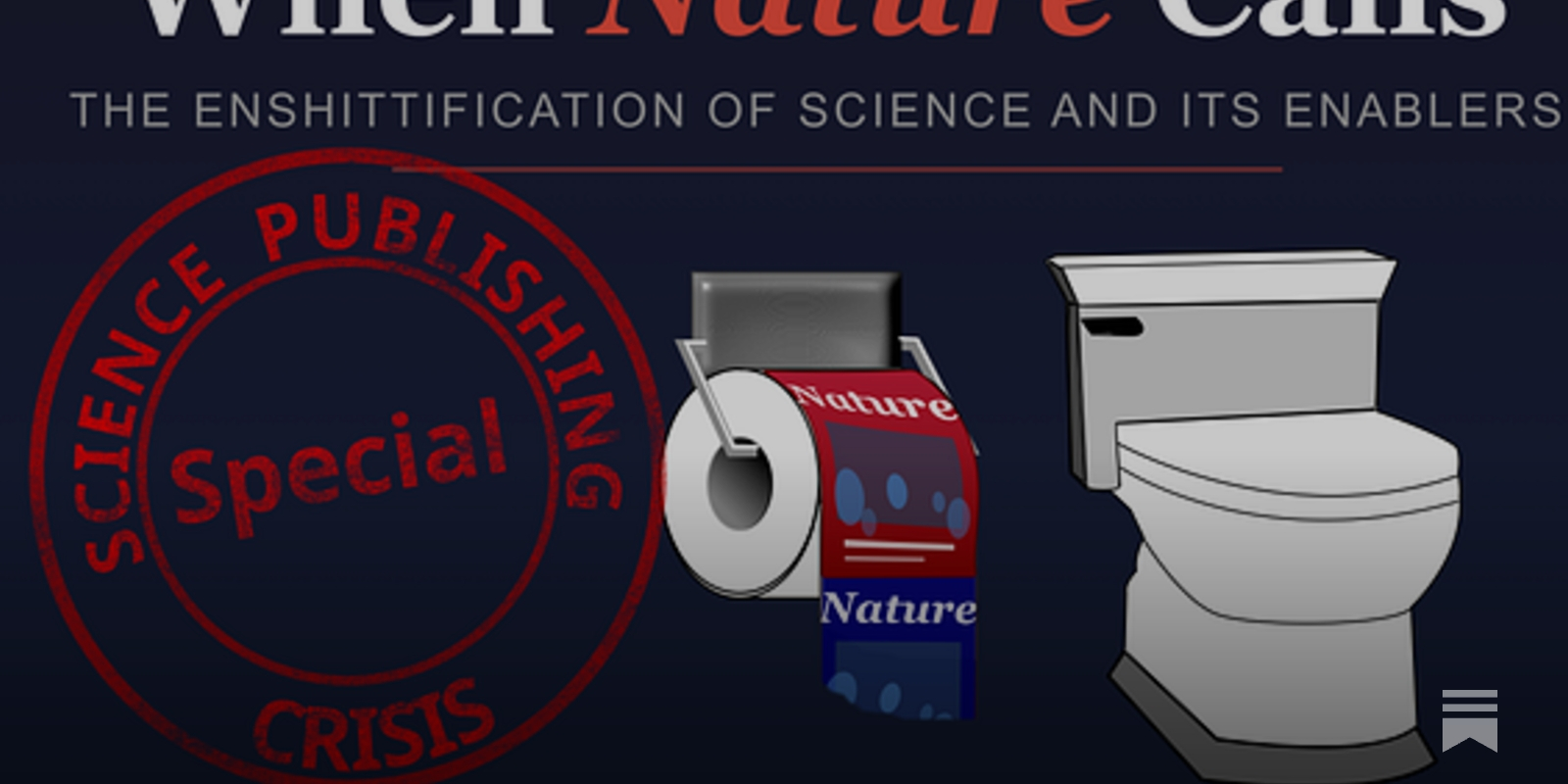
Proof-of-work papers, policy laundering, and the collapse of self-correction
Guest Post — When Errors Become Consensus: Science’s Self-Correction Can No Longer Keep Up - The Scholarly Kitchen
From 19th-century beef tea to paper mills and generative AI, the challenge is no longer detection alone; it is preventing bad claims from becoming embedded knowledge.
Guest post: If you’re going to critique science, be scientific about it
Loren K. Mell Editor’s note: This post responds to a Feb. 13 article in The Atlantic, “The Scientific Literature Can’t Save Us Now,” written by Retraction Watch cofounders Adam Marcus and Ivan Oran…
Correction of scientific literature: Too little, too late!
The Coronavirus Disease 2019 (COVID-19) pandemic has highlighted the limitations of the current scientific publication system, in which serious post-publication concerns are often addressed too slowly to be effective. In this Perspective, we offer suggestions to improve academia’s willingness and ability to correct errors in an appropriate time frame.
“Paging Dr. Fraud”: The Fake Publishers That Are Ruining Science
For years, spurious journals have proliferated online, promising academic credibility in exchange for cash.
Prompting Science Report 4: Playing Pretend: Expert Personas Don't Improve Factual Accuracy
<span> <p><span>This is the fourth in a series of short reports that help business, education, and policy leaders understand the technical details of working w

Prompting Science Report 4: Playing Pretend: Expert Personas Don't Improve Factual Accuracy
<span> <p><span>This is the fourth in a series of short reports that help business, education, and policy leaders understand the technical details of working w
Are Scientific Papers Bad?
So maybe now we can agree that having an unchecked research integrity militia who unfortunately has the ear of the press and increasingly that of the the publishers, but who fiercely rejects any… | Ioana A. Cristea
So maybe now we can agree that having an unchecked research integrity militia who unfortunately has the ear of the press and increasingly that of the the publishers, but who fiercely rejects any minimal ethics or code of conduct, is a (growing) problem? Also, that 1. problems have to be investigated before deciding they are are legitimate and serious; 2. this investigation is not social media, blogs and the press; 3. this investigation should not be on the front page of journals and Retraction Watch; 4. there are degrees of seriousness and some things can just be corrected or are simply not very consequential (no, it's not a house of bricks where we have to check every brick, that's a dumb analogy), so being absolutely hysterical and overdramatic about any lie, inaccuracy or mistake is purposeful at worse and should be ignored at best and 5. it is not only unnecessary, but harmful, to also go into other, non-academic things the person did or does to complete "investigations" that you (press, sleuth, blogger, etc) do not have the tools and information to do completely and accurately (this fixation would be called harassment in the before times). Others will justly write about what the institutions did or did not do, but what I want to say is that we really should end it with the blank credit we give to any and all allegations that come from the establish research integrity truth fighters.

Enshittification | The Paper Pilot
The Paper Pilot's digital garden of thoughts on philosophy, politics, and sociology
Scientific sleuths come in from the cold
Research integrity investigators are starting to organize, but the field, and the people, remain idiosyncratic

Why the Stockholm Declaration will never work
Abstract The Stockholm Declaration calls for a moral reformation of scientific publishing—replacing commercial publishers with scholar-led journals, rewarding quality over quantity and instituting independent oversight. While noble in spirit, it fundamentally misdiagnoses the disease. The crisis of science stems not from paper mills or profit motives but from systemic incentives that reward volume, novelty and prestige over validity and reliability. Non-profit ownership will not neutralize the prestige economy, sleuth-led policing cannot scale, and ‘integrity registries’ would merely replace metrics with surveillance. True reform requires rebuilding the publishing infrastructure as a public utility: publicly funded, free to publish and read, and stripped of hierarchy and financial incentives.

Science has been in a “replication crisis” for a decade. Have we learned anything?
Bad papers are still published. But some other things might be getting better.

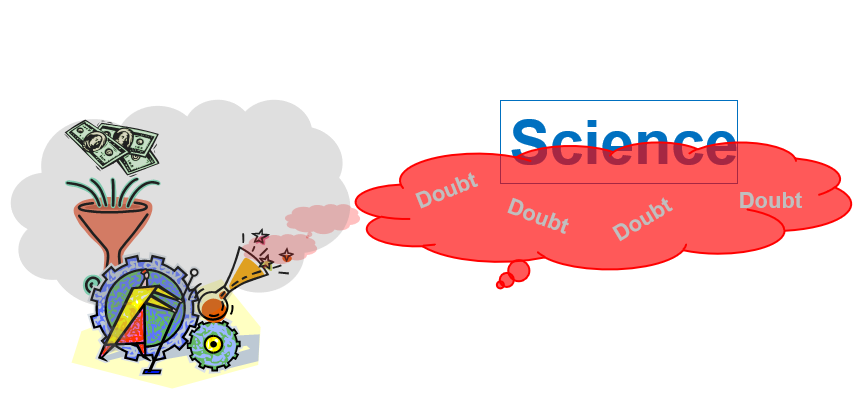
Dark-Moneyed Denialists Are Running 'Fixing Science' Symposium of Doubt
The “Fixing Science” symposium, which is hosted by the National Association of Scholars and kicks off today in Oakland, California, includes credible speakers who want to improve some areas of science hurt by the use of poor statistical methods or making irreproducible claims. Unfortunately, they are outnumbered by people who have often cast doubt on mainstream climate, environmental, and health sciences. For […]
The Drain of Scientific Publishing
The domination of scientific publishing in the Global North by major commercial publishers is harmful to science. We need the most powerful members of the research community, funders, governments and Universities, to lead the drive to re-communalise publishing to serve science not the market.

I am often told that public critique of published articles must also solve the issues found. I think this frequently enforced requirement hinders scientific self-correction. Blog post: mmmdata.io/posts/2025/07/critique-does-n…
We've written about how social media companies and other technology firms manipulate the scientific record in their favor. In our revisions, we will need to address how they have captured the state department to literally prevent researchers who criticize them FROM EVEN ENTERING THE COUNTRY.

Jameel Jaffer
This wild document is the basis for the State Department's decision to cancel the visas and green cards of tech researchers who study the social media platforms and of tech regulators who enforce privacy and transparency laws. Disclosed to us last night in @thecoalition.bsky.social v. Rubio.

