

Harnessing the power of Complex Adaptive Systems - At Coasys, our inspiration comes from the universal principles of systems theory observed in nature—from the intricate balance of biological ecosystems to the psychological interplay within individuals. Our core technology, ADAM, brings this profound understanding of interconnected systems into the digital realm, providing an evolvable substrate for social systems to emerge and evolve and scale freely.
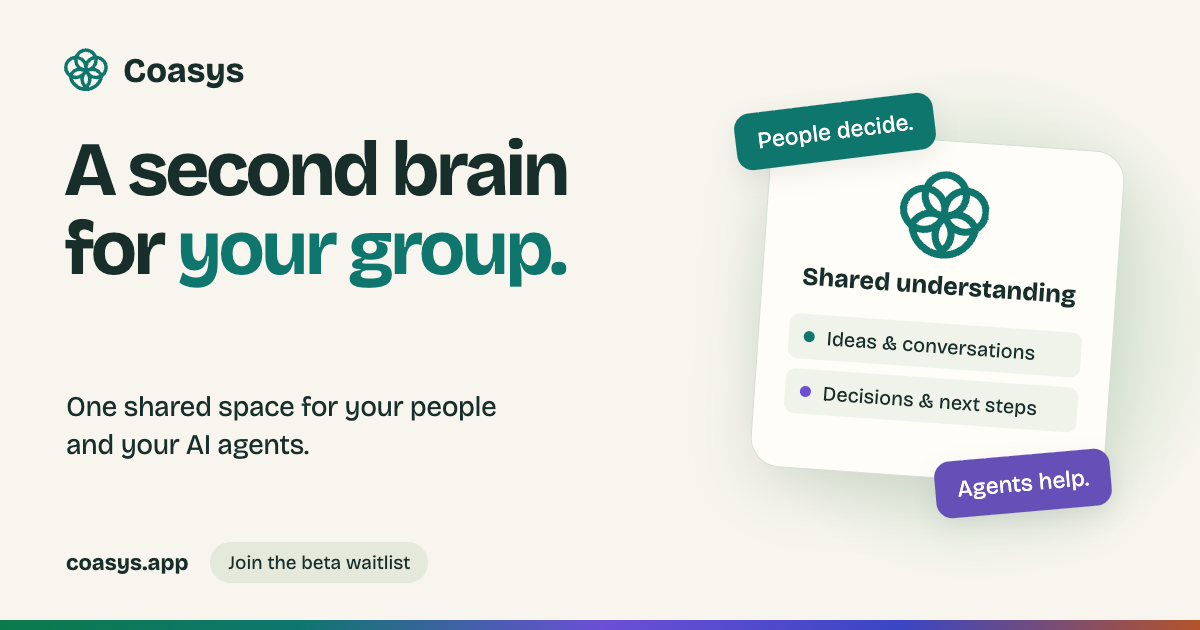
Coasys — a second brain for your group
One shared space for your people and your AI agents. People decide. Agents help. Join the beta waitlist.
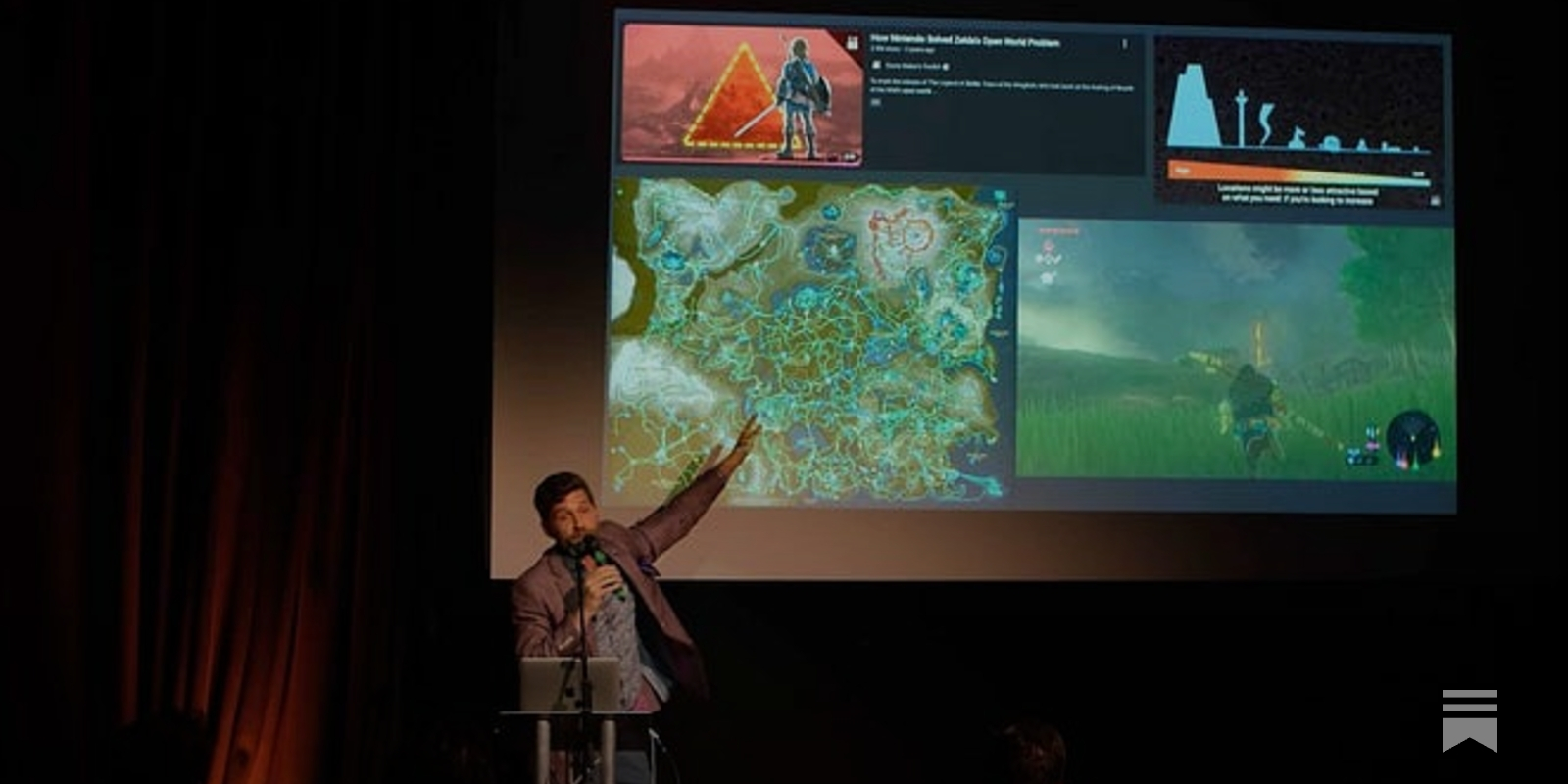
🌿 Foraging in High-Dimensional Data
My talk from the Diverse Intelligences Summer Institute 2025 on how we can draw from thinking in complex systems science and game design to heal our relationship to the Web.
Systems of Global Governance in the Era of Human-Machine Convergence
Technology is increasingly shaping our social structures and is becoming a driving force in altering human biology. Besides, human activities already proved to have a significant impact on the Earth system which in turn generates complex feedback loops between social and ecological systems. Furthermore, since our species evolved relatively fast from small groups of hunter-gatherers to large and technology-intensive urban agglomerations, it is not a surprise that the major institutions of human society are no longer fit to cope with the present complexity. In this note we draw foundational parallelisms between neurophysiological systems and ICT-enabled social systems, discussing how frameworks rooted in biology and physics could provide heuristic value in the design of evolutionary systems relevant to politics and economics. In this regard we highlight how the governance of emerging technology (i.e. nanotechnology, biotechnology, information technology, and cognitive science), and the one of climate change both presently confront us with a number of connected challenges. In particular: historically high level of inequality; the co-existence of growing multipolar cultural systems in an unprecedentedly connected world; the unlikely reaching of the institutional agreements required to deviate abnormal trajectories of development. We argue that wise general solutions to such interrelated issues should embed the deep understanding of how to elicit mutual incentives in the socio-economic subsystems of Earth system in order to jointly concur to a global utility function (e.g. avoiding the reach of planetary boundaries and widespread social unrest). We leave some open questions on how techno-social systems can effectively learn and adapt with respect to our understanding of geopolitical complexity.

Emergence: the connected lives of ants, brains, cities and software
In the tradition of Being Digital and The Tipping Point…

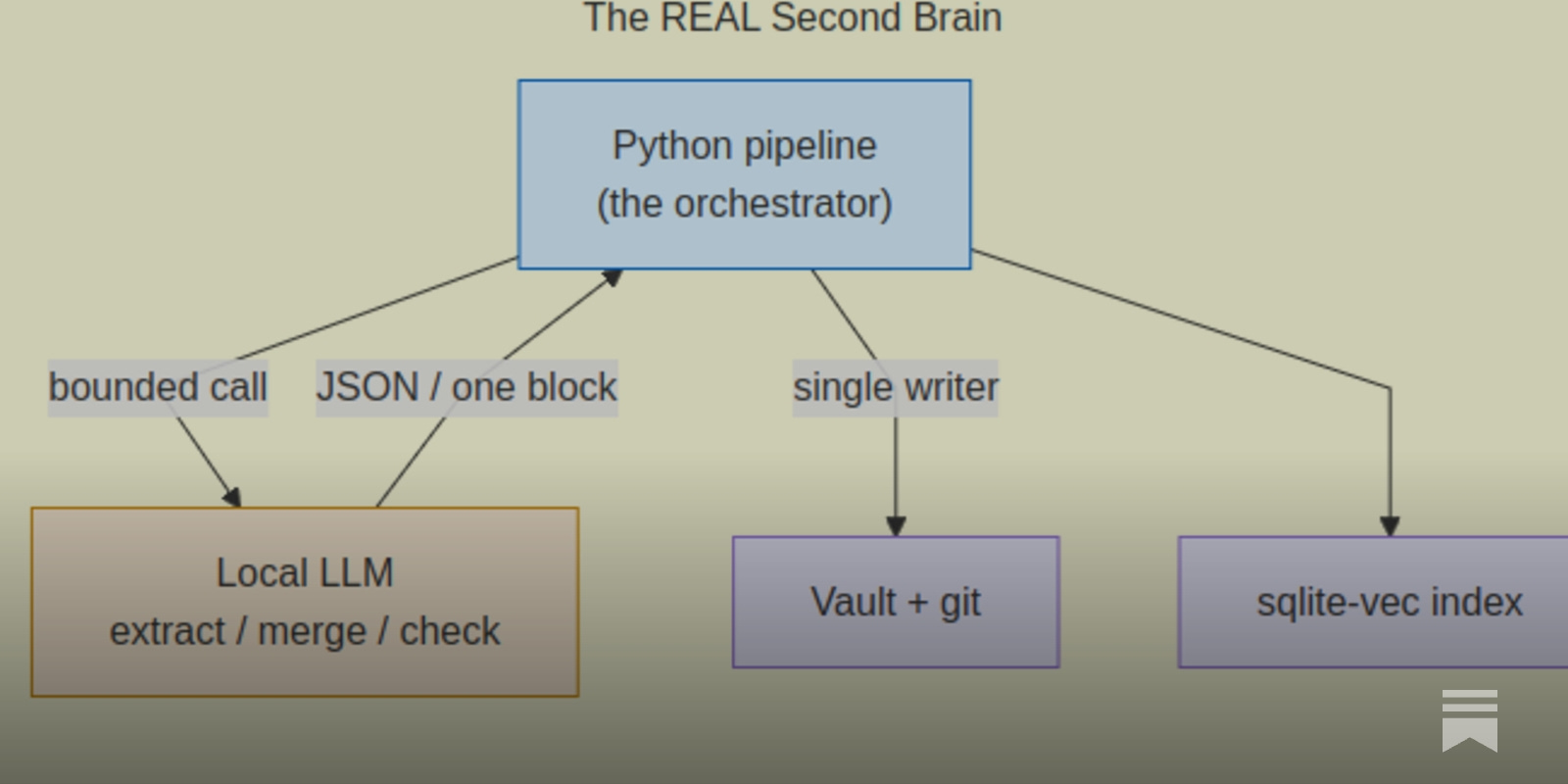
The REAL Second Brain: an autonomous, self-hosted knowledge wiki that runs on cheap local models
How I turned Karpathy's "LLM wiki" sketch into a system that actually maintains itself — no frontier API, no human in the loop, nothing leaving my LAN.
Co-Creation: Systems Thinking Beyond the Machine
Complexity thinking is all the rage — in the arts and sciences. Yet, there are two different strands of thinking about complexity, which are often confounded. The first comes from cybernetics, focussing on control in complex situations. The second is ecological, aiming at sustainable participation in a reality beyond control. Their difference rests on a fundamental distinction: is complexity rooted in feedback regulation or collective co-creation? While feedback remains mechanistic, co-creation generates new spaces of possibilities. We need it to understand life and its evolution. And it empowers us to rewrite our future, to escape our mechanistic cage without abandoning scientific rigor. In this paper, we illustrate how we implement these powerful yet abstract principles through our artistic and philosophical practice.
NETWORKED MINDS: Where human evolution is heading
by Dirk Helbing [1] Having studied the technological and social forces shaping our societies, we are now turning to the evolutionary for...

COLLECTIVE INTELLIGENCE | Edge.org
As all the people and computers on our planet get more and more closely connected, it's becoming increasingly useful to think of all the people and computers on the planet as a kind of global brain.
Functional Synchronization: The Emergence of Coordinated Activity in Human Systems
The topical landscape of psychology is highly compartmentalized, with distinct phenomena explained and investigated with recourse to theories and methods that have little in common. Our aim in this article is to identify a basic set of principles ...

The Systems Thinker
The Systems Thinker works to catalyze effective change by expanding the use of systems approaches. All articles are available free of charge in an effort to expose as wide of audience as possible. Browse, share with others, save your favorites and tell others about this valuable resource!
Semble: Collective knowledge foraging in trail-based social networks beyond feeds (Lightning Talk)
Constellation Systems, Inc | LinkedIn
Constellation Systems, Inc | 618 followers on LinkedIn. Building foundation models of human state for AI, neurotech, and anything that interacts with people. | A new platform for human-centered intelligence. Multimodal models, novel data, and a long-term vision. We’ll share more when the time is right.
Lab Notes #008: Semble Connections - Cosmik Labs
A new way to organize, curate and discover content in the open social web
Lab Notes #008: Semble Connections - Cosmik Labs
A new way to organize, curate and discover content in the open social web
1. New preprint resolving a conundrum in systems neuroscience with an AI scientist, and humans Reilly Tilbury, Dabin Kwon, @haydari.bsky.social, @jacobmratliff.bsky.social, @bio-emergent.bsky.social, @carandinilab.net, @kevinjmiller.bsky.social, @neurokim.bsky.social biorxiv.org/content/10.1101/2025.11.12.68…

Characterizing neuronal population geometry with AI equation discovery
www.biorxiv.org