

Description loading…
Temporal Logic
Broadly construed, Temporal Logic covers all formalapproaches to representing and reasoning about time and temporalinformation. More narrowly, it usually refers to the modal-logic styleapproach introduced by Arthur Prior in the 1950s under the nameTense Logic and subsequently developed further by manylogicians and computer scientists. Temporal Logic has been widely usedas a formalism for clarifying philosophical issues about time, as aframework for defining the semantics of temporal expressions innatural language, as a language for encoding temporal knowledge inartificial intelligence, and as a tool for specification andverification of computer programs and systems.
dynamic abstractions
We will have our first reading group on February 28th! Visit the reading group page for details!
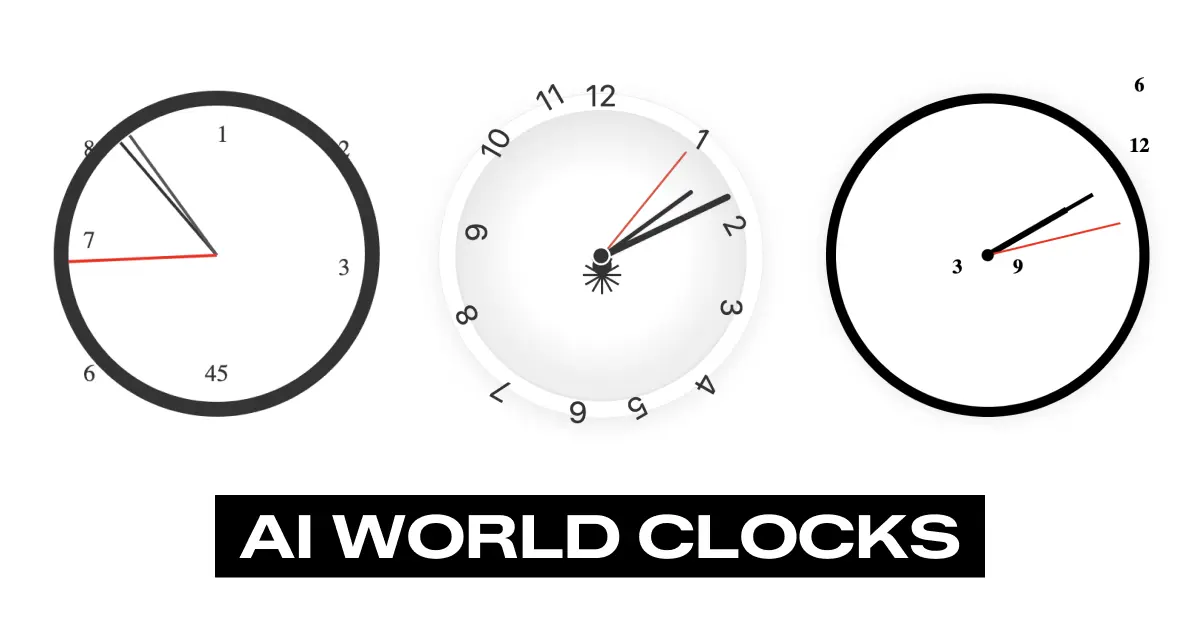
AI World Clocks
The current time as rendered by 9 different AI models. By Brian Moore.
ggtime: A Grammar of Temporal Graphics
Visualizing changes over time is fundamental to learning from the past and anticipating the future. However, temporal semantics can be complicated, and existing visualization tools often struggle to accurately represent these complexities. It is common to use bespoke plot helper functions designed to produce specific graphics, due to the absence of flexible general tools that respect temporal semantics. We address this problem by proposing a grammar of temporal graphics, and an associated software implementation, 'ggtime', that encodes temporal semantics into a declarative grammar for visualizing temporal data. The grammar introduces new composable elements that support visualization across linear, cyclical, quasi-cyclical, and other granularities; standardization of irregular durations; and alignment of time points across different granularities and time zones. It is designed for interoperability with other semantic variables, allowing navigation across the space of visualizations while preserving temporal semantics.

Temporal: The 9-Year Journey to Fix Time in JavaScript
JavaScript's Date object has been a source of bugs for three decades. Temporal, which just reached Stage 4, is a modern replacement with immutable types, first-class time zone and calendar support, and nanosecond precision. This is the story of how Bloomberg, Igalia, and the TC39 community spent nine years turning an idea into a shipping standard.

nettime: The #Refresh Action Manifesto
[Date Prev] [Date Next] [Thread Prev] [Thread Next] [Date Index] [Thread Index]
Izabella Kaminska on Twitter / X
The problem of our time is not merely information overload. It is that the time required to construct a coherent understanding of reality is becoming longer than the time during which that understanding remains valid.— Izabella Kaminska (@izakaminska) October 16, 2026
Inference Time Memory Module | Research | Tiles
Simple inference-time memory module that treats memory management as a series of LLM calls and agent loops over a markdown-based file tree.
Beyond Chat: Bringing Models to the Canvas • Lu Wilson • GOTO 2025
Composing Time: Compositional Async in Solid 2.0
Sᴜɴʀɪsᴇ Oᴀᴛʜ 十 Tʜᴇ Sʏʟʟᴀʙᴜꜱ (ORI) - CC0 on Twitter / X
It is significant that the passage of time involves the continuous transfer of data from one timestamp to another.— Sᴜɴʀɪsᴇ Oᴀᴛʜ 十 Tʜᴇ Sʏʟʟᴀʙᴜꜱ (ORI) - CC0 (@sunriseoath) September 23, 2026
Utkarsh on Twitter / X
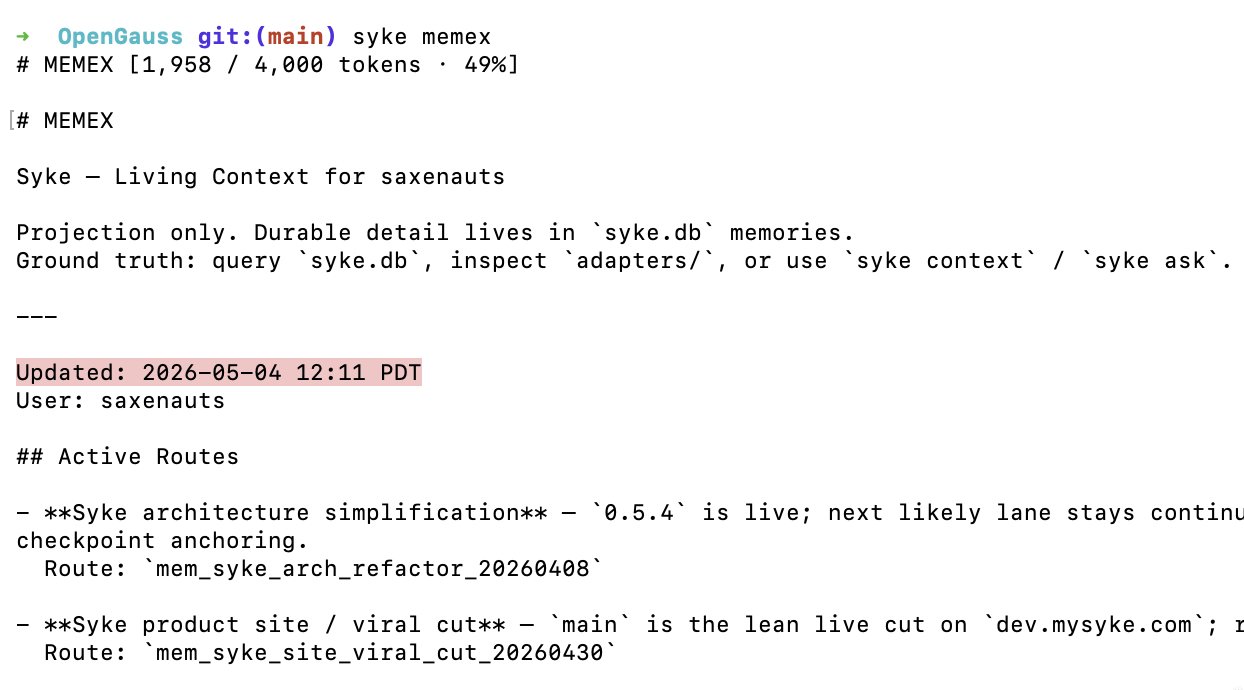
Another reason why you want an ambient memory agent is TIME. Your other coding agents understand time differently depending on who or which company writes them. Your machine however should live and breathe with you in your timeline. With Claude, I often find myself begging… pic.twitter.com/XVAvzciplY— Utkarsh (@saxenauts) May 4, 2026
The Daily Planet #123: Deep Time Impermanence - The Daily Planet
What I'm building? - Cavu Reader - Pardy Time DevLog
Why I'm building an online ereader
An update on leap seconds – Tony Finch
It has been a couple of years since my previous blog post about leap seconds, though I have been tweeting on the topic fairly frequently: see my page on date, time, and leap seconds for an index of threads. But Twitter now seems a lot less likely to stick around, so I’ll aim to collect more of my thinking-out-loud here on my blog.
Temporal logic with "Until", functional reactive programming with processes, and concrete process categories
As part of the Digital Library's transition to Open Access, new features for researchers are available in the Premium Edition. Click here to learn more.
