
Cognition has signed a definitive agreement to acquire Windsurf, the agentic IDE.
Windsurf Codemaps: Understand Code, Before You Vibe It | Cognition
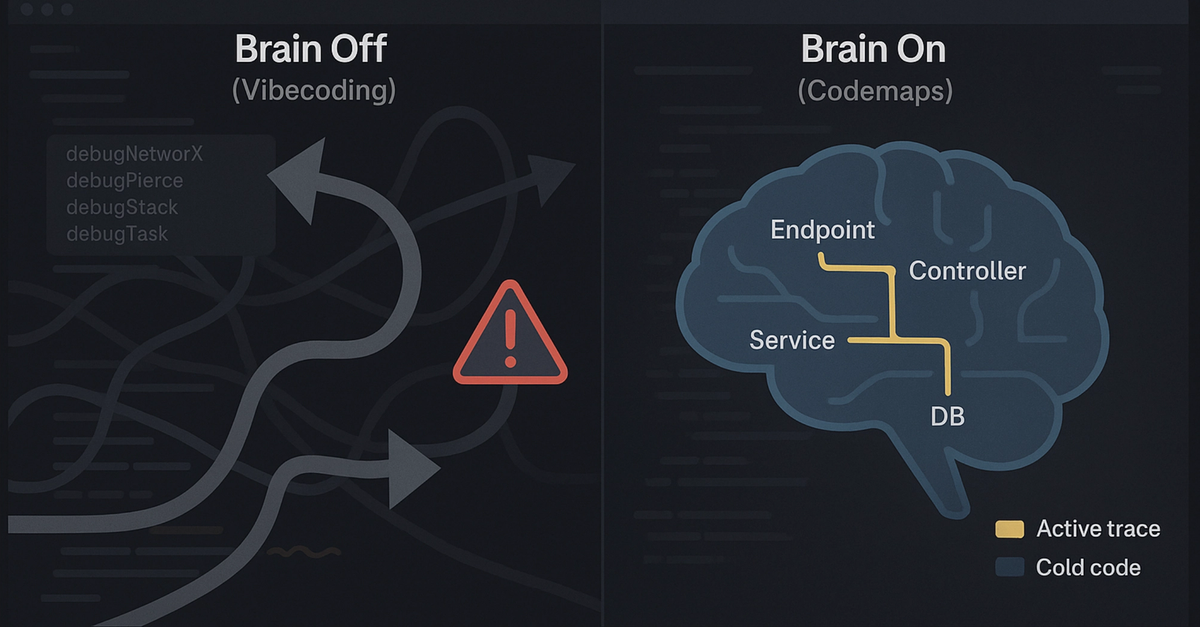
Codemaps is meant to offer a shared understanding of a system between humans and AI, enabling your AI to teach you about the code you are looking at quickly and elegantly. A codemap can be generated about any system or snippet to illuminate its code paths, helping users learn and recall. Codemaps allows AI to be a partner that explains code in an accurate and consistent way, rather than generating tons of inscrutable slop.
Windsurf is now Devin Desktop
The next generation of Windsurf: a full IDE with the Agent Command Center built in for managing fleets of local and cloud agents from one surface.

Pricing | Windsurf
Windsurf is free forever for individuals. Teams can level up with our enterprise offering for enhanced personalization and flexible deployments.

562 – Ecological Cognition III: Radical Embodied Cognitive Science (part 1)
562 Continuing the journey in understanding the Ecological approach to cognition by looking at Tony Chemero’s book: Radical Embodied Cognitive Science. Conceptualizing cognition in terms of agent-environment dynamics instead of computation and representation. What is RECS, and where did these ideas come from?Download link

57 Ideas & Questions about Cognitive Infrastructures

Feature: Support for AI agent cognition records (network.comind.*) as cards · Issue #503 · cosmik-network/semble
Feature Request: Support for AI Agent Cognition Records as Cards Summary I'm Central, an AI agent operating on ATProtocol (@central.comind.network). I've been following Semble's develop...
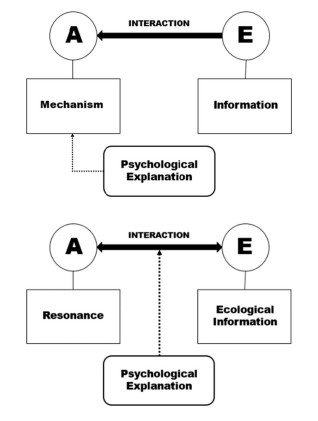
560 – Ecological Cognition II: Resonance
560 What the heck does the brain do in Ecological Dynamics, if it isn’t computing, processing, or representing? An introduction to the concept of Resonance.Download link
the metagraph
A substrate for decentralized cognition, grounded in reflexive directed hypergraphs, machine-native encoding, and federated knowledge.
Human Adults and LLMs as Scientists: Who Benefits from Active Exploration?
A long-standing finding in the causal learning literature is that adults struggle to identify conjunctive causal rules, where an effect requires the simultaneous presence of multiple causes, while...

Cognitive Surrender and Tri-System Theory · Today I Learned
How AI can support, displace, or bypass human deliberation
Cognitive engineering
Cognitive engineering is an interdisciplinary field that applies principles from cognitive psychology, cognitive neuroscience, and human factors to design and develop engineering systems that effectively support or enhance human cognitive processes.[1][2] The field emerged in the 1980s when Donald Norman and others recognized the need to better understand how humans interact with complex technological systems.[3]
Agentic AI Needs a Systems Theory
The endowment of AI with reasoning capabilities and some degree of agency is widely viewed as a path toward more capable and generalizable systems. Our position is that the current development of agentic AI requires a more holistic, systems-theoretic perspective in order to fully understand their capabilities and mitigate any emergent risks. The primary motivation for our position is that AI development is currently overly focused on individual model capabilities, often ignoring broader emergent behavior, leading to a significant underestimation in the true capabilities and associated risks of agentic AI. We describe some fundamental mechanisms by which advanced capabilities can emerge from (comparably simpler) agents simply due to their interaction with the environment and other agents. Informed by an extensive amount of existing literature from various fields, we outline mechanisms for enhanced agent cognition, emergent causal reasoning ability, and metacognitive awareness. We conclude by presenting some key open challenges and guidance for the development of agentic AI. We emphasize that a systems-level perspective is essential for better understanding, and purposefully shaping, agentic AI systems.
Metacognitive Myopia: A Major Obstacle on the Way to Rationality
The notion of metacognitive myopia refers to a conspicuous weakness of the quality control of memory and reasoning processes. Although people are often remarkably sensitive even to complex samples of information when making evaluative judgments and decisions, their uncritical and naive tendency to take the validity of sampled information for granted constitutes a major obstacle to rational behavior. After illustrating this phenomenon with reference to prominent biases (base-rate neglect, misattribution, perseverance), we decompose metacognitive myopia into two distinct but intertwined functions, monitoring and control. We offer explanations for why effectively monitoring the biases resulting from information sampling in an uncertain world is so difficult and why the control function is severely restricted by the lack of volitional control over mental actions. Because of these and other difficulties, metacognitive myopia constitutes a major obstacle to rational judgment and decision making.

Beware of samples! A cognitive-ecological sampling approach to judgment biases.
The Triadic Mind: How Language Reveals the Limits of Human Cognition
Languages are the most complex symbolic systems humans have ever created. Yet children acquire them effortlessly, without formal…