Slow thoughts on fast tech.
Scott Jenson – Exploring the world beyond mobile
Fast AI requires slow thinking The current Silicon Valley flex is trading notes on your favorite new AI tools over lunch. Each week brings another one to explore. Some of these tools are very impressive; I’ve been able to reply to someone with an alternative UI design in less than a minute, and they were […]
On Programming with Agents
From the Zed Blog: Agents handle typing so we can focus on thinking.
AI, I tried to love you – Writings and rehearsals by Nathan Schneider
Among my peers who study the cultures and economies surrounding technology, I often find myself more tech-positive than most. On the whole I like computers, like the internet, and like in general the emergent human creativity that these things have enabled and revealed. A source of my appreciation is that I expend a lot of effort on the practice of “slow computing,” which is to say, choosing tools and technical communities that I can feel in right relationship with. I tend to approach new socio-technologies (like gig economies, blockchains, and social media) not from a perspective of why is this so bad? so much as asking how could we do this right?
Has AI Changed Work Forever? Not Really... | Cal Newport
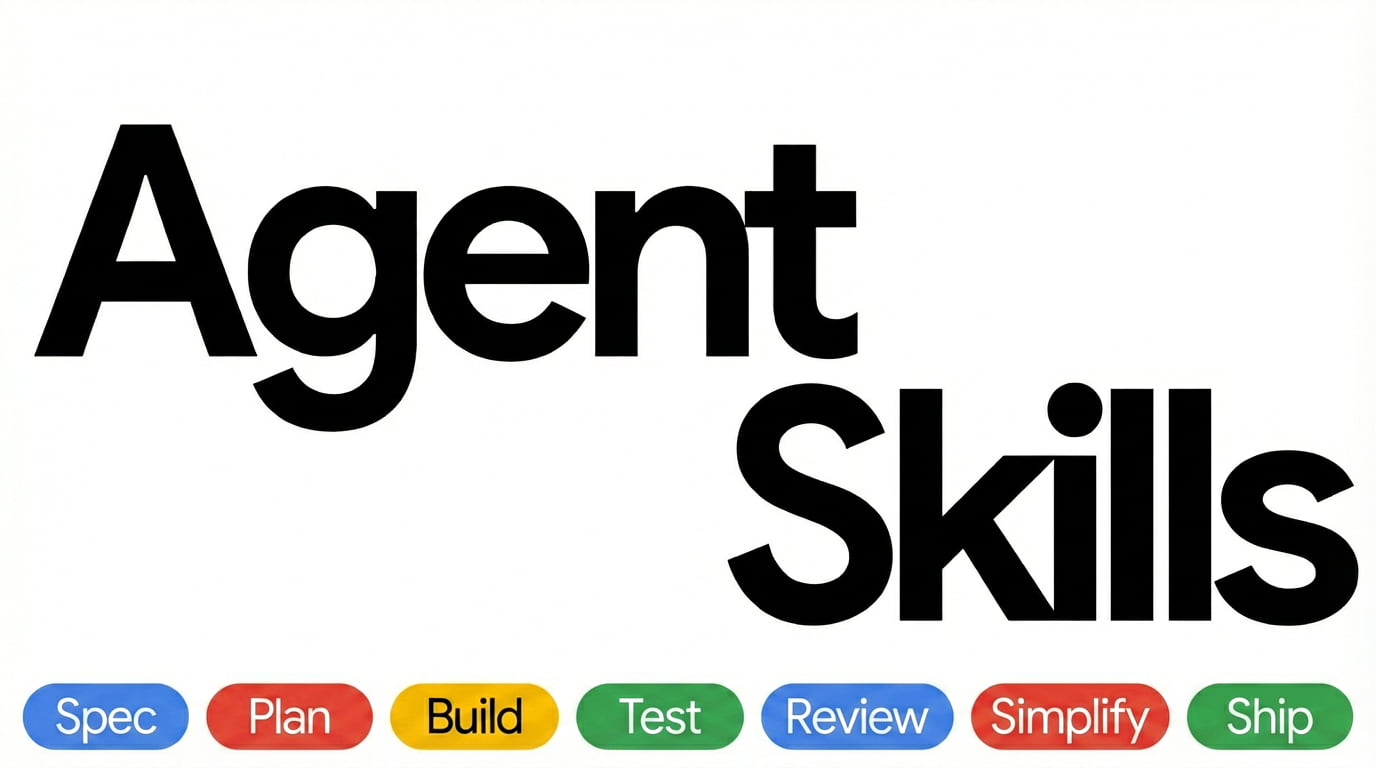
Agent Skills
AI coding agents take the shortest path to done, which usually means skipping the specs, tests, and reviews that make software reliable at scale. Agent Skill...
What the hell happened with AGI timelines in 2026?
10 things I learned from burning myself out with AI coding agents
Opinion: As software power tools, AI agents may make people busier than ever before.

The Gap Through Which We Praise the Machine
My current theory of agentic programming: people are amazing at adapting the tools they're given and totally underestimate the extent to which they do it, and the amount of skill we build doing that is an incidental consequence of how badly the tools are designed.

Building and evaluating AI Agents — Sayash Kapoor, AI Snake Oil
Collaborative AI Engineering: One Dev, Two Dozen Agents, Zero Alignment — Maggie Appleton, GitHub
Care at the Edge of Automation – Topos Institute
Technologies don’t just solve problems, they change us. We invent technologies, and they invent us in turn, shaping our lives and worlds. This is the phenomenon that Terry Winograd and Fernando Flores, in Understanding Computers and Cognition (1986), called “ontological design.” It matters now more than ever—along with a second lesson they saw clearly. Technological research is always guided (and sometimes misguided) by deep ontological assumptions about, e.g., the nature of cognition, agency, and communication. If we are to create technologies that truly serve human flourishing and care, we must bring these hidden assumptions into the open and question them at their roots.

X : What are you interested in? Me : Wow, that varies constantly. Right now? There are a number of topics that I'm actively pursuing … a) When we talk about software engineering we typically think… | Simon Wardley
X : What are you interested in? Me : Wow, that varies constantly. Right now? There are a number of topics that I'm actively pursuing … a) When we talk about software engineering we typically think about the active part of creating code but software development is currently practised as a craft not an engineering discipline. The only engineering discipline in software engineering is testing. This creates a flaw in the comparison with using AI to code because development itself has never been optimised. If all we have to do is write code and we can automate that part then we can just replace those expensive typists with LLMs but development should be, and has the capability to become an engineering discipline. It's just not that for now. https://lnkd.in/eSRprhbf b) Most people talking digital sovereignty are doing so with good intentions but they literally have no idea what they are talking about. This is not because they are daft or foolish but because they cannot see the environment they are talking about. They are like generals talking about territorial sovereignty with no idea of what territory is or how you represent it. https://lnkd.in/eku2X_Ea c) Architectural decisions are made in code and not in the diagrams we create. Those architectural diagrams are more like prompts, wishes and beliefs of what a system should be but rarely reflect the actual system. This creates additional problems when the real architectural decisions are made by coders but coding itself is a craft not an engineering discipline. d) The current crop of LLMs / LMMs are driving us towards a new theocracy. We can counter this through diversity, critical thinking and open approaches but that does mean we have to get to the point of all symbolic instructions being open. That includes the training data. Copyright is a distraction from the real issue that we don't know what the systems are being trained on. Guardrails are a post event kludge. https://lnkd.in/exJVmNvD e) The medium we use in conversational programming environments such as cursor and lovable (or what we call vibe coding when not looking at the code or Software Engineering + AI when looking at the code) appear to be flawed. We are focused on text not images. The change of medium changes the conversation, the corollary is the conversation we have around the screen and the one we have around the whiteboard. Same problem, different medium, different discussion. https://lnkd.in/e_W6b6z3 f) "Value" in consulting land is mostly theatre rather than something meaningful. There are many forms of value but often we fail to identify this, quantify it or even measure it. https://lnkd.in/eeNbR_VY g) Rewilding Software Engineering. To change software development into an engineering practice, we need to introduce two wolves - one that software engineering is a decision making process and secondly that we need to build tools for problems we are facing - https://lnkd.in/epyUnqgh

Hyperspace: The Agentic OS Apple Should Have Built On December 19th, 2024, we announced the world’s first Agentic Browser. What followed was a movement — a new category was born which led to many early products in this space and recently the hundreds of people lining up outside https://t.co/lws2rMNmel
Hyperspace: The Agentic OS Apple Should Have Built On December 19th, 2024, we announced the world’s first Agentic Browser. What followed was a movement — a new category was born which led to many early products in this space and recently the hundreds of people lining up outside the The Agentic Browser Summit in San Francisco underscored that. Silicon Valley instinctively gets it, from students to tech executives, people can feel a revolutionary new change in computing is in the air. Past year taught us why such a product was inevitable, a hard engineering effort, and also the last mover in the entire software world this decade if and when done right. All paths are headed in the same direction: one tool which orchestrates them all. At Hyperspace we showed that path with essays and products we launched in earlier months: from a spatial UI of orchestrating agents, to showcasing transparent activity in how the AI system operates which leads to user trust, to presenting the software end-game, which massively improves human productivity. We also built the world’s largest AI network, drawing participation from people in almost 6000 cities around the world contributing their machines as nodes in the network. Think Uber, but for AI. That is, planetary-scale. And now we are stretching this industry ambition further with our end-to-end vision of the Agentic Supercomputer, the first breakthrough new AI OS, and an effort which spans from AI research to distributed systems to inventing a new UI to inventing a new business model to complement it. All of this together helps us in serving our mission, of delivering “Everyone’s Personal Supercomputer”. While others have built AI-native browsers, no one though has built something agentic from the ground up — with AI as the foundation, not a feature. How do you fundamentally improve the lives’ of billions around the world ? We believe that requires building a native environment for agents to be viewed, created, deployed, executed, discovered and priced in. That is a world where we move on from static apps, to dynamic agents. But, as my 2 year old niece likes to ask: “but why ?” The issue is that the world of software today is fragmented, and everyone is sprinkling on AI as a feature and charging a subscription fees for it. From browser makers, to IDEs, to design and other productivity tools. This leads to a fragmented UX, where people have to learn to use AI in each app, their memory and other context is not shared between all these apps, and they also have to pay separately for compute for each such AI-enhanced app. Each app maker has to figure out basics such as compute, and leads to the issues we saw with Cursor pricing recently. This is not the future. What if AI was the foundation instead of a feature ? What if Apple had built a fundamentally new AI OS from the ground up and what would it have looked like ? At Hyperspace, that is what we did. On July 15th we introduced three breakthrough key pillars of our AI OS: 1. Agentic Browser 2. Agentic Memory 3. Agentic Payments And we didn’t stop there. We also introduced a breakthrough new user interface called the Spatial AI which is inspired both from the spreadsheet and the HyperCard - each card is an agent, with it’s own inputs and outputs, endlessly extensible and pluggable with others, just like cells of a spreadsheet. Update one cell and all the dependents update, like a spreadsheet formula. It goes beyond a static linear workflow to being able to operate in all directions. This revolutionary new interface helps manage all of the below: 1. Multiple websites being browsed in parallel 2. Multiple desktop apps being browsed in parallel 3. Multiple server tools being used in parallel 4. Multiple smartphone apps streamed to your device or opened via an emulator All the software which you need comes together in this one seamless, agent-native interface. This interface provides you access to the largest network of models, vectors, agents and compute on the planet. The Browser. The IDE. The Notepad… they are not separate products: they are all in one, the Agentic Browser. As Steve Jobs famously said at the iPhone announcement, “are you getting it ?” And beneath this UI lies a new intelligence routing layer — leveraging both swarms of specialized models to the Hyperspace Matrix model that recalls thousands of tools in real-time, not by context window hacks, but through retrieval, ranking, and reuse. To many, this will feel like AGI. Not one big system by one big company, but an intelligent network. Now lets talk about privacy… Are you comfortable with one company owning all your memory forever ? I am not. So we have invented Agentic Memory as a new open protocol which provides full power over memory to you, the user. Your memory is yours, encrypted, on your device, and portable if and how you want. Anyone can build on it without our permission, but not without your permission. This protocol, and the decentralized vector database spread out across the world, would enable apps and agents to share context and memory. Think copy-paste, but for the AI world. It doesn’t just remember — it knows what matters. VectorRank helps your AI weigh your life’s most relevant moments over time, just like the way our minds elevate memories. Now each time you use an agent, your experience with other agents will also continuously improve: you don’t have to keep repeating the same things about yourself, while fully preserving your privacy. Agentic Memory is accessible within the Agentic Browser to manage. And there is one more thing… AI as the foundation requires compute to be available at the base layer, but this base layer spans models running on your own device, to cloud APIs, to also running across the peer-to-peer distributed network. Agentic Payments provides a singular interface to all of that compute, running a spot auction clearing marketplace every second to determine the fair price of compute. This results in price transparency, and you as the user paying the lowest possible cost. If you want predictability, you can reserve compute in advance. This end-to-end system provides the most streamlined world for agents to operate in. In order to enable this world and the world of agents being able to pay each other in sub-cent increments millions of times a second, we had to also invent a fundamentally new agentic micropayments blockchain. All of this together would enable a world where you as a user, or the agent itself, can efficiently call and utilize other agents built by others and also pay for content which is unique and useful. This enables a move away from the current AI exploitative economy for bloggers and other content creators, to a web with a fundamental new business model. Earlier we didn’t have the right infrastructure to enable such a world. Now, all the dots connect. The Hyperspace AI OS would give the power of a supercomputer in everyone’s hands. This isn’t a browser, or an IDE or limited to any device or cloud. It’s an entire AI operating system — with a breakthrough new spatial UI, local and distributed compute, agentic memory, agentic payments, and orchestration built into the foundation. As a user, we move the choice back in your hands with an experience you will love and find delightful. You get to choose the level of privacy, cost, and utility you want. And while Apple should have done it, we could not wait, and we feel this just required a new level of passion and DNA which we bring here. We are just getting started. Thank you, Varun Mathur Cofounder and CEO, Hyperspace cc @naval @pmarca @vkhosla @karpathy @sama

Thinking—Fast, Slow, and Artificial: How AI is Reshaping Human Reasoning and the Rise of Cognitive Surrender
People increasingly consult generative artificial intelligence (AI) while reasoning. As AI becomes embedded in daily thought, what becomes of human judgment? We

Thinking Fast, Slow, Artificially: AI and Your Brain
AI can boost your decisions — or quietly undermine them. Wharton researchers introduce a new theory of cognition that every leader needs to understand.

Something Big Is Happening
A personal note for non-tech friends and family on what AI is starting to change.