

1 Introduction 2 A brief explanation of open-source software development 3 Community-developed and continually-improved models 3.1 Incremental and cheaply-communicable updates 3.2 Merging models 3.3 Vetting community contributions 3.4 Versioning and backward compatibility 3.5 Modularity and distribution 4 An example future 5 Conclusion
Is Open Source Broken?
The movement to develop software applications and all manner of IT services through the open source model is fundamentally rooted in the notion of community contribution, but things have shifted.

The shape of open source
At its core, open source is about collaboration. Whether it’s version control, licenses, or issue trackers—everything exists to support people working with each other. Open source embodies a model for…

Open source and the software supply chain
Managing something as esoteric as resources for building software with a variety of contributions made by the open source community is more amorphic.

The next wave in software is open adoption software | TechCrunch
There’s a big shift happening in how enterprises buy and deploy software. In the last few years, open technology -- software that is open to change and free to adopt -- has gone from the exception to the rule for most enterprises. We’ve seen the IT stack redrawn atop powerful open-source projects, with developers opting for an “open-first” approach to building solutions.

Creating and growing healthy community open source projects [PLoP 2020]
Abstract: This article presents a succinct and minimal handbook of best practices of how to create and grow community open source projects. We start with the assumption that the handbook’s user has…

How open-source software took over the world | TechCrunch
It was just five years ago that there was an ample dose of skepticism from investors about the viability of open source as a business model. Fast-forward to today and we’ve witnessed the growing excitement in the space.
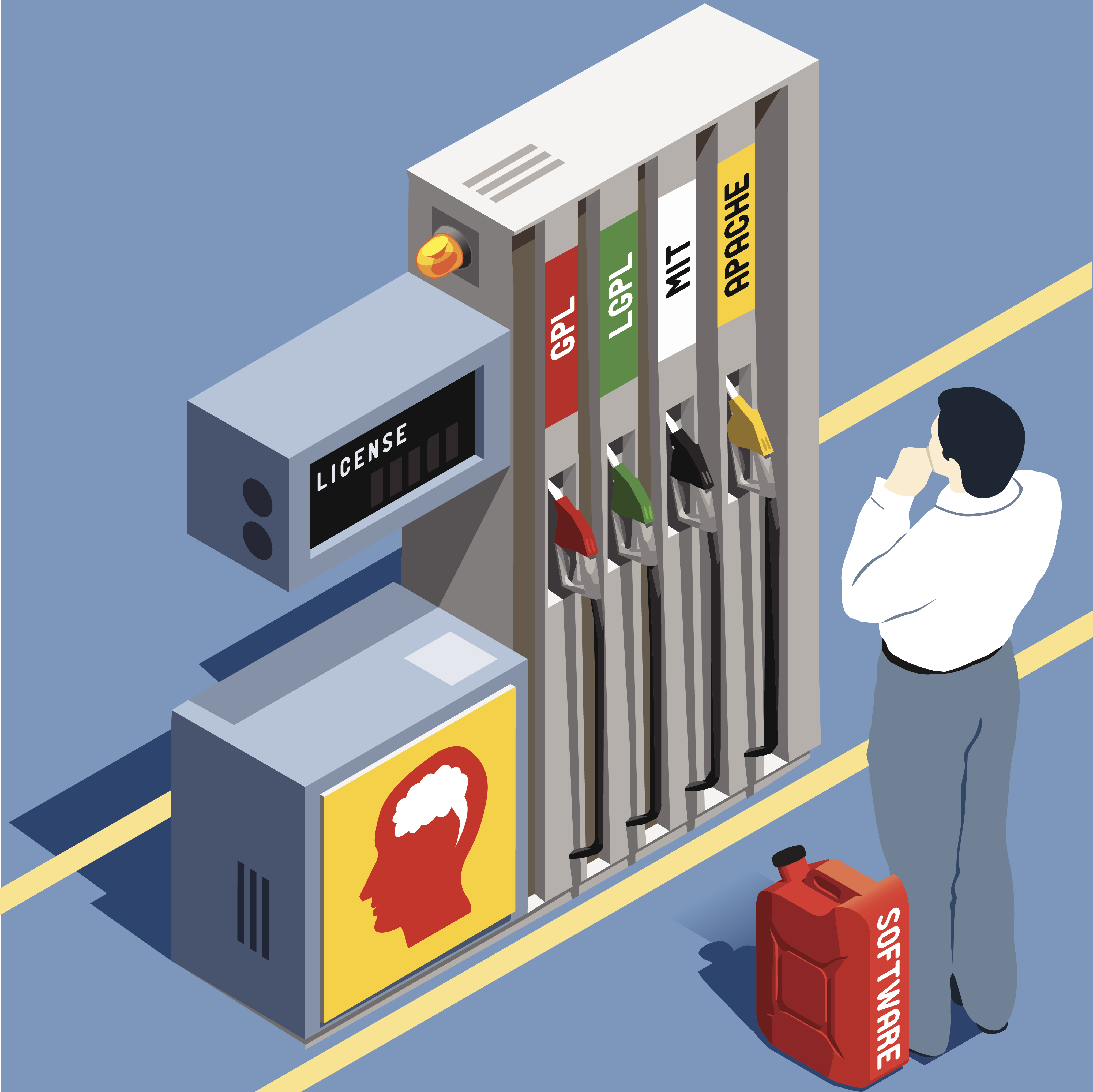
The Open Source Distributor Business Model
Dirk Riehle, dirk@riehle.org, Published in Computer vol. 54, no. 12 (December 2021), pp. 99-103. Abstract This article defines and discusses one particular commercial open source business model, ca…

Is open source a development model, business model, or something else?
The term "open source" was coined in 1998 at a strategy session held by Open Source Initiative (OSI).

The Asymmetry of Open Source - Matt Holt
A comprehensive guide to funding open source software projects


A Replication Study on Measuring the Growth of Open Source
Context: Over the last decades, open-source software has pervaded the software industry and has become one of the key pillars in software engineering. The incomparable growth of open source reflected that pervasion: Prior work described open source as a whole to be growing linearly, polynomially, or even exponentially. Objective: In this study, we explore the long-term growth of open source and corroborating previous findings by replicating previous studies on measuring the growth of open source projects. Method: We replicate four existing measurements on the growth of open source on a sample of 172,833 open-source projects using Open Hub as the measurement system: We analyzed lines of code, commits, new projects, and the number of open-source contributors over the last 30 years in the known open-source universe. Results: We found growth of open source to be exhausted: After an initial exponential growth, all measurements show a monotonic downwards trend since its peak in 2013. None of the existing growth models could stand the test of time. Conclusion: Our results raise more questions on the growth of open source and the representativeness of Open Hub as a proxy for describing open source. We discuss multiple interpretations for our observations and encourage further research using alternative data sets.

Open Source or Open Core: Why Should You Care?
Open source software has gained its significant foothold because the community development model works everywhere. Its momentum has moved it into the underlying infrastructure of some of the most sophisticated web scale companies, like Facebook and Google. Open source underpinnings now drive many of the most significant advances in the worlds of cloud and big data.
Open Source or Open Core: Why Should You Care?
Open source software has gained its significant foothold because the community development model works everywhere. Its momentum has moved it into the underlying infrastructure of some of the most sophisticated web scale companies, like Facebook and Google. Open source underpinnings now drive many of the most significant advances in the worlds of cloud and big data.
There is Still NO Open Source Business Model
I wrote a blog post two years ago called There is NO Open Source Business Model. In it, I argued that open source software is really about…

Setting an Open Source Strategy
The majority of companies that use open source understand its business value and identify its advantages in efficiency, flexibility, interoperability, and speed of innovation. Yet only half of these companies report practicing basic open source management, such as community development, code maintenance, and the like, according to the latest Future of Open Source survey.
Open Source Saturation
In Supporting Open Source Software I discussed the critical need for better support for contributors to open source projects. Now, Quo Vadi...
