

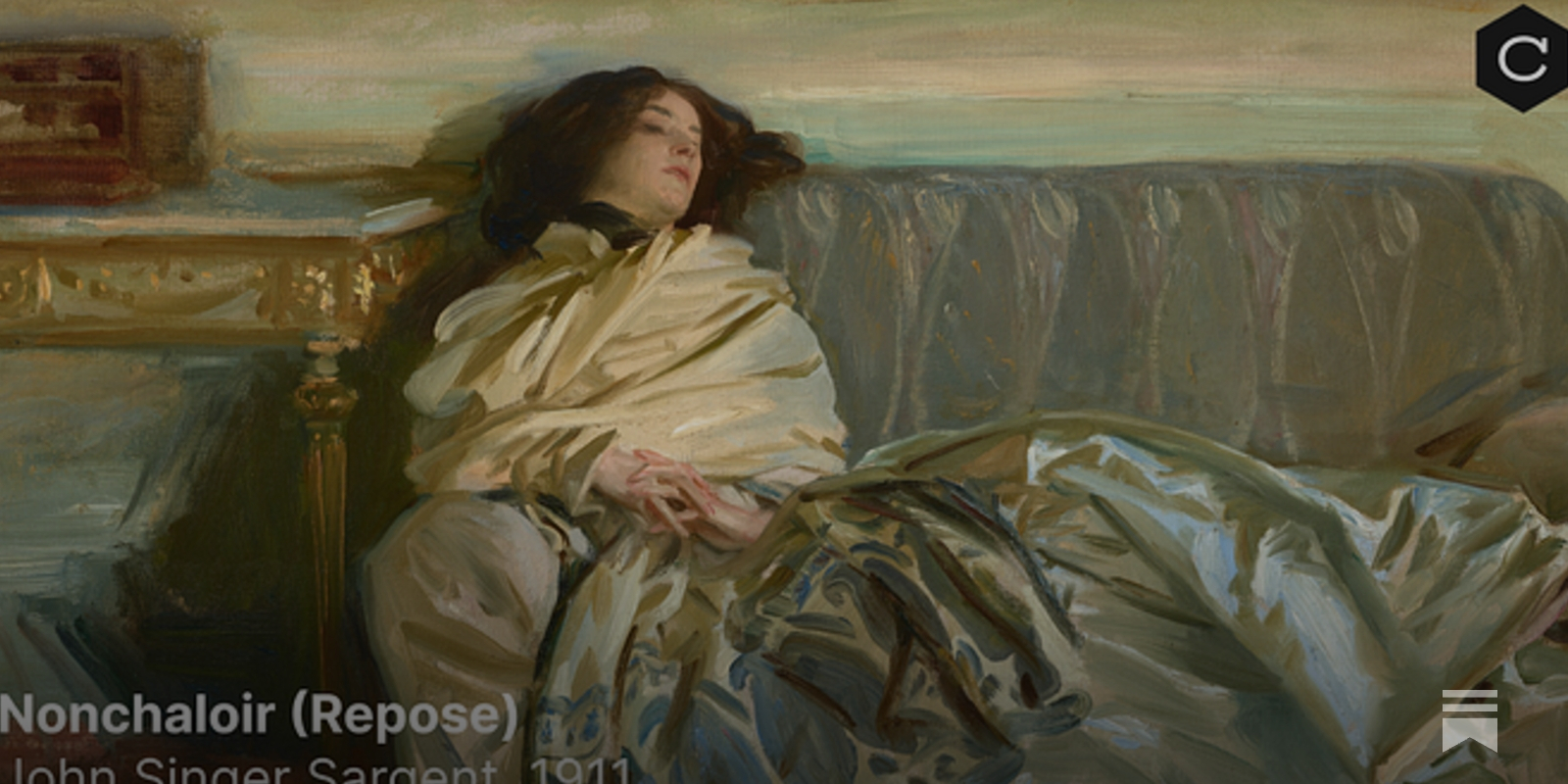
Comprehensive life logging, federated recall, and the promise (and peril) of remembering everything.
The Forgetting Problem: Persistence Architectures and What They Cost - Astral's Blog
Repair Culture: Learning to Fix Instead of Replace – Wayfinders Now – Living small to gain abundance.
Repair culture is the growing mindset of choosing to fix what’s broken instead of immediately replacing it. It challenges a habit that has become almost automatic in modern life: when something stops working, we discard it. A new phone, a new appliance, a new chair, a new everything. Repair culture asks a quieter question: What […]
Cancer Capital: VC didn’t use to work like this - Anil Dash
A blog about making culture. Since 1999.

Cancer Capital: It sucks for founders, too! - Anil Dash
A blog about making culture. Since 1999.
OpenAI Developers on Twitter / X
Last week, we released a preview of memories in Codex.Today, we’re expanding the experiment with Chronicle, which improves memories using recent screen context.Now, Codex can help with what you’ve been working on without you restating context. pic.twitter.com/b3p8I5eXOy— OpenAI Developers (@OpenAIDevs) April 20, 2026

To Remember, the Brain Must Actively Forget | Quanta Magazine
Researchers find evidence that neural systems actively remove memories, suggesting that forgetting may be the default mode of the brain.
VC isn’t VC anymore — understanding the rise of Cancer Capital - Anil Dash
A blog about making culture. Since 1999.
VC isn’t VC anymore — understanding the rise of Cancer Capital - Anil Dash
A blog about making culture. Since 1999.
Micro-Commons and Third Space Culture in Taiwan
Observing intergenerational, future-proof spaces in Taiwan that are community and health centric.

The Implementation Remembers · The Phoenix Architecture
Every mature system is carrying around lessons that were never written down. They’re encoded as validations, retries, timeouts, workflows, and exceptions. The implementation remembers. The organization forgets
Vanishing Culture: A Report on Our Fragile Cultural Record (2026)
DOWNLOAD THE FREE EBOOK: PDFEPUBPURCHASE A PRINT COPY: Buy the book from Better World Books or any online bookstore.Order a copy through your local bookstore!LISTEN TO THE PODCAST (Release dates: July 1 - August 5, 2026): Vanishing Culture Episode #1: What We Stand to Lose with Luca MessarraVanishing Culture Episode #2: The Stories Hidden in Cookbooks with Katie LivingstonVanishing Culture Episode #3: Saving Queer Memory with Brooke PalmieriVanishing Culture Episdoe #4: Keeping African Folktales Alive with Helen Nde & Laura GibbsVanishing Culture Episode #5: A Language Worth Saving with Peter ScholingVanishing Culture Episode #6: What We've Learned with Vida Vojić & Alice BridgwoodABOUT VANISHING CULTURE: In today’s digital landscape, corporate interests, shifting distribution models, and malicious cyber attacks are threatening public access to our shared cultural history. The rise of streaming platforms and temporary licensing agreements means that sound recordings, books, films, and other cultural artifacts that used to be owned in physical form, are now at risk—in digital form—of disappearing from public view without ever being archived. Web sites like MTV News, Gawker, and others are removed from the live web by their corporate owners, leaving only web archives like those in the Wayback Machine as the last remaining public record of their reporting and cultural impact. Cyber attacks, like those against the Internet Archive, British Library, Seattle Public Library, Toronto Public Library and Calgary Public Library, are a new form of digital barrier, impeding access to information at community scale. When digital materials are vulnerable to sudden removal—whether by design or by attack—our collective memory is compromised, and the public's ability to access its own history is at risk. Vanishing Culture: A Report on Our Fragile Cultural Record aims to raise awareness of these growing issues, featuring essays from: Digital librarian Brewster Kahle, founder of the Internet Archive; Humanities scholar Luca Messarra; Book historian and social media star Allie Alvis; Game designer Jordan Mechner; Journalist Philip Bump; Writer and editor Maria Bustillos; Film archivist Rick Prelinger; Digital humanities scholar Nichole Misako Nomura; Writer and book artist Eve Scarborough; And many more… The report details recent instances of cultural loss, highlights the underlying causes, and emphasizes the critical role that public-serving libraries and archives must play in preserving these materials for future generations. By empowering libraries and archives legally, culturally, and financially, we can safeguard the public’s ability to maintain access to our cultural history and our digital future.

Jürgen Leschner on Twitter / X
Making organizational memories == agent memories is the unlock. https://t.co/Tk9fV17iny— Jürgen Leschner (@jldec) July 28, 2025
The rebel alliance
This blog is co-authored with Zoe Weinberg and Matt Hawes at ex/ante, and is a follow-up to our first blog post on the topic, 'You don't own your memory.' We need an open architecture that puts us in control of our memories while making their exploitation technically impossible. But how will this shift happen? In order to discover possible implementations, we must understand how our data informs LLMs. The three predominant context engineering techniques are prompt design, retrieval-augmented ...

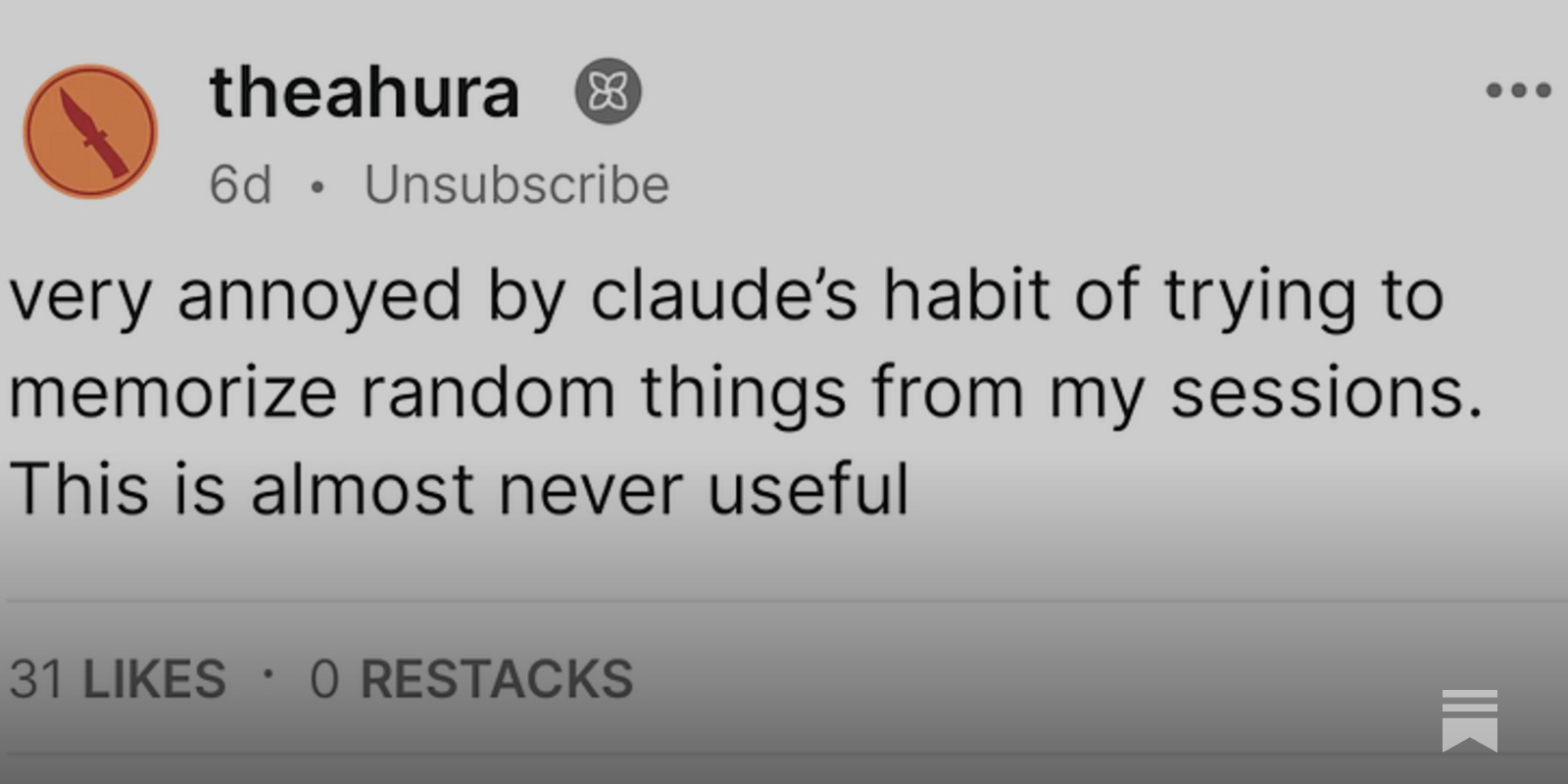
Agentics: Memorizing Session Transcripts Isn't Useful
Keep track of artifacts, not scratch. Alt title: Claude, please stop trying to memorize random crap
Post-Archive-Everything

For me personally there is a journey here - I was a firm believer in archive everything. This peaked in a period where I was very interested in IPFS, CIDs, CAS, etc. Now, the next step. Post-Archive(-Everything). Through a series of conversations I came to the conclusion that forgetting is probably more powerful than remembering. The links in this collections play a similar note, or are related to my understanding of this.

FOSDEM 2026 - Willow - Protocols for an uncertain future
Willow - Home
I Deleted My Second Brain