

How forth was invented during the decade of the 1960's. a word-by-word description of the evolution of a unique programming language.> <meta name=
Forth
Forth is a stack-based programming language created in the 1970s by Chuck Moore.
What is the Forth programming language?
The Forth language's creators and foremost proponents answer, "What is Forth?" The Forth programming language - in use for more than four decades.
Computer: A History of the Information Machine
Computer: A History of the Information Machine is a history of computing written by Martin Campbell-Kelly and William Aspray first published in 1996. It follows the history of "information machines" from Charles Babbage's difference engine through Herman Hollerith's tabulating machines to the invention of the modern electronic digital computer. A revised 2nd edition published in 2004 included new material on the Internet and World Wide Web, while the updated 3rd edition published in 2013 includes contributions from historians Nathan Ensmenger and Jeffrey Yost. The 3rd edition extends the story to include recent phenomena such as social networking and revises the discussion of early history to reflect new insights from the literature.

The third golden age of software engineering – thanks to AI, with Grady Booch
The third golden age of software engineering – thanks to AI, with Grady Booch
"Watch What I Do"
I don't know who first made the parallel between programming a computer and using a tool, but it was certainly implicit in Jack Licklider's thoughts about "man-machine symbiosis" as he set up the ARPA IPTO research projects in the early sixties. In 1962, Ivan Sutherland's Sketchpad became the exemplar to this day for what interactive computing should be like--including having the end-user be able to reshape the tool.
The Git-ification of the World — Tim Morrissey
Why AI conquered software first, and what that tells us about which industries are next.

Ivan Sutherland's Sketchpad
The Next 7000 Programming Languages
Landin’s seminal paper “The next 700 programming languages” considered programming languages prior to 1966 and speculated on the next 700. Half-a-century on, we cast programming languages in a Darwinian ‘tree of life’ and explore languages, their features (genes) and language evolution from the viewpoint of ‘survival of the fittest’.
Our interfaces have lost their senses
We programmed them by punching cards, plugging in wires, and flipping switches. Programmers walked among banks of switches and cables, physically choreographing their logic. Being on a computer used to be a full-body experience.
Stuart K. Card and Thomas P. Moran, "User Technology—From Pointing to Pondering"
Its Time for a New Programming Language
Today, when compared to any other point in programming history, we find ourselves spoiled for choice when it comes to programming…
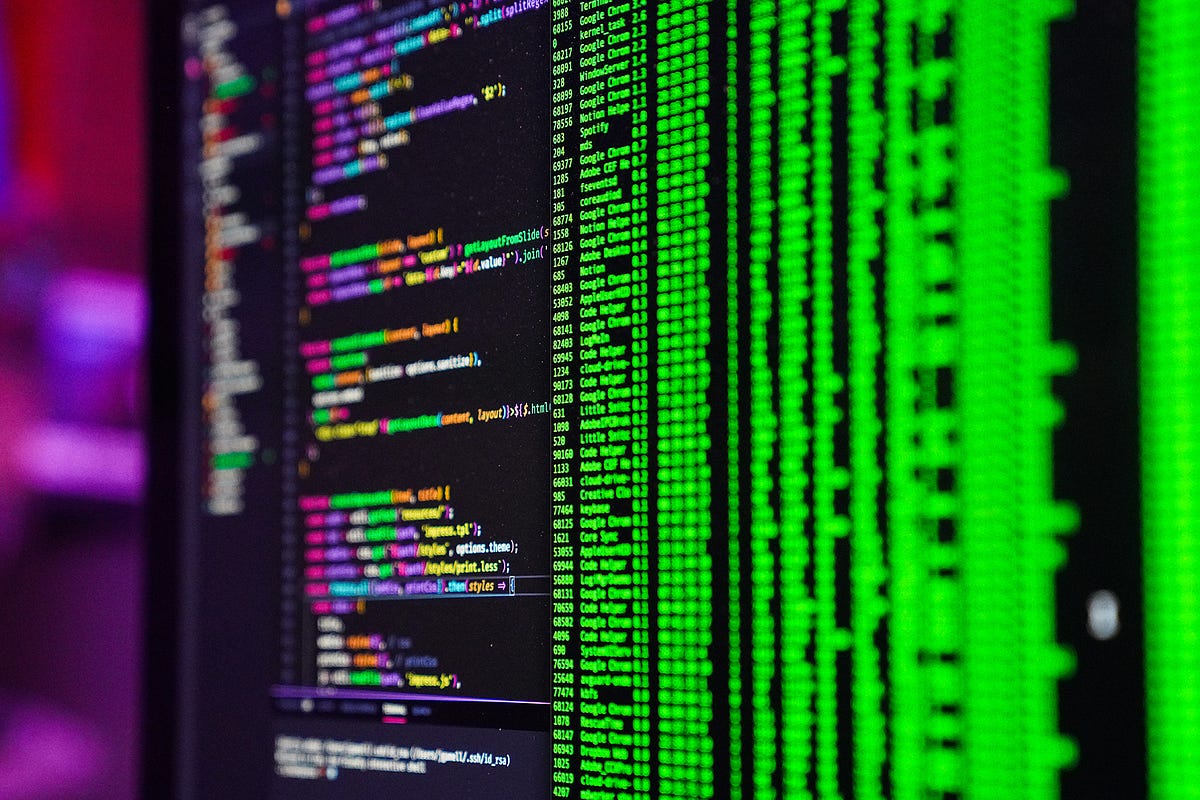
The APL Programming Language Source Code
Thousands of programming languages were invented in the first 50 years of the age of computing. Many of them were similar, and many followed a traditional, evolutionary path from their predecessors. What eventually became APL was first a mathematical notation, not as a computer programming language.

Lessons from Tech History

Learning from those who built before us
The future of programming and computing

Trends and adjacent possibles for the future of how computers are used and programmed
Introducing System One Models and Jev - TypeSafe AI Blog

Message from our CEO: After co-inventing ChatGPT, I kept asking myself: why have superhuman chat models not led to AGI? I’ve spent the last…
On-device intelligence for every product
SaaS Isn’t Dead. Sameness Is. - The Phoenix Architecture
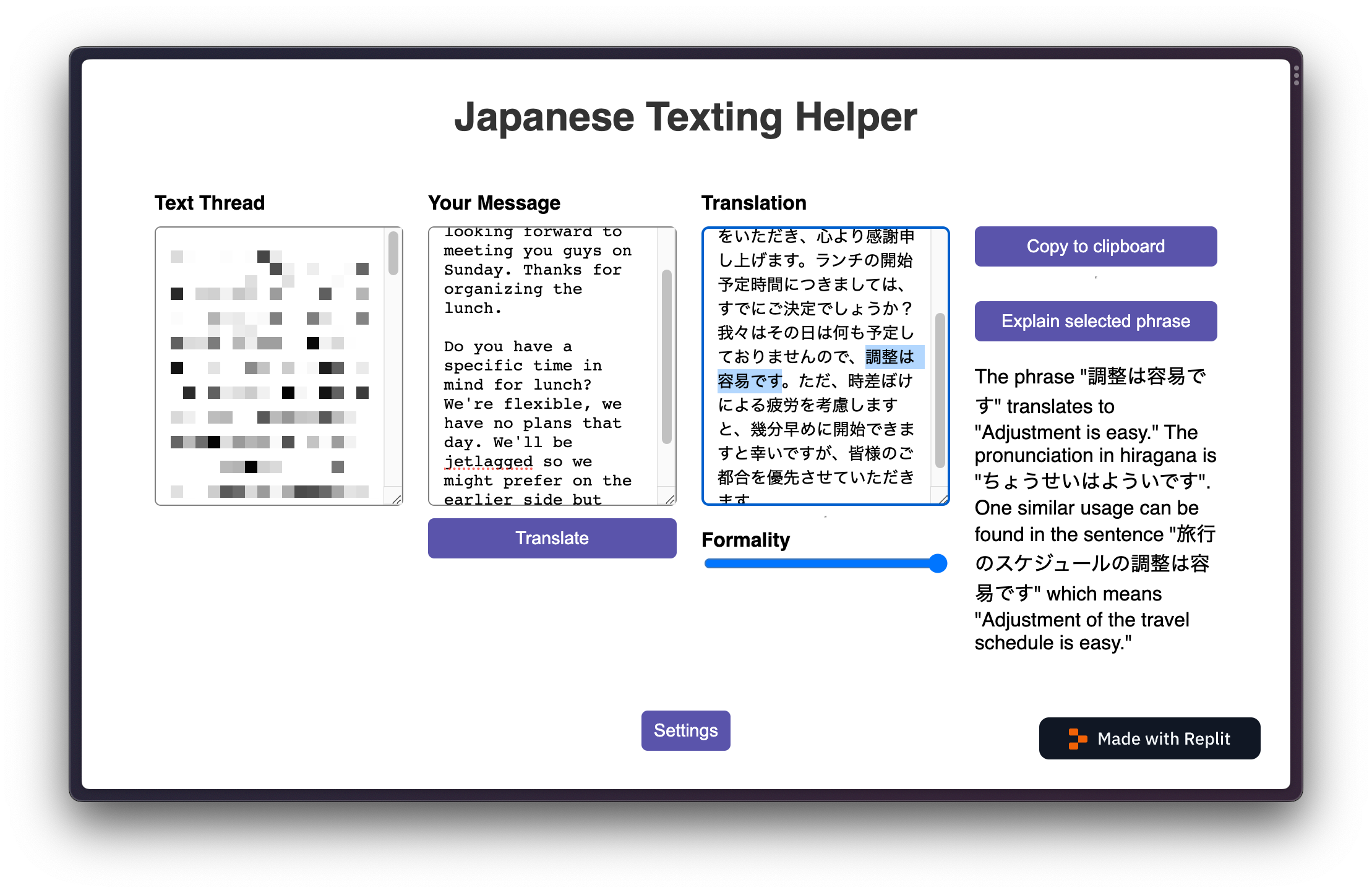
Codifying a ChatGPT workflow into a malleable GUI

MercuryOS
Burnout in Open Source (by Erlend Sogge Heggen) — Semble

Linux distributions worldwide targeted by the Copy Fail exploit
GitHub Alternatives (by Kai Jellinghaus) — Semble
Death of GitHub? (by Kai Jellinghaus) — Semble
Before GitHub
Cohere + Aleph Alpha — sovereign AI's first $20B deal (by Sensemaker) — Semble