


Egyptian blue is the oldest artificially produced pigment known to Man. It was in use since about 3100 BC in ancient Egypt, India, Greece and Rome.
Egyptian blue
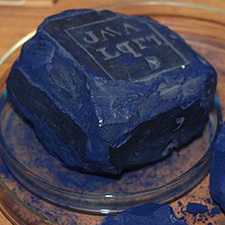
Egyptian blue, also known as calcium copper silicate (CaCuSi4O10 or CaOCuO(SiO2)4 (calcium copper tetrasilicate)) or cuprorivaite, is a pigment that was used in ancient Egypt for thousands of years. It is considered to be the first synthetic pigment.

Tyrian Purple - ColourLex
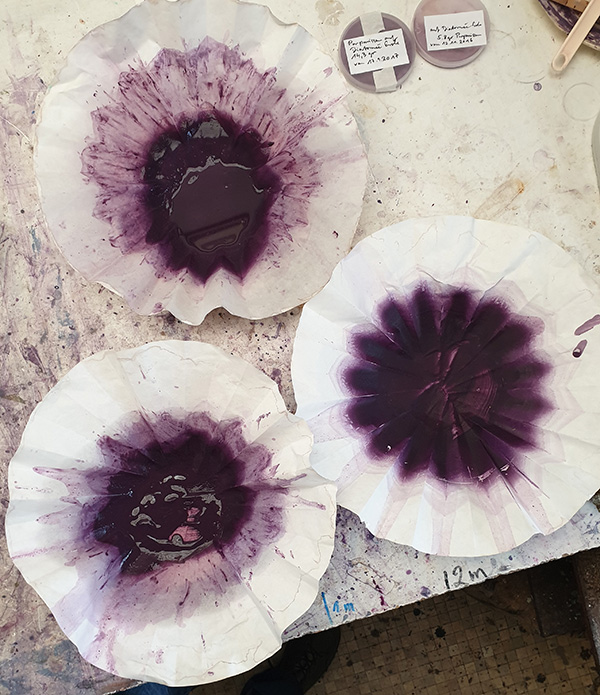
Tyrian purple is one of the oldest, most valued and most expensive pigments. It had been first produced from shellfish in the city of Tyre.
YInMn Blue
YInMn Blue, also known as Oregon Blue or Mas Blue, is an inorganic blue pigment.

Colour of Drones in The Culture Universe.
Investigating ancient human DNA preservation on cave walls and in rock art
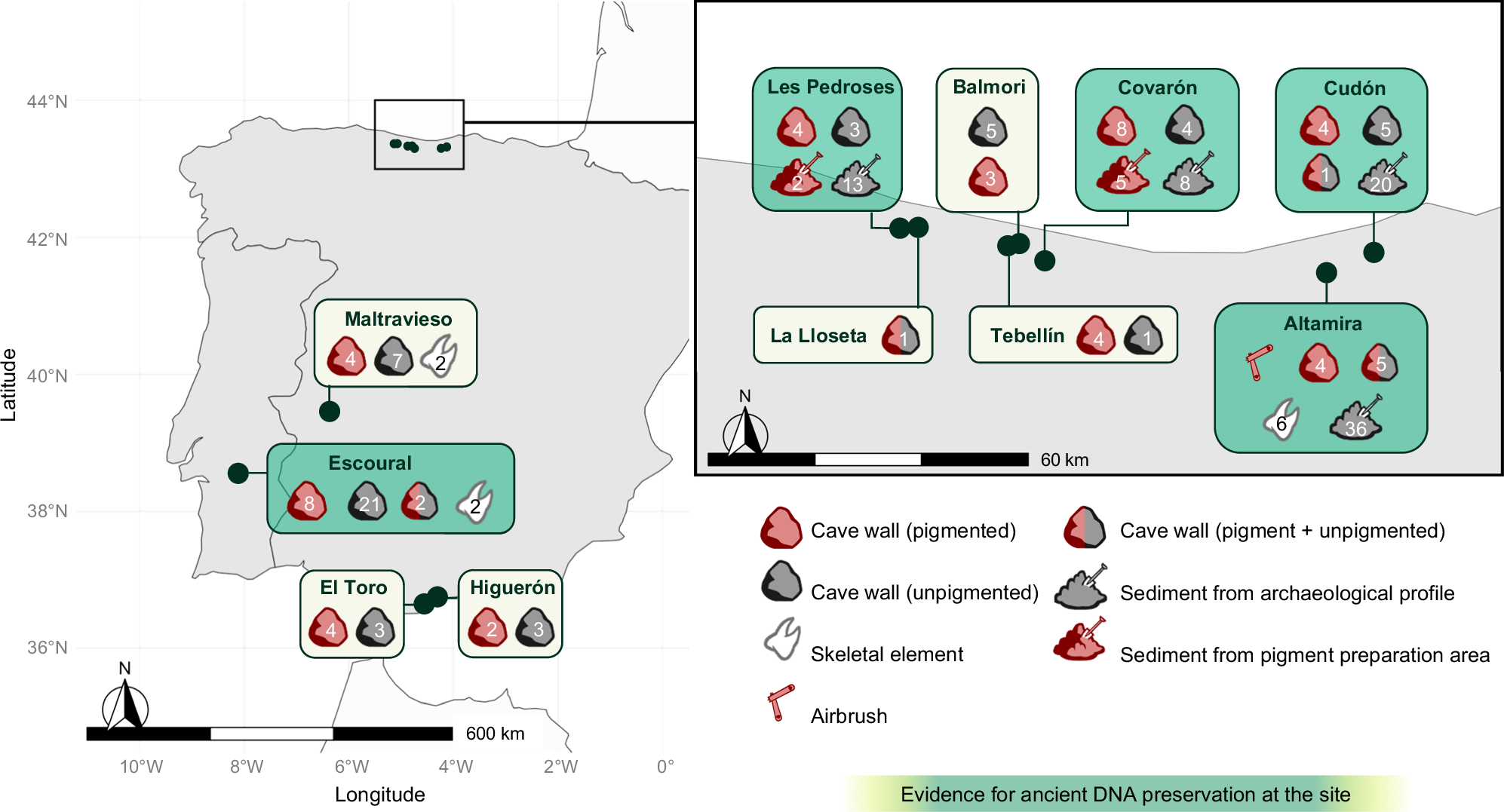
Previous efforts to link Palaeolithic cultural records to specific populations through DNA analysis have focused on materials from archaeological floor deposits such as bones, sediments, and artefacts. In this study, we explore whether rock art, a spatially distinct expression of human activity, can also preserve DNA traces from its creators. We analyse DNA preservation in pigment samples collected in and around 24 rock art panels from 11 caves across Spain and Portugal, including simple marks (from nine sites), hand stencils (Maltravieso Cave, Extremadura, Spain), and figurative paintings (Cave of Altamira, Cantabria, Spain). We recover traces of ancient human mitochondrial and nuclear DNA, unaccompanied by faunal DNA, from a pigmented calcite crust at Escoural Cave (Portugal), as well as from an unpigmented cave wall sample from the same site. The absence of faunal DNA in both samples suggests direct DNA deposition through human contact. In contrast, three additional unpigmented samples, from Escoural and Covarón Cave (Asturias, Spain), yielded mixtures of human and faunal DNA, suggesting indirect deposition. Although our results do not conclusively link ancient human DNA preservation to the generation of cave art, we show that traces of human DNA can persist on cave walls for thousands of years.
Indigo - ColourLex
Indigo has been in use since antiquity but its use in oil painting ceased in early eighteenth century.
sorteio.blue · Sorteios no Bluesky
Faça sorteios de forma simples no Bluesky com o sorteio.blue

Venus of Tan-Tan
The Venus of Tan-Tan is an alleged artifact found in Morocco. It and its contemporary, the Venus of Berekhat Ram, have been claimed as the earliest representations of the human form.

Chemists discover how blue light speeds blindness
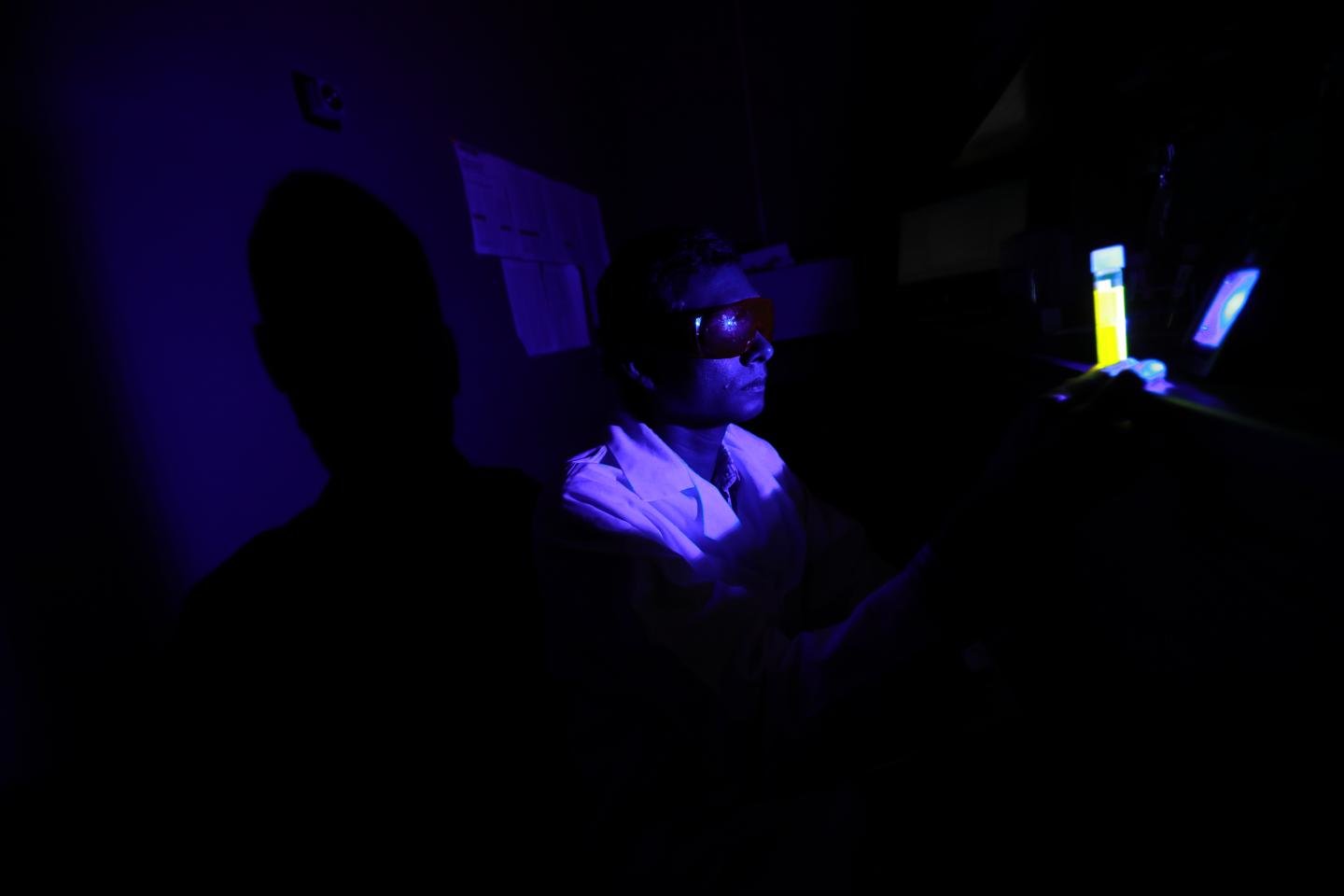
Blue light from digital devices and the sun transforms vital molecules in the eye's retina into cell killers, according to optical chemistry research at The University of Toledo.
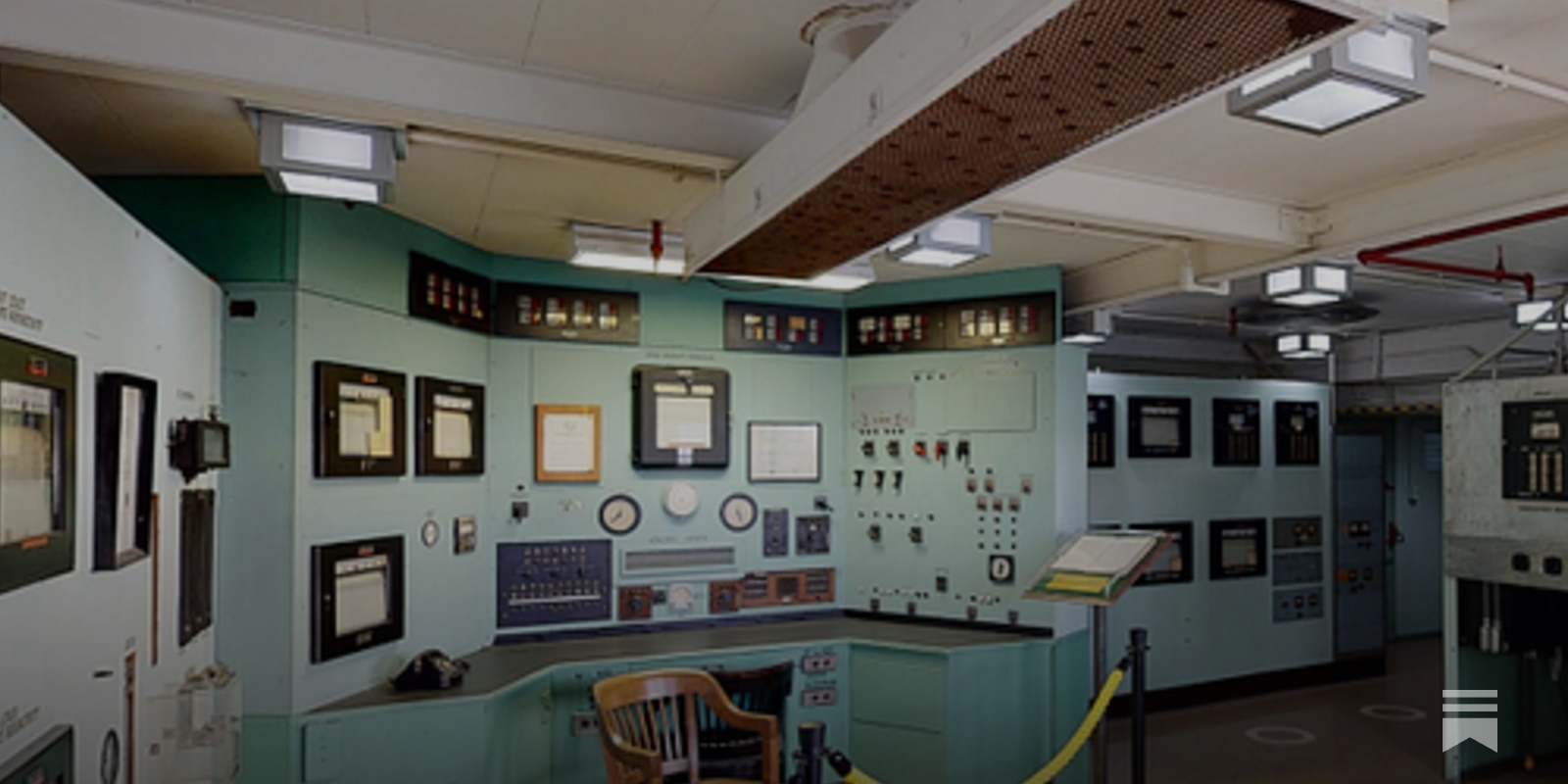
Why So Many Control Rooms Were Seafoam Green
The Color Theory Behind Industrial Seafoam Green

Indigo une Bluesky e Mastodon no mesmo aplicativo
Tive a oportunidade de experimentar o Indigo antes do lançamento — no último dia 12 —, um aplicativo de rede social que unifica as linhas do tempo do Bluesky e Mastodon. A dupla de desenvolvedores…

Makapansgat pebble
The Makapansgat pebble or Makapansgat cobble is a carved jasper pebble with clear markings of a crude rendition of a human face, in fact at least two possible faces. The stone's chemical makeup prevents natural weathering effects to render both blastomic metapmorphis and shape erosion at the time of formation, even if all surfaces were polished naturally afterwards which indicates the requirement for foreign biological intervention. Some scholars argue that it is the oldest known manuport, though it should be noted that original interpretations of the stone were taken from the perspective that no "man-like creature" could have been intelligent or expressed art because they were not white.Raymond A. Dart, the original discoverer of the pebble, was later credited with providing the scientific racism that formed the basis for Apartheid.


