


Much of expertise is tacit: that is, it cannot be captured through words alone. We look at techniques, drawn from the field of Naturalistic Decision Making, designed to acquire the tacit knowledge of experts.
Why Tacit Knowledge is More Important Than Deliberate Practice
What tacit knowledge is, and why it is the most interesting topic in the study of expertise today.

The Best Tacit Knowledge Videos on Every Subject — LessWrong
TL;DR Tacit knowledge is extremely valuable. Unfortunately, developing tacit knowledge is usually bottlenecked by apprentice-master relationships. Ta…

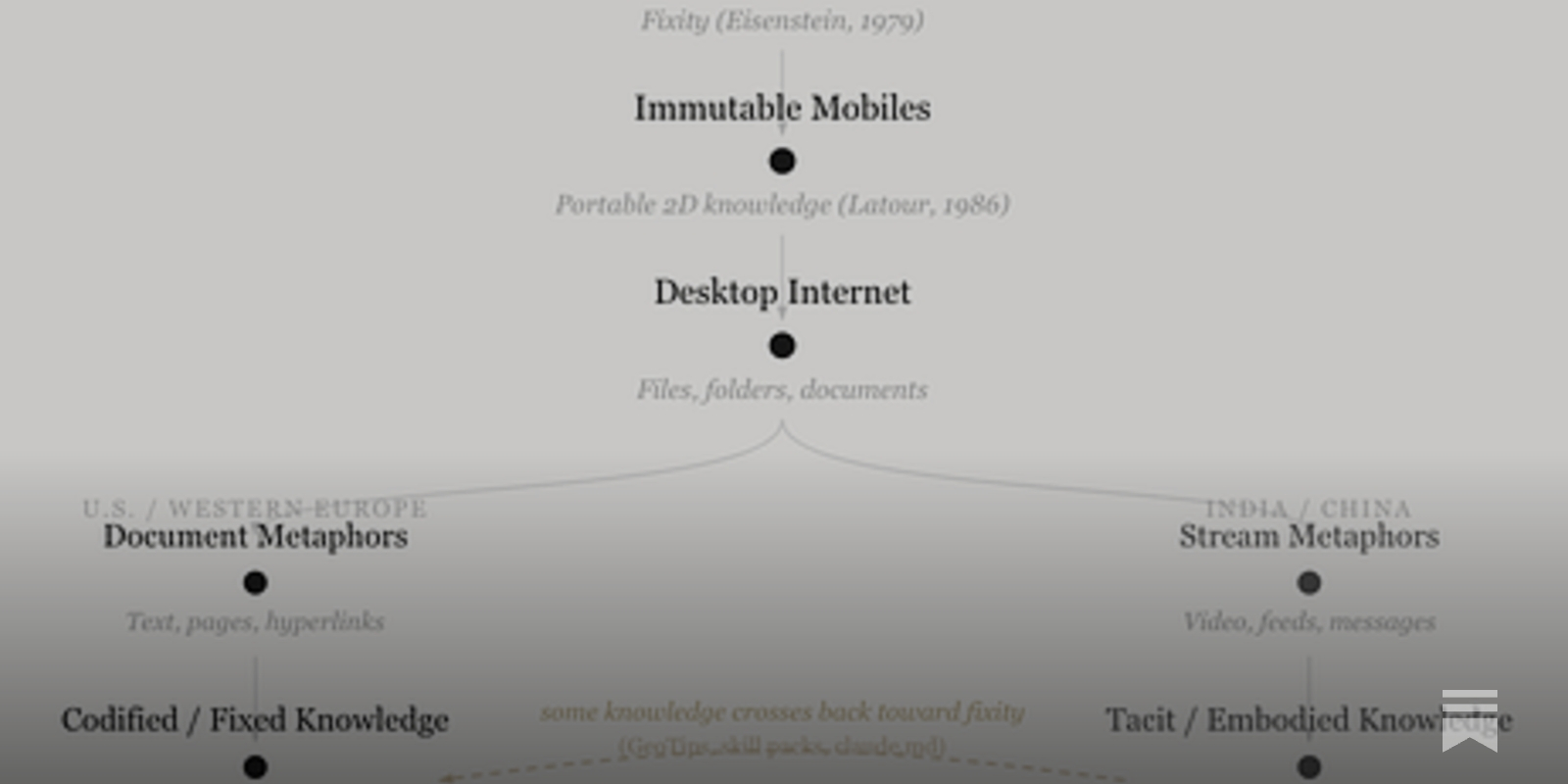
Immutable Skills
How knowledge redevelops at higher levels of abstraction, and why its still dependent on properties of the printing press
What Exactly is Acquired During Skill Acquisition? | Request PDF
Request PDF | What Exactly is Acquired During Skill Acquisition? | In this paper we propose that the term skill acquisition, as commonly used in traditional psychology, and the philosophy, education, movement... | Find, read and cite all the research you need on ResearchGate


Opinion | Can You Get Smarter? (Published 2015)
There is much that you can do to keep cognitively sharp.

Social learning preserves both useful and useless theories by canalizing learners’ exploration
In many domains, learning from others is crucial for leveraging cumulative cultural knowledge, which encapsulates the efforts of successive generations of innovators. However, anecdotal and experimental evidence suggests that reliance on social information can reduce the exploration of the problem space. Here, we experimentally investigate the extent to which cultural transmission fosters the persistence of arbitrary solutions in a context where participants are incentivized to improve a physical system across multiple trials. Participants were exposed to various theories about the system, ranging from accurate to misleading. Our findings indicate that even under conditions conducive to exploration, the transmission of cultural knowledge canalizes learners’ focus, limiting their consideration of alternative solutions. This effect was observed in both the theories produced and the solutions attempted by participants, irrespective of the accuracy of the provided theories. These results challenge the notion that arbitrary solutions persist only when they are efficient or intuitive and underscore the significant role of cultural transmission in shaping human knowledge and technologies.

Launching the Tacit Knowledge Podcast: How the world's hardest problems really get solved
By Kumar Garg
Sense-making reconsidered: large language models and the blind spot of embodied cognition
Large Language Models (LLMs) demonstrate a kind of linguistic competence that theories of embodied and enactive cognition have long deemed impossible for systems lacking the meaningful perspective of a living being, i.e., the capacity for sense-making. Facing up to this unexpected technological development requires confronting what I propose to call the “AI dilemma”: either frontier LLMs are capable of sense-making despite lacking biological embodiment, or the kind of linguistic competence they exhibit does not necessarily require sense-making. In their chapter on cognition, Frank, Thompson, and Gleiser (2024) maintain that no AI system comes close to realizing relevance, a position that derives much of its motivation from past practical failures. However, frontier LLMs have effectively overcome Dreyfus’ commonsense knowledge problem, such that their dismissal as categorically mindless risks undermining Frank et al.’s central claim that human cognition is deeply intertwined with lived experience. I therefore argue in favor of the alternative side of the AI dilemma: human-level linguistic competence of LLMs should be recognized as a novel non‑biological form of sense‑making, based on a technologically‑mediated embodiment whose enabling properties are in need of further theoretical analysis. This reorientation invites enactive theory to clarify which aspects of sense-making may be universal and which aspects are specifically contingent on organic life, thereby advancing its conceptual framework in dialogue with contemporary AI.
Embracing Gen AI at Work
Today artificial intelligence can be harnessed by nearly anyone, using commands in everyday language instead of code. Soon it will transform more than 40% of all work activity, according to the authors’ research. In this new era of collaboration between humans and machines, the ability to leverage AI effectively will be critical to your professional success. This article describes the three kinds of “fusion skills” you need to get the best results from gen AI. Intelligent interrogation involves instructing large language models to perform in ways that generate better outcomes—by, say, breaking processes down into steps or visualizing multiple potential paths to a solution. Judgment integration is about incorporating expert and ethical human discernment to make AI’s output more trustworthy, reliable, and accurate. It entails augmenting a model’s training sources with authoritative knowledge bases when necessary, keeping biases out of prompts, ensuring the privacy of any data used by the models, and scrutinizing suspect output. With reciprocal apprenticing, you tailor gen AI to your company’s specific business context by including rich organizational data and know-how into the commands you give it. As you become better at doing that, you yourself learn how to train the AI to tackle more-sophisticated challenges. The AI revolution is already here. Learning these three skills will prepare you to thrive in it.

Curse of knowledge
The curse of knowledge, also called the curse of expertise[1] or expert's curse, is a cognitive bias that occurs when a person who has specialized knowledge assumes that others share in that knowledge.[2]
Discovering and transmitting abstract knowledge over generations
The complexity of human culture depends on people's ability to discover and transmit abstract knowledge. Studying this ability is crucial to understanding humans' distinctive place among species, but current experimental paradigms focus on the cultural transmission of specific, concrete facts rather than generalizable abstract knowledge. In this paper, we develop a crafting game paradigm to study how people discover abstract knowledge and transmit it via language. We compared individuals playing this game for 40 rounds to chains of four participants playing for 10 rounds each and passing messages to each other sequentially. The individuals performed significantly better over rounds, but the chains did not. Through simulations with language model agents and a follow-up experiment, we find substantial variation in the helpfulness of participants' messages, which may explain the lack of consistent improvement in chains. The ability to learn selectively from the good messages may be essential for improvement over generations.
Your Most Important Skill: Empathy
TL;DR — Empathy is the most important skill you can practice. It will lead to greater success personally and professionally and will allow…
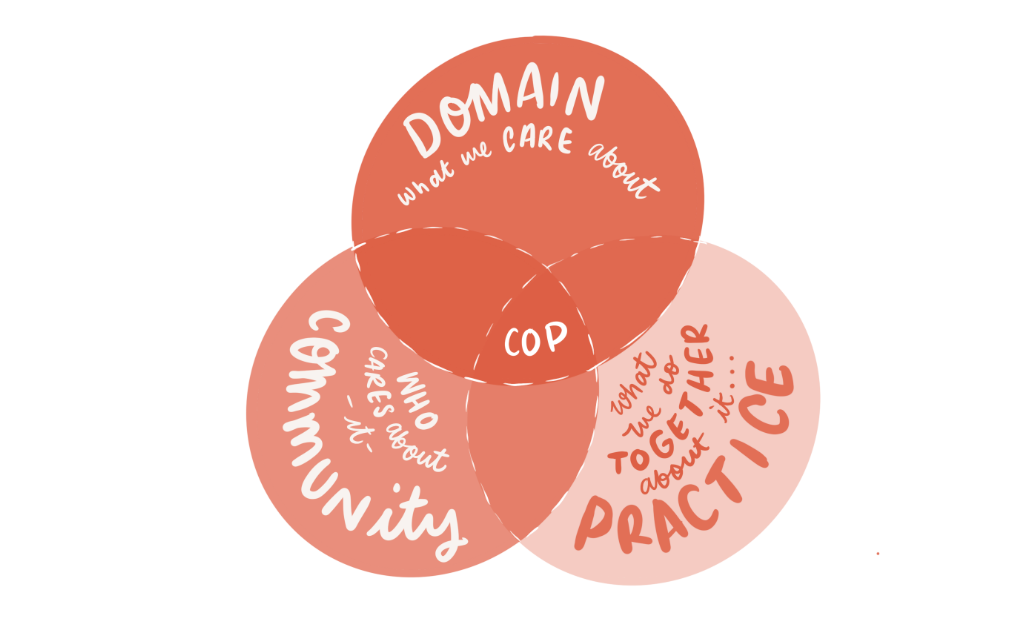
Wait… whats a Community of Practice?
“Learning is not merely the acquisition of knowledge by individuals. It is a process of social participation.” A slightly bastardised…
Capturing our Attention by @neillevy.bsky.social "we possess sophisticated capacities of epistemic vigilance, which work reasonably well to distinguish reliable from unreliable information, but ... we do not have parallel defences against attentional capture" > tandfonline.com/doi/full/10.1080/00048402.202…
