

Eines lliures tecnoètiques cooperatives
cooperative/Formation Documents at main · NorthskySocial/cooperative
Information about our Cooperative. Contribute to NorthskySocial/cooperative development by creating an account on GitHub.
Cooperative non-profit social media for Canada - CoSocial Community Cooperative
CoSocial, officially CoSocial Community Cooperative, is a member-owned organization with the purpose of providing democratically-run open social media.


Start.coop | Empower Cooperative Growth
Discover resources and support to build and grow cooperatively-owned businesses, fostering community wealth-building and economic stability.

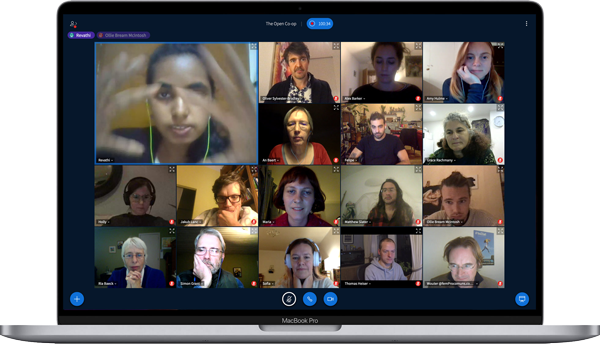
meet.coop - The Online Meeting Cooperative
Online meeting and conferencing tools, powered by renewable energy running on cooperatively owned and managed infrastructure.
Coops 4 Coops
Your dedicated directory of cooperatives offering services to other cooperatives across Canada.
Liberating work - workers.coop
Worker cooperatives enable workers to unite and collectively advance their economic, social, and cultural interests.

The Cooperative Economy (@cooperatives.bsky.social)
Advocating for a democratic, equitable, and inclusive world through cooperatives, worker ownership, unions, mutual aid, and workplace democracy. 💜 #EconomicDemocracy 🌲🌲 usworker.coop | ncbaclusa.coop | workers.coop | ica.coop

New to the Commons? | David Bollier
If you’re coming to the commons for the first time, it can be difficult to grok the idea because there are so many different ways to understand the commons. That’s because the commons is not so much a fixed, universal thing as a general concept describing durable, dynamic sets of social relationships for managing resources -- all sorts of resources: digital, urban, natural, indigenous, rural, cultural, scientific, to use some crude categories.

Proto-Social Infrastructure and Stewardship of Commitment Pooling
This paper examines Commitment Pooling as a commons-based resource coordination framework. The Commitment Pooling protocol establishes rules for the exchange of resources, emphasizing reciprocity and mutual support. The infrastructure, blending proto-social systems like rotational labor with modern technologies such as blockchain, enables a transition from extractive to cooperative models. Central to this framework is stewardship, ensuring responsible governance and long-term sustainability of the commons. By integrating protocol, infrastructure, and stewardship, Commitment Pooling provides a flexible, scalable model for fostering cooperative, resilient economies and addressing contemporary challenges in resource management.
The Routledge Handbook of Cooperative Economics and Management
Cooperatives have spread across virtually all continents. Today, the International Cooperative Alliance (ICA) recognises over 3 million cooperatives with 1 billion cooperative members or about 12% of the human population and serving many more members of the public, collectively owning trillions in assets. This handbook provides a comprehensive introduction to the subject and the current state of affairs with regard to the study of cooperation in the economy generally and of the cooperative and related sectors particularly. It highlights the essential issues and debates; provides a future research agenda, outlining the distinctions and similarities between individual and (inter)organisational cooperation; and explores the connections of cooperative economics and management to fundamental ethical principles. This book examines coopetition and the similarities and differences between competitive economics and cooperative economics, identifying to what extent and how cooperative economics and management are more capable of addressing the problems of global neoliberalism, such as ecological collapse, wealth inequity, value capture, and distribution, including via online platforms and social/relational problems. This book offers a variety of new research and theory‑building from various disciplines, particularly focusing on the fields of economics and management but extending beyond these disciplines to domains such as sociology, psychology, anthropology, and political science. It will become the standard reference work for not only a broad and large audience of scholars, researchers, and students but also interested professionals, policymakers, regulators, and cooperators in the field wishing to orient themselves in a global, rapidly developing movement and field of study with reference to issues of producing and allocating resources and focusing on the impact of cooperation on issues like risk, trust, the development of preferences, institutional governance, networks, and inequity. The Open Access version of this book, available at https://www.taylorfrancis.com, has been made available under a Creative Commons Attribution-Non Commercial-No Derivatives (CC-BY-NC-ND) 4.0 license. The handbook has received an Honorable Mention for the Joyce Rothschild book prize.
A Revised “Ostrom’s Design Principles for Collective Governance of the Commons
A Revised “Ostrom’s Design Principles for Collective Governance of the Commons” The traditional economic definition of “the commons” are those resources...

Commons Network
Digital Commons are not only about digital technology, but also about the economy, how it is organised and who it benefits. Digital Commons represent a democratic practice, with shared ownership, thus initiating a shift away from centralised (private or state) management of technology and towards democratisation of digital infrastructure. In this way Digital Commons help guard and reinforce such public values as democracy, self-determination and sovereignty. In the first explainer we put forward how this shift offers numerous opportunities for the Netherlands, or any country that takes Digital Commons seriously. Read the explainer

Cooperate Now! @ DWeb Camp Cascadia

Links for talk: Cooperate Now! @ DWeb Camp Cascadia: Learn about cooperatives, their history and traditions, and what cooperating looks like in practice. Through a short presentation and small group dialogue, participants will reflect on solidarity, mutual aid, and co-ownership. Putting it all together to consider legal cooperatives as one tool for collaborative democracy and building livelihoods together.

Indigenous Cooperatives in Canada: The Complex Relationship between Cooperatives, Community Economic Development, Colonization, and Culture
Meet the Team — Freedom Dreams Co-operative Education
CiviCRM | CMC CRM
Coops 4 Coops
geo.coop

Framework for Economic Reconciliation