I tend to focus on the origin of the computer within the military. Particularly in the early days of digital computing, the military was a key customer, and fundamental concepts of modern computing arose in universities and laboratories serving military contracts. Of course, the war would not last forever, and computing had applications in so many other fields—fields that, nonetheless, started out as beneficiaries of military largesse.
The closed world: Systems discourse, military strategy and post WWII American historical consciousness
This essay proposes a cultural and historical explanation for the American Military's fascination with computing. Three key elements of post-WWII US political culture — apocalyptic struggle with the USSR, subsuming all other conflicts: a long history of antimilitarist sentiment in American politics; and the rise of science-based military power — contributed to a sense of the world as a closed system accessible to American technological control. A developing scientific systems discourse, centrally including computer science and AI, was adopted for strategic thinking and military technology. The Strategic Computing and Strategic Defense Initiatives are discussed as contemporary examples of this conjunction.
War in the age of intelligent machines
271 pages : 24 cm; In the aftermath of the methodical destruction of Iraq during the Persian Gulf War, the power and efficiency of new computerized weapons and suveillance technology has become chillingly apparent. This new weaponry has a significance that goes far beyond military applications; it represents a profound historical shift in the relation of human beings both to machines and to information. Details the mutating history of information analysis and machinic organization from the mobile siege artillery of the Renaissance, the clockwork armies of the Thirty Years War, the Napoleonic campaigns, and the Nazi blitzkrieg up to present-day cybernetic battle-management systems and satellite reconnaissance network, and provides a philosophical and historical reflection on the changing forms through which human bodies and materials are combined, organized, deployed and made effective. [back cover]; Includes bibliographical references (pages 233-266) and index; Introduction -- Collision course -- Bloodless transfusion -- Policing the spectrum

Computer: A History of the Information Machine
Computer: A History of the Information Machine is a history of computing written by Martin Campbell-Kelly and William Aspray first published in 1996. It follows the history of "information machines" from Charles Babbage's difference engine through Herman Hollerith's tabulating machines to the invention of the modern electronic digital computer. A revised 2nd edition published in 2004 included new material on the Internet and World Wide Web, while the updated 3rd edition published in 2013 includes contributions from historians Nathan Ensmenger and Jeffrey Yost. The 3rd edition extends the story to include recent phenomena such as social networking and revises the discussion of early history to reflect new insights from the literature.

100% Utilization
Since the end of the Second World War, we have come to expect continual growth in computing power and the rapid development of digital technology. This dynam...
IBM's "Man & Computer" (1967)
The education of a computer
triumph of the nerds
The International Research Conference in the History of Computing at Los Alamos, 1976
Hackers: Heroes of the Computer Revolution
A mere fifteen years ago, computer nerds were seen as m…

Humanities in the Machine - Blain Smith
There is something quietly remarkable about the people who built the foundations of modern computing. Not their technical achievements, though those are extraordinary. What is remarkable is where they came from before they ever touched a machine.
The Software Revolution
In human history, there have been three great technological revolutions and many smaller ones. The three great ones are the agricultural revolution, the industrial revolution, and the one we are...
Ivan Sutherland's Sketchpad
Stuart K. Card and Thomas P. Moran, "User Technology—From Pointing to Pondering"
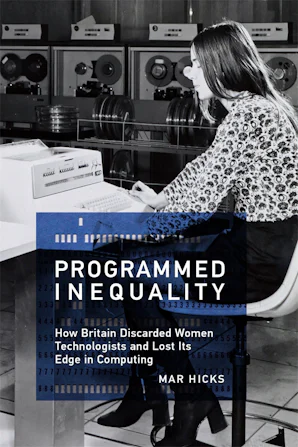
Programmed Inequality
In 1944, Britain led the world in electronic computing. By 1974, the British computer industry was all but extinct. What happened in the intervening thirty y...
The rise of Whatever
This was originally titled “I miss when computers were fun”. But in the course of writing it, I discovered that there is a reason computers became less fun, a dark thread woven through a number of events in recent history. Let me back up a bit.

The shifting battlefield: technology, tactics, and the risk of blurring lines in warfare - Humanitarian Law & Policy Blog
The accelerating integration of emerging technologies into armed conflict is transforming not only the tools of war, but its tactics, geography, participants and impact. Technological developments – from commercial drones to artificial intelligence, electronic warfare to the military use of civilian infrastructure – risk undermining boundaries between military and civilian domains. These changes challenge long-held...