

Thousands of programming languages were invented in the first 50 years of the age of computing. Many of them were similar, and many followed a traditional, evolutionary path from their predecessors. What eventually became APL was first a mathematical notation, not as a computer programming language.
The Next 7000 Programming Languages
Landin’s seminal paper “The next 700 programming languages” considered programming languages prior to 1966 and speculated on the next 700. Half-a-century on, we cast programming languages in a Darwinian ‘tree of life’ and explore languages, their features (genes) and language evolution from the viewpoint of ‘survival of the fittest’.
J Notation as a Tool of Thought
Kenneth Iverson’s 1964 language, APL, won him the Turing Award. His award lecture, Notation as a Tool of Thought, argued that better notations would lead people to deeper insights about mathematics. He provided a number of examples ranging across linear algebra, arithmetic, probability, and logic. Unfortunately, most of the mathematics he covers isn’t relevant to programming. However, his core idea still applies, and changing how we describe programs changes how we think about them.
Its Time for a New Programming Language
Today, when compared to any other point in programming history, we find ourselves spoiled for choice when it comes to programming…
SHARP APL Source Code
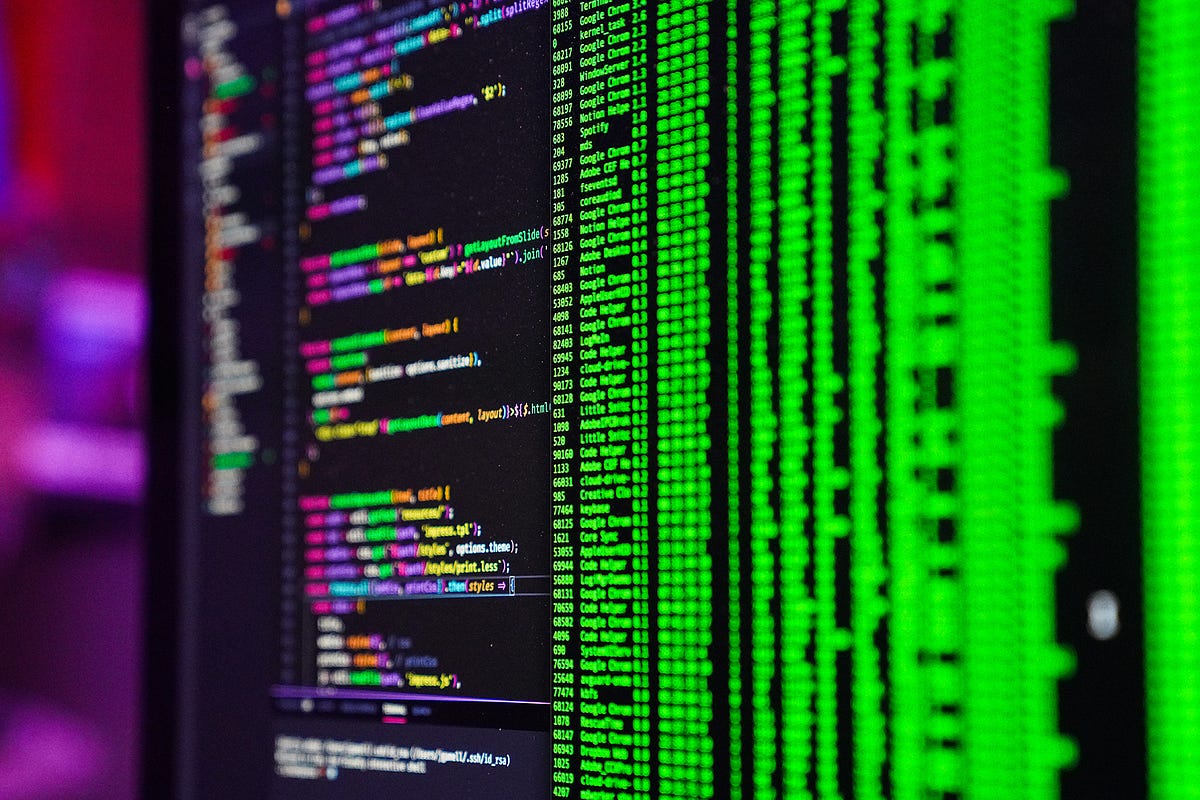
SHARP APL source code (circa 1989). This is posted for educational and historical purposes and may not represent a fully working system. Tools associated with a full system (e.g., assembler, link-editor, IBM 370-code simulator, graphics driver, workspaces) may also not be included. Likely this was a version used to generate the PC version of SHARP APL. NOTE: The original files are ANSI encoded but look to have originally contained APL characters (which are no longer displayed as such). As a result, the comments and some other lines are sometimes hard to read. A secondary zip file has been added which attempts to convert the files to UTF8 and to change some characters back to APL. A zip file of SHARP APL/PC workspace listings has been added for example code. A version of SHARP APL/PC has been added which also has additional implementation code examples (requires a DOS emulator in order to run).

The Story of C++: The World's Most Consequential Programming Language | The Official Story
Most used languages among software developers globally 2025| Statista
As of 2025, JavaScript and HTML/CSS are the most commonly used programming languages among software developers around the world, with more than 66 percent of respondents stating that they used JavaScript and just around 61.9 percent using HTML/CSS.

History of free and open-source software
The history of free and open-source software begins at the advent of computer software in the early half of the 20th century. In the 1950s and 1960s, computer operating software and compilers were delivered as a part of hardware purchases without separate fees. At the time, source code—the human-readable form of software—was generally distributed with the software, providing the ability to fix bugs or add new functions. Universities were early adopters of computing technology. Many of the modifications developed by universities were openly shared, in keeping with the academic principles of sharing knowledge, and organizations sprung up to facilitate sharing.

Something Pretty Right: A History of Visual Basic | Retool
How Visual Basic became the world’s most dominant programming environment, its sudden fall from grace, and why its influence is still shaping the future of software development.
Crafting Interpreters
Ever wanted to make your own programming language or wondered how they are designed and built?
The Man Who Revolutionized Computer Science With Math
pldb: programming languages papers
Search 22,324 papers from POPL, PLDI, ICFP, OOPSLA and other programming languages venues, from 1973 to today.
Chuck Moore: The Invention of Forth
How forth was invented during the decade of the 1960's. a word-by-word description of the evolution of a unique programming language.> <meta name=
The Rise and Fall of Visual Basic
After 28 years, are we are finally seeing the beginning of the end for one of the world’s most popular languages?

The third golden age of software engineering – thanks to AI, with Grady Booch
The third golden age of software engineering – thanks to AI, with Grady Booch
p-code
Niklaus Wirth specified a simple p-code machine in the 1976 book Algorithms + Data Structures = Programs. The machine had 3 registers - a program counter p, a base register b, and a top-of-stack register t. There were 8 instructions: