

A question I get quite frequently is “What makes a good leader?” One of the most important aspects of a good leader is that they have values. This may at first sound noncontroversial, but we are surrounded today by leaders who do not have values or whose only values are to get rich personally or to be powerful (or both). Tech investors have been especially guilty of enabling charismatic leaders, and sometimes even non-charismatic but wildly successful ones, who are fundamentally hollow and wi...
Leaders are responsible for culture and strategy. Everything else is secondary.
Are you focused on serving a need or building a product? The difference matters more than you think.
Develop Strategic Thinkers Throughout Your Organization
It’s the single most important skill a leader needs.

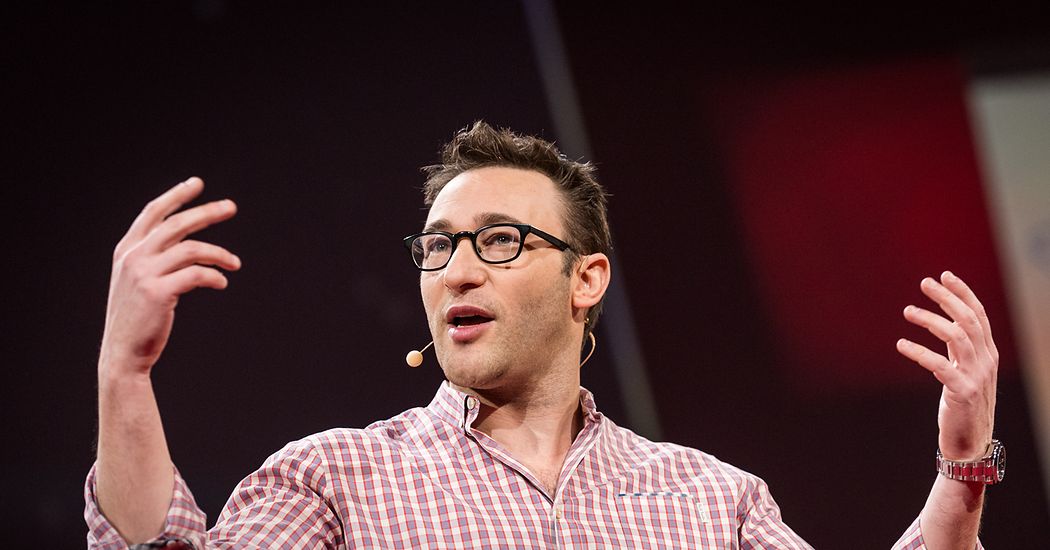
Simon Sinek: Why good leaders make you feel safe
What makes a great leader? Management theorist Simon Sinek suggests, it's someone who makes their employees feel secure, who draws staffers into a circle of trust. But creating trust and safety -- especially in an uneven economy -- means taking on big responsibility.
Wisdom and Wanting What's Good
Wisdom as a practical, collective capacity for choosing what's good and acting skilfully towards it, and why modern society, trusting only what can be measured, has neglected it.

The Most Important People in Business | Observer
The most powerful leaders in business, with a focus on media, technology and finance.

The Most Important People in Business | Observer
The most powerful leaders in business, with a focus on media, technology and finance.
The Most Important People in Business | Observer
The most powerful leaders in business, with a focus on media, technology and finance.
The surprising traits of good remote leaders
Strong in-person leadership skills don’t necessarily translate to being a good virtual leader. Instead, organisation and competency reign supreme.

Trust is the most powerful currency in business | Fortune
A clear sense of ethics tells employees, clients, and members of your community that you care about a lot more than making money.

Want to Instantly Become a Better Leader? Science Says 3 Simple Habits Will Make You More Influential and Charismatic
Simple things you can immediately start doing, without changing your leadership style. (Or yourself.)

Why the Most Productive People Don’t Always Make the Best Managers
Not every top performer makes for a good manager. In this piece, the authors argue that the difference between a good individual contributor and a good manager hinges on six key abilities: being open to feedback and personal change, supporting others’ development, being open to innovation, communicating well, having good interpersonal skills, and supporting organizational changes. The problem for most organizations is that they hope their new managers will develop these skills after being promoted, but that’s exactly when overwhelmed new managers tend to fall back on their individual contributor skill sets. Instead, the authors suggest that organizations should start developing these skills in all of their employees early on — after all, they’re useful for individual contributors, too.

Simon Sinek: Why Leaders Eat Last
In this in-depth talk, ethnographer and leadership expert Simon Sinek reveals the hidden dynamics that inspire leadership and trust. In biological terms, leaders get the first pick of food and other spoils, but at a cost. When danger is present, the group expects the leader to mitigate all threats even at the expense of their personal well-being. Understanding this deep-seated expectation is the key difference between someone who is just an “authority” versus a true “leader.” For more on this topic, check out Sinek’s latest book Leaders Eat Last: Why Some Teams Pull Together and Others Don’t now available for pre-order. About Simon Sinek A trained ethnographer and the author of Start With Why: How Great Leaders Inspire Everyone to Take Action, Simon Sinek has held a life-long curiosity for why people and organizations do the things they do. Studying the leaders and companies that make the greatest impact in the world and achieve a more lasting success than others, he discovered the formula that explains how they do it. Sinek’s amazingly simple idea, The Golden Circle, is grounded in the biology of human decision-making and is changing how leaders and companies think and act. His innovative views on business and leadership have earned him invitations to meet with an array of leaders and organizations, including Microsoft, Dell, SAP, Intel, Chanel, Members of the United States Congress, and the Ambassadors of Bahrain and Iraq. Sinek recently became an adjunct staff member of the RAND Corporation, one of the most highly regarded think tanks in the world. He also works with the non-profit Education for Employment Foundation to help create opportunities for young men and women in the Middle East region. He lives in New York, where he teaches graduate level strategic communications at Columbia University.

How To Be Successful
I’ve observed thousands of founders and thought a lot about what it takes to make a huge amount of money or to create something important. Usually, people start off wanting the former and end up...
Values Aren’t a Moral Imperative
Credit: pxhere One of the most impactful exercises in DRI Your Career has been the values exercise (Jean wrote about it here). At first this surprised me, but then I thought about it more. Even whe…

Influence without authority — Gabriel Valdivia
Some of the most influential designers I’ve worked with had no direct reports. They didn't spend their days assigning work, running performance reviews, or deciding who got promoted. Yet they could change the direction of a project, raise the quality bar of a team, and sometimes change the strategy for the entire company. Individual contributors can develop influence by giving people reasons to trust their judgment, then finding ways for that judgment to travel beyond the things they personally make.
Why Do So Many Incompetent Men Become Leaders?
Why are so few women in management positions? The popular explanations range from women just aren’t capable of being leaders to women just don’t want to be leaders. According to the author, however, the absence of women in leadership roles has less to do with women themselves and more to do with how we interpret leadership traits. Confidence – a trait more associated with men – is often misinterpreted as competence. As a result, charismatic, but incompetent men have fewer barriers to reach the top than women. Individuals in positions to promote and hire managers should think more critically about what seems like a leadership trait versus what is an actual leadership trait. They will find that arrogance and overconfidence – the characteristics that get men into management positions – are also the characteristics that cause poor performance.
