


What happens when you pay off all your intention debts?
Archiving web sites
I recently took a deep dive into web site archival for friends who were worried about losing co [...]
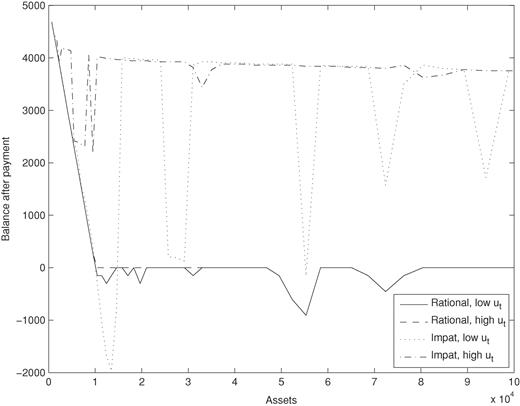
Credit Card Debt Puzzles and Debt Revolvers for Self Control
Abstract Most US credit card holders revolve high-interest debt, often with substantial liquid and retirement assets. We model separation of accounting from shopping allowed by credit cards, in a rational, dynamic game. When the shopper is more impatient than the accountant, selling assets to repay debt is not necessarily optimal, as the shopper can restore debt. Modest relative impatience generates asset-debt co-existence and target utilization rates, matching incidence and median assets of debt revolvers with substantial assets. Empirical evidence is consistent with a role for spending control considerations, after allowing for standard determinants of credit card debt.
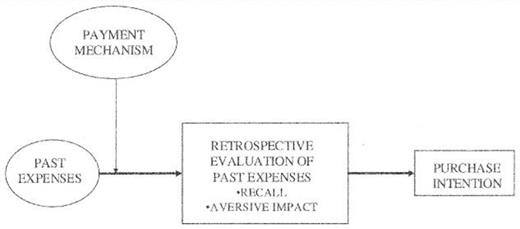
Effects of Payment Mechanism on Spending Behavior: The Role of Rehearsal and Immediacy of Payments
Abstract. Past expenses have been shown to influence future spending behavior by depleting available budgets. However, a prerequisite for this relationship
Consumption, Debt, and Portfolio Choice: Testing the Effects of Bankruptcy Law
In the United States, consumer bankruptcy (Chapter 7 and Chapter 13) is designed to provide debtors a fresh start. Broadly speaking, after a household successfully files a bankruptcy petition, its unsecured debts are erased, but it must forfeit any assets above an exemption level determined by law. Laws regulating bankruptcy are a complex mix of state and federal rules. While the specific legal details are beyond the scope of this essay, in general, state laws set the exemption levels above which households forfeit assets; these range from exemptions as low as $75 to more than $100,000 (or, indeed, potentially unlimited levels).1
Payment Depreciation: the Behavioral Effects of Temporally Separating Payments From Consumption
Abstract. Research suggests that individuals mentally track the costs and benefits of a consumer transaction for the purpose of reconciling those costs and
Research Debt
Science is a human activity. When we fail to distill and explain research, we accumulate a kind of debt...

The Effects of Prior Spending on Future Spending Decisions: The Role of Acquisition Liabilities and Payments
Research in mental accounting shows that prior spending influences a consumer's decision to make a new spending decision (Heath and Soll 1996, Soman 2001). In particular, greater spending in a particular category reduces the likelihood of further spending in that category. In the present research, we decompose “spending” into two distinct episodes—the acquisition liability episode during which a purchase is made accompanied by a commitment to pay (e.g., using a credit card) and the payment episode during which the consumer's wealth actually gets depleted (e.g., paying the credit card bill). Using a controlled laboratory experiment and real world data from a group of consumers, we replicate earlier findings that prior spending influences a pending spending decision, but also show that the location of both the acquisition liability episode and the payment episode play a role. Our results contribute to an understanding of the dynamic mental accounting of acquisition liability and actual outflows.
Precautionary borrowing and the credit card debt puzzle
Credit Card Debt Puzzle: Liquid Assets to Pay Bills
Using transaction data from a US consumer payments diary, we revisit the credit card debt puzzle—a scenario in which consumers revolve credit card debt while al

The Fiduciary Obligation
ROBERT FLANNIGAN; The Fiduciary Obligation, Oxford Journal of Legal Studies, Volume 9, Issue 3, 1 October 1989, Pages 285–322, https://doi.org/10.1093/ojls

Debt literacy, financial experiences, and overindebtedness
We analyze a national sample of Americans with respect to their debt literacy, financial experiences, and their judgments about the extent of their indebtedness. Debt literacy is a component of broader financial understanding that measures knowledge about debt and self-assessed financial knowledge. Financial experiences are the participants’ reported experiences with traditional borrowing, alternative borrowing, and investing. Overindebtedness is a self-reported measure. Debt literacy is low, with only about one-third of the population grasping the basics of interest compounding. Even after controlling for demographics, we find a relationship between debt literacy and both financial experiences and debt loads. Individuals with lower levels of debt literacy tend to transact in high-cost manners, incurring higher fees and using high-cost borrowing. We provide a rough estimate of the national implications of debt ignorance on credit card costs by consumers. Less knowledgeable individuals also report that their debt loads are excessive or that they are unable to judge their debt position.
Overconfidence and the Credit Card Debt Puzzle - ProQuest
Explore millions of resources from scholarly journals, books, newspapers, videos and more, on the ProQuest Platform.
An Empirical Analysis of Personal Bankruptcy and Delinquency
Abstract. This article uses a new dataset of credit card accounts to analyze credit card delinquency, personal bankruptcy, and the stability of credit risk
Back into blogging and just published something I've been thinking about for a while now – making archival content more resilient and discoverable on atproto. Oral history, interactive transcripts, content addressing, and keeping important stories from being quietly erased. maboa.it/resilient-archives-on-the-at-…

Keeping Archives Alive: Resilience and Discovery on ATProto
maboa.itPost-Archive-Everything

For me personally there is a journey here - I was a firm believer in archive everything. This peaked in a period where I was very interested in IPFS, CIDs, CAS, etc. Now, the next step. Post-Archive(-Everything). Through a series of conversations I came to the conclusion that forgetting is probably more powerful than remembering. The links in this collections play a similar note, or are related to my understanding of this.

FOSDEM 2026 - Willow - Protocols for an uncertain future
Willow - Home
I Deleted My Second Brain


