


Learning to feel time again in the Permaweird
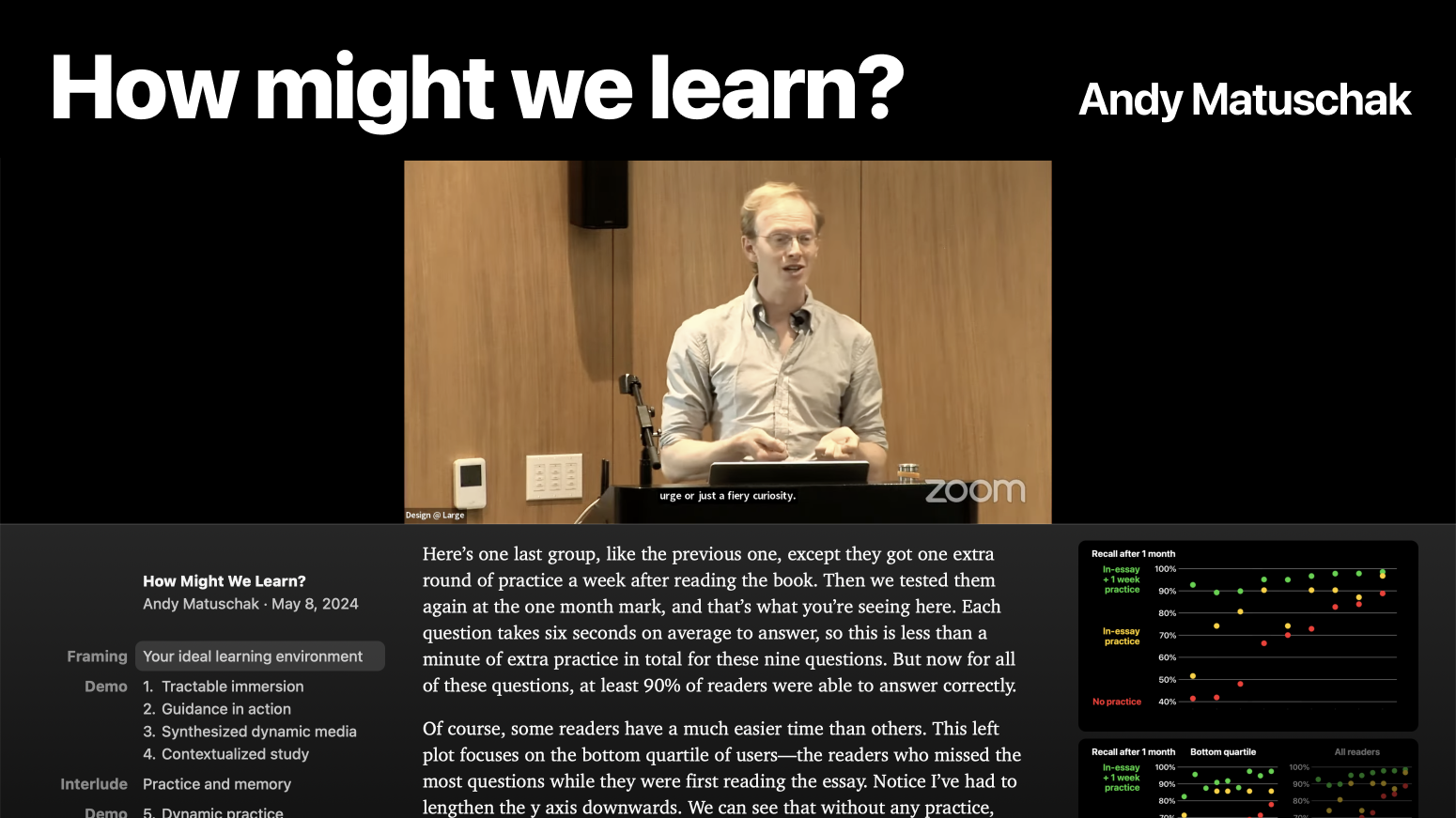
The Akrasia Effect: Why We Don’t Follow Through on What We Set Out to Do and What to Do About It
Plus, 3 strategies to help you start beating procrastination now.
Six Ways to Think Long-term: A Cognitive Toolkit for Good Ancestors
None of these six ways is enough alone to create a long-term revolution of the human mind — a fundamental shift in our perception of time. But together — and when practised by a critical mass of people and organisations — a new age of long-term thinking could emerge out of their synergy.

Math Academy
Q. Michael Pershan’s main critique of spaced repetition in the context of Math Academy?A. It reinforces his memory of a shallow understanding.
Izabella Kaminska on Twitter / X
The problem of our time is not merely information overload. It is that the time required to construct a coherent understanding of reality is becoming longer than the time during which that understanding remains valid.— Izabella Kaminska (@izakaminska) October 16, 2026
The Great Reckoning - The Ideas Letter
The world feels unsettled, as if history itself were changing tempo. The familiar landmarks of the modern age are blurring, slipping away, and the stories we once told ourselves about…
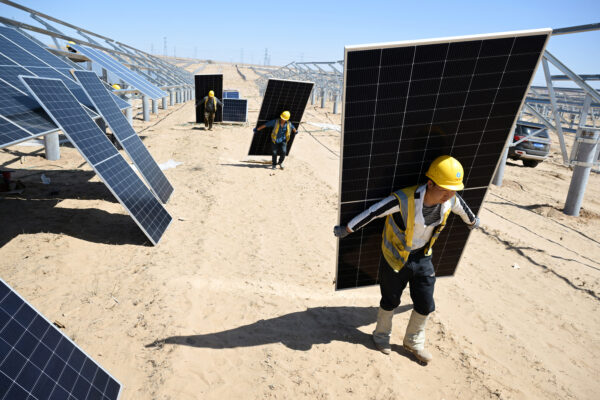
The Great Reckoning - The Ideas Letter
The world feels unsettled, as if history itself were changing tempo. The familiar landmarks of the modern age are blurring, slipping away, and the stories we once told ourselves about…
Excess Capacity Learning
How do humans learn from experience? Traditionally, cognitive scientists have assumed that discovering generalizable patterns requires that humans compress rich and noisy experiences. However, recent computer science results suggest otherwise — systems can learn by ‘overfitting’ and expanding all the details of their experiences. We offer a new perspective on learning based on a cognitive system’s representational capacity, which can be constrained (forcing the system to compress details of past experiences), sufficient (to memorize past experiences), or excess (allowing the system to expand on the details of past experiences). This framework has implications for understanding learning across cognitive, clinical, and developmental contexts.
Letta
Making machines that learn. Create stateful agents that remember everything, learn continuously, and improve themselves over time.

Neuralink and the Brain's Magical Future — Wait But Why
I knew the future would be shocking but this is a whole other level.

To Make Sense of the Present, Brains May Predict the Future | Quanta Magazine
A controversial theory suggests that perception, motor control, memory and other brain functions all depend on comparisons between ongoing actual experiences and the brain’s modeled expectations.

Prophecy And Future Coding
Preface: On Prophecy and the Search for Certainty in an Age of Reflexive Time

How are we writing the future of humanity?
Consciousness spinning

Permacomputing Update 2021 | viznut
It is now more than a year since I wrote my "early notes" about Permacomputing. At that time, I was not yet aware of anyone else having similar ideas, so I've now decided to write an update that connects my ideas with the existing discussions and activities. I also want to share some new ideas I have been pondering about. This text is about 33K characters / 4900 words long, so allocate your time accordingly.
Ever thought we acquire generalizable knowledge by discarding details and compressing our experiences? In a new BBS paper, @sabinasloman.bsky.social and I argue otherwise, proposing a novel way of studying human learning inspired by double descent in ML. Disagree? Propose a commentary by May 15 :)
