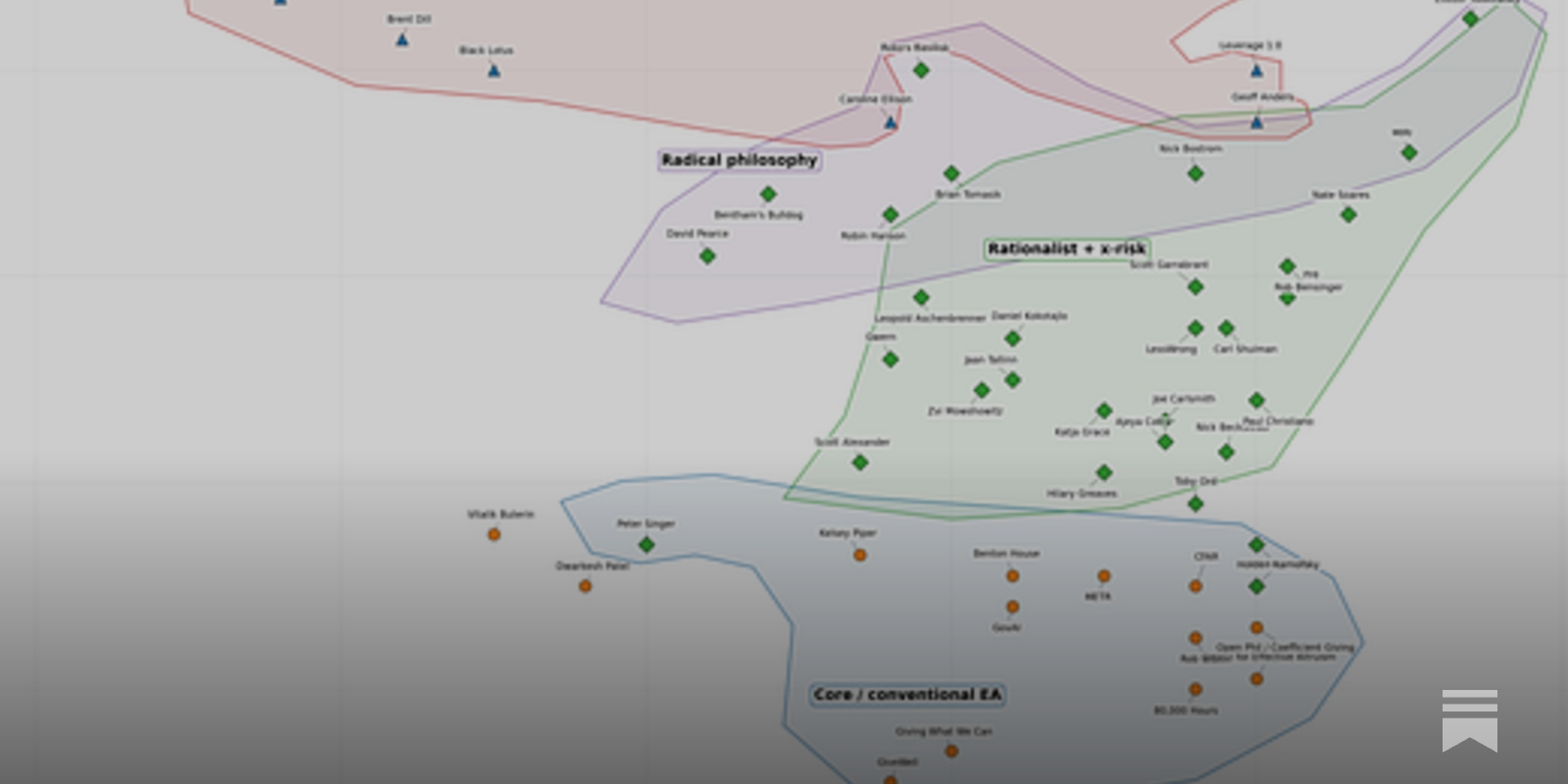
EA promises to solve AI Safety. Now we have two problems.
Clear, Compelling Arguments: Rethinking the Foundations of Frontier AI Safety Cases
This paper contributes to the nascent debate around safety cases for frontier AI systems. Safety cases are structured, defensible arguments that a system is acceptably safe to deploy in a given context. Historically, they have been used in safety-critical industries, such as aerospace, nuclear or automotive. As a result, safety cases for frontier AI have risen in prominence, both in the safety policies of leading frontier developers and in international research agendas proposed by leaders in generative AI, such as the Singapore Consensus on Global AI Safety Research Priorities and the International AI Safety Report. This paper appraises this work. We note that research conducted within the alignment community which draws explicitly on lessons from the assurance community has significant limitations. We therefore aim to rethink existing approaches to alignment safety cases. We offer lessons from existing methodologies within safety assurance and outline the limitations involved in the alignment community's current approach. Building on this foundation, we present a case study for a safety case focused on Deceptive Alignment and CBRN capabilities, drawing on existing, theoretical safety case "sketches" created by the alignment safety case community. Overall, we contribute holistic insights from the field of safety assurance via rigorous theory and methodologies that have been applied in safety-critical contexts. We do so in order to create a better foundational framework for robust, defensible and useful safety case methodologies which can help to assure the safety of frontier AI systems.

Action Plan to increase the safety and security of advanced AI
The first U.S. government-commissioned assessment on catastrophic national security risks from advanced AI on the path to AGI.


AI safety and the data center backlash
Planting a flag for AI safety as a place where we won’t abjectly bullshit you

Safety isn’t safety without a social model (or: dispelling the myth of per se technical safety) — AI Alignment Forum
As an AI researcher who wants to do technical work that helps humanity, there is a strong drive to find a research area that is definitely helpful so…

The AI safety movement needs normies
A broader base may be the only way for the AI safety field to get what it wants

A big-tent or small-tent AI safety movement?
The unstated disagreement that underpins safety debates

Artificial Intelligence Safety and Security License Requirements
Artificial Intelligence Safety and Security License Requirements Artificial Intelligence (AI) is now broadly capable, which can produce both benefits and dangers. AI will hasten the design and proliferation of bioweapons, cyberweapons, nuclear weapons, progressively more general intelligence,...

AI in 2025: gestalt — LessWrong
This is the editorial for this year’s "Shallow Review of AI Safety". (It got long enough to stand alone.) …
How a single tweet transformed the AI safety debate
Most people think AI is risky, but they don’t agree what to do next.

Safety cases at AISI | AISI Work
As a complement to our empirical evaluations of frontier AI models, AISI is planning a series of collaborations and research projects sketching safety cases for more advanced models than exist today, focusing on risks from loss of control and autonomy. By a safety case, we mean a structured argument that an AI system is safe within a particular training or deployment context.
The real lesson : safety is out
595 votes, 460 comments. The real lesson from the OpenAI coup is safety is out. Meta just disbanded their team responsible for AI oversight. I am…
Who decides when AI is too dangerous?
Anthropic asked for AI regulation, but not like this.

An End-to-End View of AI Safety
In this blog, Rachel Coldicutt OBE, Executive Director, Careful Industries discusses our newly published literature review on the safe adoption of artificial intelligence in engineered systems.

Safety and alignment in an era of long-horizon models
OpenAI shares lessons from deploying long-running AI models, highlighting new safety risks, observed failures, and improved safeguards through iterative deployment.
AI agents pose untold risk to humanity. We must act to prevent that future | David Krueger
The pieces are falling into place for autonomous artificial intelligence. We must stop unregulated development