

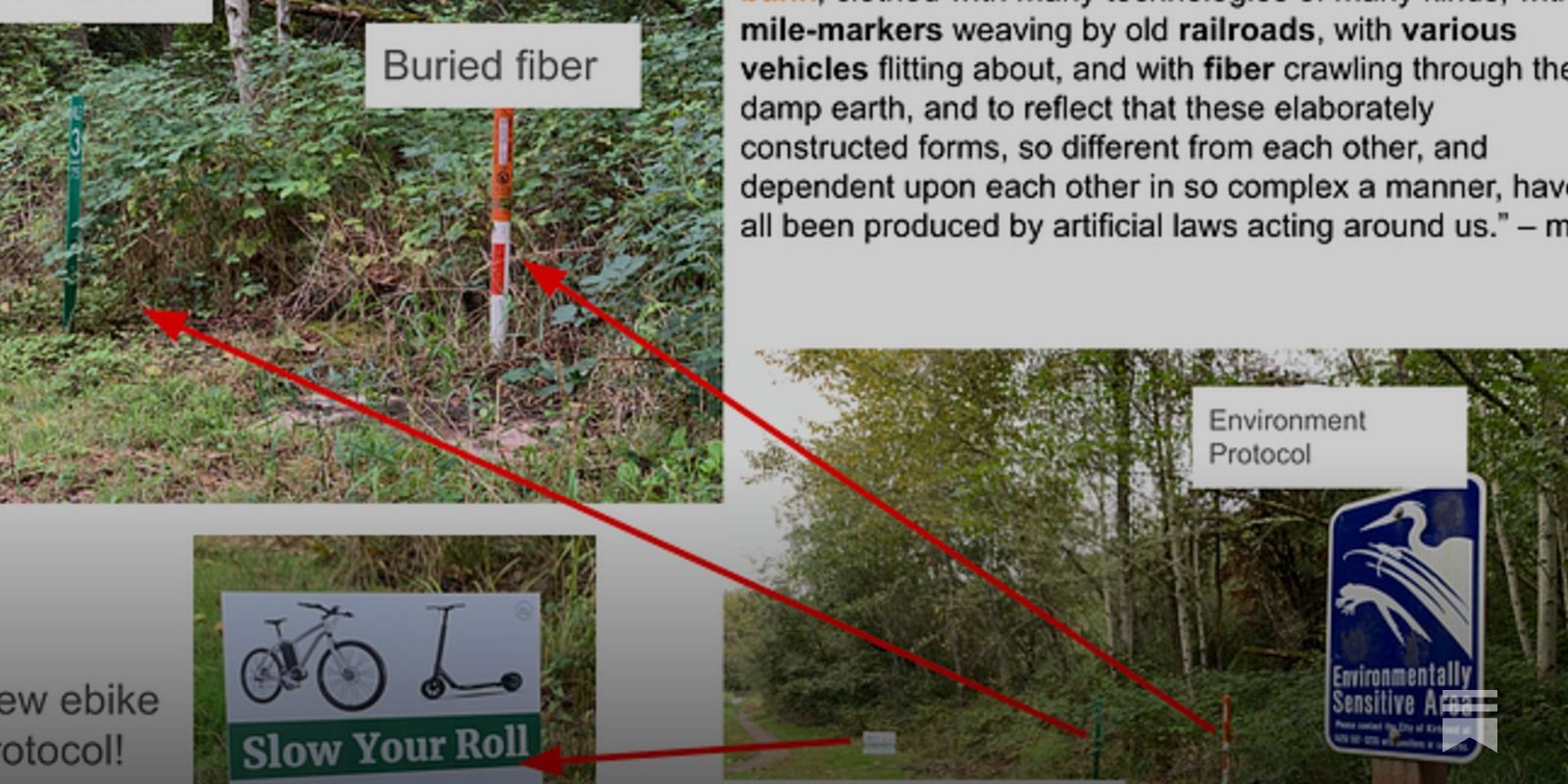
New Nature in the Gramsci Gap
Writing Liveness
The message of the medium of generated text is liveness

b.next: rebuilding biology for engineering
Don't Feed the Thought Leaders
In this article, the author shares their experience as an engineering manager and the challenges they faced when trying to reach alignment and prev...

Rabrg/artificial-life
A simple (300 lines of code) reproduction of Computational Life: How Well-formed, Self-replicating Programs Emerge from Simple Interaction
The Multiple Paths to Multiple Life
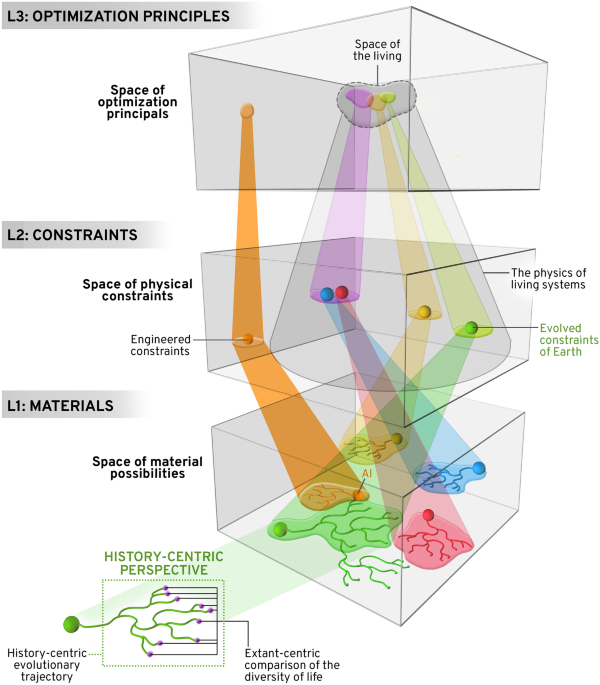
We argue for multiple forms of life realized through multiple different historical pathways. From this perspective, there have been multiple origins of life on Earth—life is not a universal homology. By broadening the class of originations, we significantly expand the data set for searching for life. Through a computational analogy, the origin of life describes both the origin of hardware (physical substrate) and software (evolved function). Like all information-processing systems, adaptive systems possess a nested hierarchy of levels, a level of function optimization (e.g., fitness maximization), a level of constraints (e.g., energy requirements), and a level of materials (e.g., DNA or RNA genome and cells). The functions essential to life are realized by different substrates with different efficiencies. The functional level allows us to identify multiple origins of life by searching for key principles of optimization in different material form, including the prebiotic origin of proto-cells, the emergence of culture, economic, and legal institutions, and the reproduction of software agents.
For the First Time, a Cell Built From Scratch Grows and Divides | Quanta Magazine
Scientists built a synthetic cell that combines more lifelike properties than ever before — proof of concept that it’s possible to bring nonliving materials to life, or something close to it, in the lab.
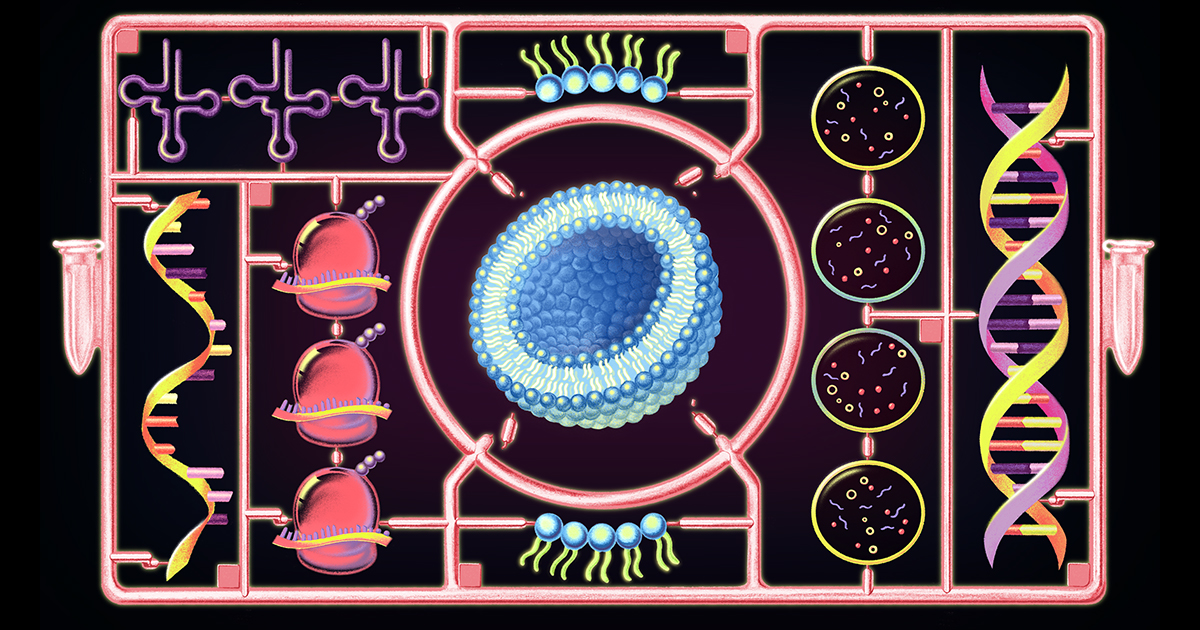
For the First Time, a Cell Built From Scratch Grows and Divides | Quanta Magazine
Scientists built a synthetic cell that combines more lifelike properties than ever before — proof of concept that it’s possible to bring nonliving materials to life, or something close to it, in the lab.
Exploratory and Live, Programming and Coding: A Literature Study Comparing Perspectives on Liveness
Various programming tools, languages, and environments give programmers the impression of changing a program while it is running. This experience of liveness has been discussed for over two decades and a broad spectrum of research on this topic exists. Amongst others, this work has been carried out in the communities around three major ideas which incorporate liveness as an important aspect: live programming, exploratory programming, and live coding. While there have been publications on the focus of each particular community, the overall spectrum of liveness across these three communities has not been investigated yet. Thus, we want to delineate the variety of research on liveness. At the same time, we want to investigate overlaps and differences in the values and contributions between the three communities. Therefore, we conducted a literature study with a sample of 212 publications on the terms retrieved from three major indexing services. On this sample, we conducted a thematic analysis regarding the following aspects: motivation for liveness, application domains, intended outcomes of running a system, and types of contributions. We also gathered bibliographic information such as related keywords and prominent publications. Besides other characteristics the results show that the field of exploratory programming is mostly about technical designs and empirical studies on tools for general-purpose programming. In contrast, publications on live coding have the most variety in their motivations and methodologies with a majority being empirical studies with users. As expected, most publications on live coding are applied to performance art. Finally, research on live programming is mostly motivated by making programming more accessible and easier to understand, evaluating their tool designs through empirical studies with users. In delineating the spectrum of work on liveness, we hope to make the individual communities more aware of the work of the others. Further, by giving an overview of the values and methods of the individual communities, we hope to provide researchers new to the field of liveness with an initial overview.

Are We Really Engineers?
This is part one of the Crossover Project. Part two is here and part three is here. A conference talk based on this work is now available here. I sat in front of Mat, idly chatting about tech and cuisine. Before now, I had known him mostly for his cooking pictures on Twitter, the kind that made me envious of suburbanites and their 75,000 BTU woks. But now he was the test subject for my new project, to see if it was going to be fruitful or a waste of time.
Levers for Progress
A Living Database of Methods to Advance Science and Technology. By Kelvin Yu and Anson Yu
The golden mean of design and engineering - The Intercom Blog
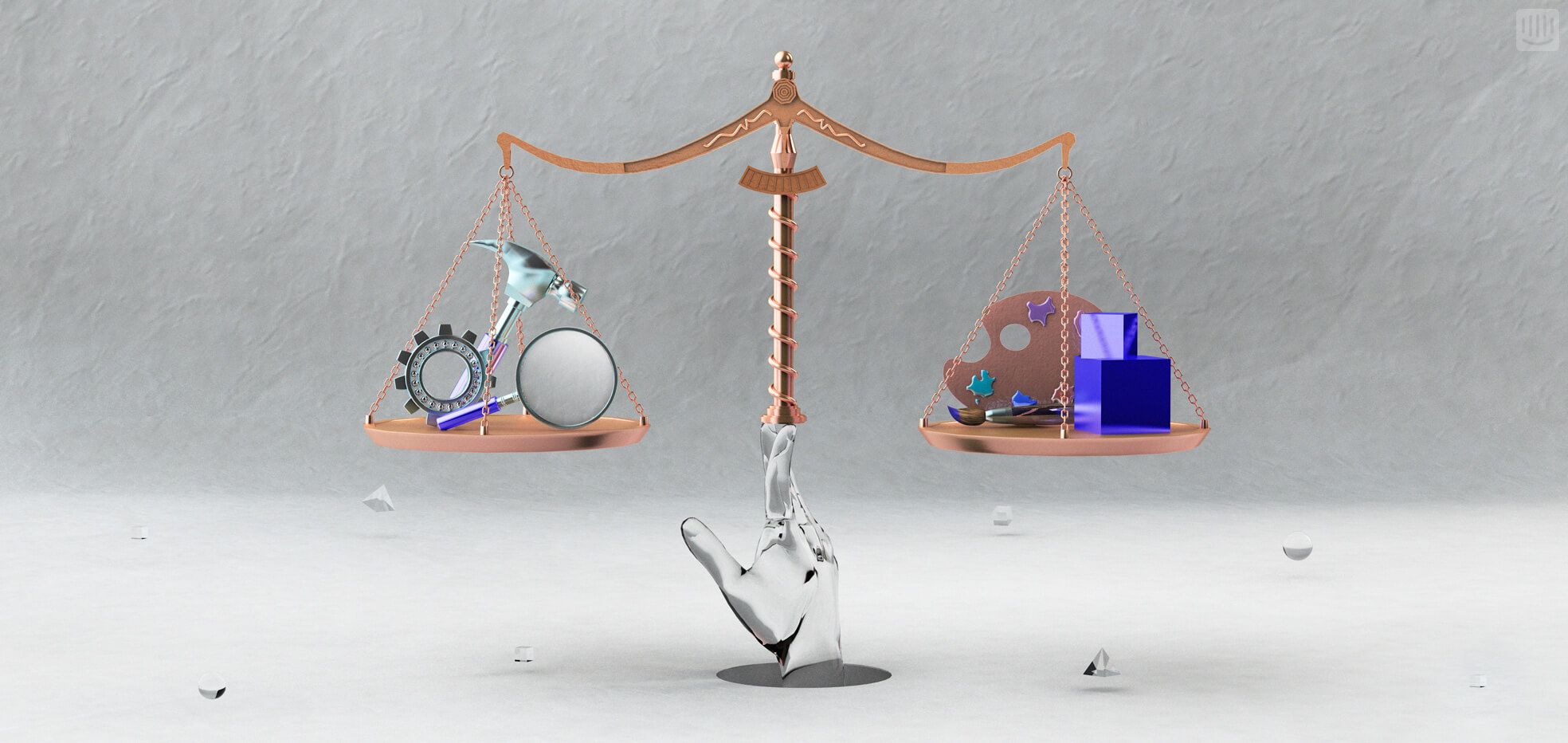
For great products to be built, both design and engineering need to be in balance. If you have a super strong engineering team but a weak or underserved design team, you will struggle.
How to build a generative engineering culture
A generative engineering culture is one where nothing seems to fall through the cracks, “we should” gets prioritized and becomes reality, and original ideas and value come primarily from engineers, rather than management. A culture like this is an engine for building capacity, quality, innovation, and sophistication.

The Regenerative Grain - The Phoenix Architecture
In 2014 I gave a talk called Tiny (keep things small enough to understand) In 2026, small means something different. Small means safe to delete. New in the Phoenix Architecture series: The Regenerative GrainI
Workshop on Live Programming (LIVE)
The 12th Workshop on Live Programming (LIVE 2026) will take place online. LIVE invites submissions of ideas for improving the immediacy, usability, and learnability of programming.

📚 STEM - Tech

Deep dives in technology
Neurotech (by Teon) — Semble
Women in Tech (by Bee 🐝) — Semble
AI (+ nuance) (by Bee 🐝) — Semble
If you’re an AT Proto enthusiast, do yourself a favour and read @yanisvaroufakis.bsky.social ‘s “Technofeudalism”. I swear you’ll have an eureka moment of understanding the real potential of AT Proto within society.
