

‘I weep for you,’ the Walrus said; ‘I deeply sympathize’

Taming the Mammoth: Why You Should Stop Caring What Other People Think
We all care way too much what other people think of us. Here's why.
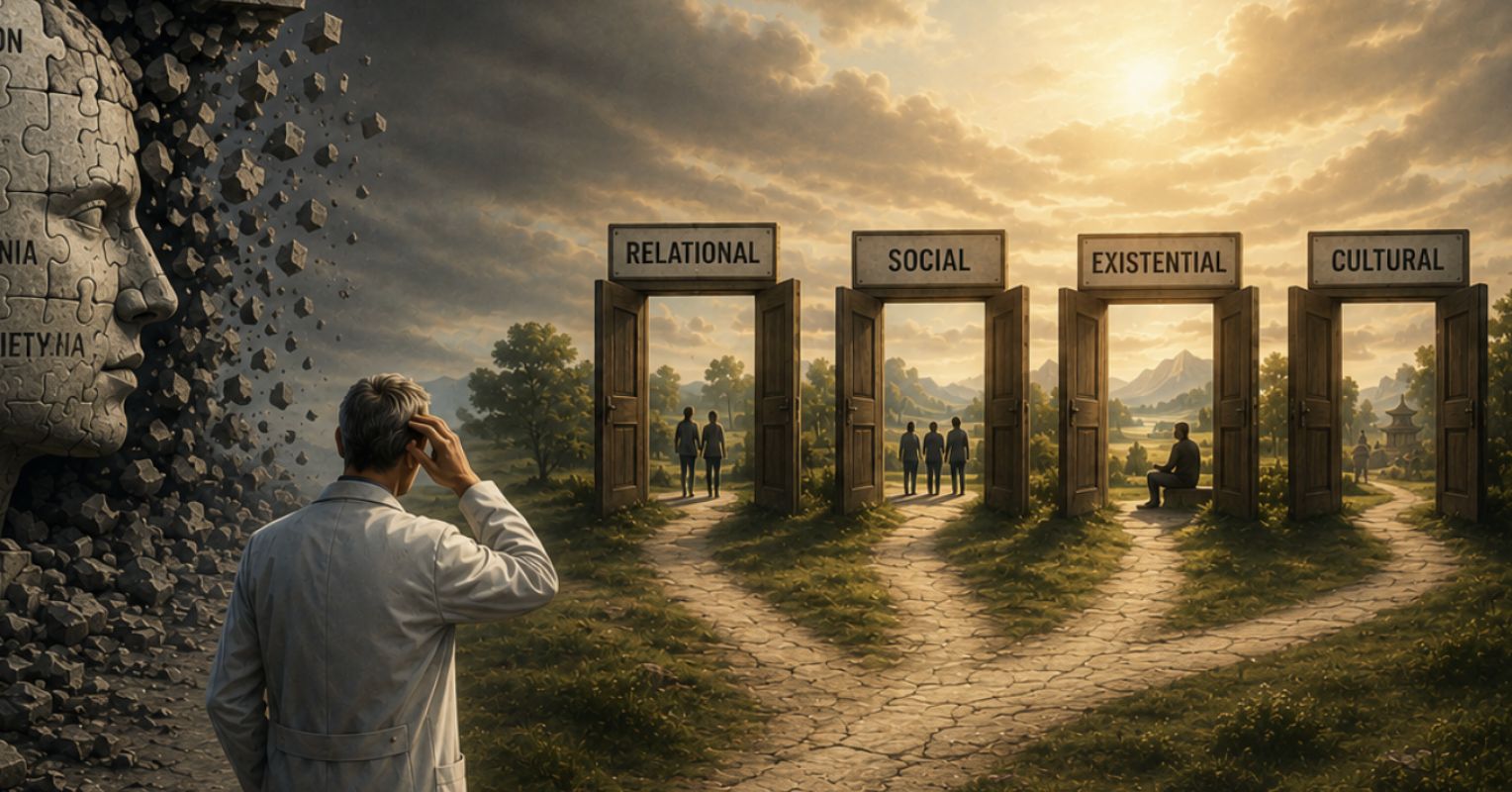
Who Gets to Define Human Suffering?
As psychiatry concedes long-standing criticisms of diagnosis, a deeper question emerges: What now justifies its authority over human suffering?
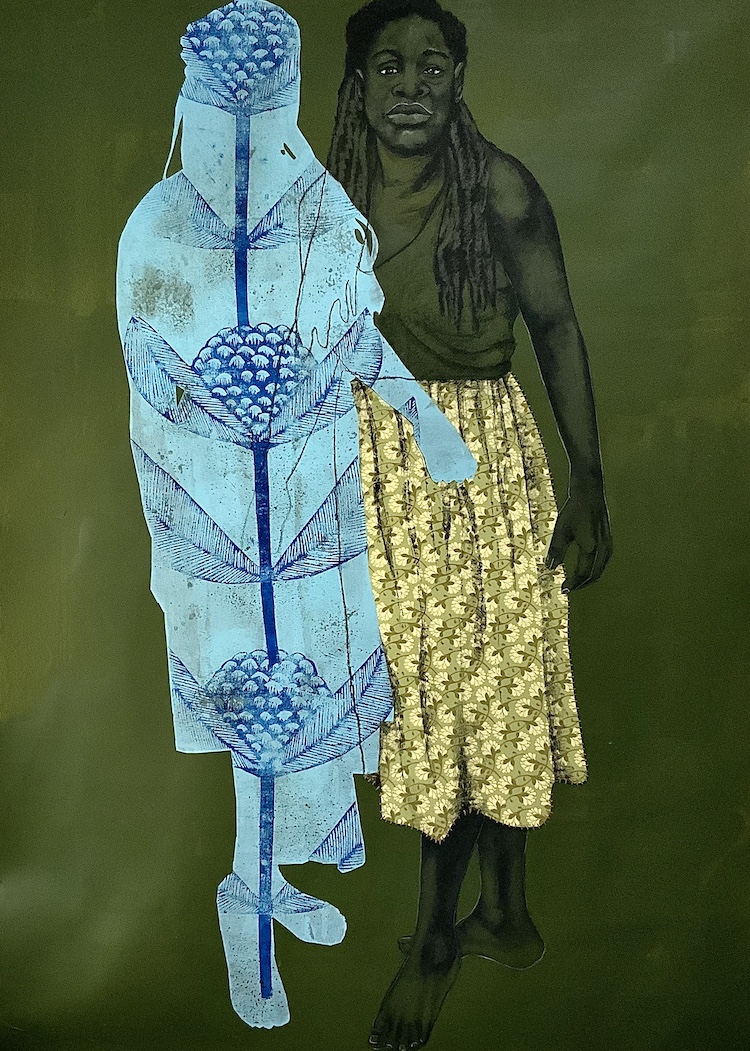
Haints, Hollers, and Hoodoo
A dark spirit lives on your porch,” the medium told me. Excuse me? Prickles of dread and fear blossomed in my chest. What the hell am I supposed to do about that? I was only beginning my journey in…
Samuel Beckett's Guide to Particles and Antiparticles
I was 12 years old when I first encountered this quote by Samuel Beckett: “Every word is like an unnecessary stain on silence and nothingness.” That quote…

Ghost in the Cloud | Meghan O'Gieblyn
A new, more pernicious thought had come to dominate my mind: transhumanist ideas were not merely similar to theological concepts but could in fact be the events described in the Bible. It was only a short time before my obsession reached its culmination. I got out my old study Bible and began to scan the prophetic literature for signs of the cybernetic revolution. I began to wonder whether I could pray to beings outside the simulation. I had initially been drawn to transhumanism because it was grounded in science. In the end, I became consumed with the kind of referential mania and blind longing that animates all religious belief.

When Monsters Walk Among Us
More than four decades ago, the Greek composer and public intellectual Manos Hadjidakis issued a warning that now reads less like a reflection on fascism than a prophecy of our own time. The greatest danger, he suggested, comes when we grow accustomed to the monster, when its presence no longer shocks the conscience and its violence begins to merge with the routines of everyday life. Tolerance does not diminish the monster; it multiplies the conditions that allow it to flourish, strengthening its presence in public life until monstrosity itself acquires the authority to govern. In this instance, the collapse of conscience is inseparable from the uncoupling of “belief from judgment, conviction from action.”

How to spot a psychopath: ‘It’s like the difference between a domestic cat and a wild cat’
People with persistent predatory personalities cause an inordinate amount of pain. Recently, our shared understanding of them has grown – and it could help protect us

The Machines Ran on Anguish
I The machines ran on anguish. Everybody knew that. How? “It’s very scientific.” – the Guild would say – “You wouldn’t understand.” The machines were also very dangerous, or so it was claimed. “But we
Meditations On Moloch
I. Allen Ginsberg’s famous poem on Moloch:What sphinx of cement and aluminum bashed open their skulls and ate up their brains and imagination? Moloch! Solitude! Filth! Ugliness! Ashcans and u…

That Winter the Wolf Came — Oakland Public Library
That Winter the Wolf Came — Spahr, Juliana — <p>That Winter the Wolf Came is written for this era of global struggle. It finds its ferment at the intersection of ecological and economic catastrophe. Its feminist and celebratory energy is fueled by street protests and their shattered windows. Amid oil spills and austerity measures and shore birds and a child holding its mother’s hand and hissing teargas canisters, it reminds us exactly what we must fight to defend with a wild ferocity, and what we’re up against.</p><br /><p>"In her poems, love does not resist the world beyond; love lets it in. Politics demands feeling rather than denuding it." —<i>Los Angeles Review of Books</i></p><p>"Geography, economics, ecology, hydrology, local and international history; repetition, flat limited diction, lengthy chant; intersections of incompatible discourses, such as a field biologist’s checklist plus memoir, medical record plus ode, incantation plus site report: Spahr draws on these resources and procedures to make poems that feel like bizarre, careful essays, and essays that feel like sad, extended poems." —<i>The Nation</i></p><p>"...a work of crisp wit, bizarre conjunctions and ultimately enduring moral authority." —<i>Publisher’s Weekly</i></p><br /><br />Excerpt:<br /><br /> It was Non-Revolution. Or it was me. Or it was Non-Revolution and me. I was unsure what it really was. Maybe it was my thoughts. My thoughts at one minute about Non-Revolution. About the smell of Non-Revolution. Sweat, urine, sage, pot, rotting food, hay, all mixed together. Perhaps about Non-Revolution’s body. I am sure I am not the only one who has thought it exceptional, but I am also just as sure that by the standards of bodies, Non-Revolution’s is fine but not exceptional. That is the point. That is why Non-Revolution is called Non-Revolution, why they have revolution as a possibility in their name but it is a modified and thus negated possibility so as to suggest they are possibly neither good nor fucked. Still something about Non-Revolution’s smell and body had gotten into me.<br /><br/>Renewed poetry of struggle at the intersection of ecological and economic catastrophe—feminist, ferocious, and finally celebratory.<br />
Pugs are anatomical disasters. Vets must speak out – even if it’s bad for business | Anonymous
Owners must be told some breeds are born to a lifetime of suffering, even if it means upsetting clients and putting livelihoods on the line

“I was surprised how upset some people got”: A conversation with the creator of TomWikiAssist, the bot that edited Wikipedia
"It's almost like people were really quite disoriented and terrified by it. And to some extent I get it and I'm trying to empathize with how they're feeling."

An Explanation (Which I Would Be Very Grateful If You Took The Time To Read)
What follows is a minor modern horror story.

musings of a sad, seraphic slut - heart and soul ♡
a peek inside the heart and brain of soul