
Solving the distribution crisis in marketing
There Are Actually Just Three Ways To Grow
Most brands obsess over distribution when the real growth comes from moves marketers can’t make alone

How Targeting Affects Customer Search: A Field Experiment
It has become common practice for retailers to personalize direct marketing efforts based on customer transaction histories as a tactic to increase sales. Targeted email offers featuring products in the same category as a customer’s previous purchases generate higher purchase rates. However, a targeted offer emphasizing familiar products could result in curtailed search for unadvertised products, as a closely matched offer weakens a customer’s incentives to search beyond the targeted items. In a field experiment using email offers sent by an online wine retailer, targeted offers resulted in decreased search activity on the retailer’s website. This effect is driven by a lower rate of search by customers who visit the site, rather than a lower incidence of search. There are several ways this could potentially hurt retailers and consumers, such as reduced cross-selling and fewer opportunities for customers to explore new products. This paper was accepted by Pradeep Chintagunta, marketing.

Content Products: The new way of doing Content Marketing
The era of the 'quick wins' in content marketing is long gone. Learn how to drive new leads by creating Content Products

AIDA model | Marketing | Research Starters | EBSCO Research
<p>The AIDA model is a marketing framework that outlines the stages consumers typically go through when making a purchasing decision: Attention, Interest, Desire, and Action. Developed in the late 19th century by American marketer Elias St. Elmo Lewis and later refined by Edward Strong in the 1920s, this model aims to guide marketers in capturing potential buyers' attention and leading them toward a purchase. </p> <p>In the Attention stage, marketers employ engaging strategies to attract consumers, often using eye-catching visuals or intriguing information. Next, the Interest stage focuses on maintaining that attention through memorable content or relatable messaging. The Desire stage demonstrates how a product or service fulfills the consumer's needs, often using persuasive techniques like testimonials or demonstrations. Finally, the Action stage prompts the consumer to make a purchase, providing clear instructions on how to proceed.</p> <p>While the AIDA model remains relevant, marketers today may adapt it to incorporate new elements, such as Retention or Satisfaction, reflecting the evolving digital landscape and consumer behavior. Overall, the AIDA model serves as a foundational tool for understanding consumer engagement and facilitating effective marketing strategies.</p>

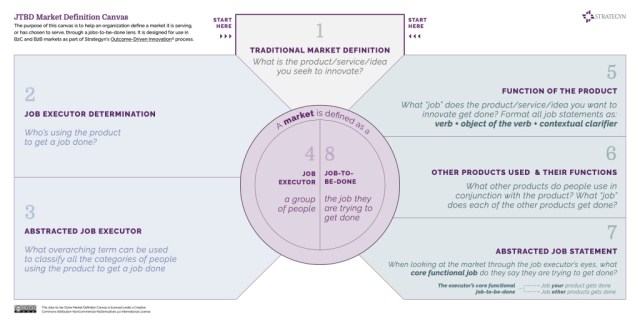
Steve Blank How to Find a Market? Use Jobs-To-Be-Done as the Front End of Customer Discovery
Modern entrepreneurship began at the turn of the 21st century with the observation that startups aren’t smaller versions of large companies – large companies at their core execute known business mo…
Solving the "marketplace" business model - @ASmartBear
I'm amazed how many startups follow the "marketplace" pattern but don't acknowledge or address the peculiar difficulties of that model. Here's some guidance.
Selling the American People: Advertising, Optimization, and the Origins of Adtech
How marketers learned to dream of optimization and speak in the idiom of management science well before the widespread use of the Internet.Algorithms, data

Shedding light on the dark web
The drug trade is moving from the street to online cryptomarkets. Forced to compete on price and quality, sellers are upping their game

How To Think In Funnels (And Achieve The Best Possible Outcomes)
Elias Elmo Lewis created a formula that changed marketing forever. But his method applies beyond marketing. Here's how to think in funnels:

Field Experimentation in Marketing Research
Despite increasing efforts to encourage the adoption of field experiments in marketing research (e.g., Campbell 1969 ; Cialdini 1980 ; Li et al. 2015 ), the majority of scholars continue to rely primarily on laboratory studies ( Cialdini 2009 ). For example, of the 50 articles published in Journal of Marketing Research in 2013, only three (6%) were based on field experiments. The goal of this article is to motivate a methodological shift in marketing research and increase the proportion of empirical findings obtained using field experiments. The author begins by making a case for field experiments and offers a description of their defining features. She then demonstrates the unique value that field experiments can offer and concludes with a discussion of key considerations that researchers should be mindful of when designing, planning, and running field experiments.

Online Marketing Tools and Resources | Amy Porterfield
Get access to my free resources and paid programs to help you build and scale your online business, one step at a time.

goabstract/Marketing-for-Engineers
A curated collection of marketing articles & tools to grow your product.
Platform Information Provision and Consumer Search: A Field Experiment
Despite substantial efforts to help consumers search in more intuitive ways, text search remains the predominant tool for product discovery online. In this paper, we explore the effects of visual and textual cues for search refinement on consumer search and purchasing behavior. We collaborate with one of the largest e-commerce platforms in China and study its roll out of a new search tool. When a customer searches for a general term (e.g., “headphones”), the tool suggests refined queries (e.g., “bluetooth headphones” or “noise-canceling headphones”) with the help of images and texts. The search tool was rolled out with a long-run experiment, which allows us to measure its short-run and long-run effects. We find that, although there was no immediate effect on orders or total expenditures, the search tool changed customers’ search and purchasing behavior in the long-run. Customers with access to the new tool eventually increased orders and expenditures compared to those in the control group, especially for non top-selling products. The purchase increase comes from more effective searches, rather than an increase in activity on the platform. We also find that the effect is not only driven by the direct value of suggested searches, but also by customers indirectly learning to perform more effective searches on their own.

WebProNews
Breaking business news covering marketing, I.T., ecommerce & emerging trends like electric vehicles, solar energy, financial tech & space.

WP Growth Council
In the WordPress world, when we look back an 2016 I think we’ll remember it as the year that we awoke to the importance of marketing. WordPress has always grown organically through word of mouth an…

Bluesky follower sales websites
As Bluesky grows, so does the spam industry orbiting it