


The Coral Project is an open source project to help publishers of all sizes build better communities around their journalism. We’re creating tools that help everyone to feel safe, respected, and heard.
“Paging Dr. Fraud”: The Fake Publishers That Are Ruining Science
For years, spurious journals have proliferated online, promising academic credibility in exchange for cash.

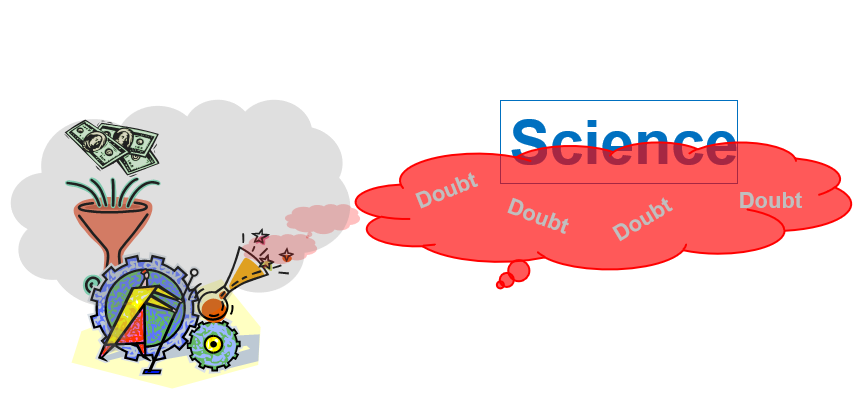
Dark-Moneyed Denialists Are Running 'Fixing Science' Symposium of Doubt
The “Fixing Science” symposium, which is hosted by the National Association of Scholars and kicks off today in Oakland, California, includes credible speakers who want to improve some areas of science hurt by the use of poor statistical methods or making irreproducible claims. Unfortunately, they are outnumbered by people who have often cast doubt on mainstream climate, environmental, and health sciences. For […]
Value and vulnerability: a framework for understanding the complexity of misinformation use
Why does misinformation influence some and not others? Vulnerability is often mischaracterized as personal weakness or deficiency, or as susceptibility to “infection” or “pollution”—dehumanizing descriptions that highlight supposed shortcomings of media consumers. We propose a broader perspective that focuses on the value of misinformation to persons, groups, and platforms that adopt or share it. The Vulnerability and Value (VV) framework conceptualizes vulnerability as arising from interconnected scales and systems of valuation. Using a complex adaptive systems framing, we describe how misinformation can generate value for individuals, groups, and platforms. When misinformation spreads successfully, it often does so because it serves purposes that extend beyond veracity. Its spread indicates something significant is at stake for those who believe or facilitate it. A key contribution of the VV framework is to formalize the tradeoff individuals face: whether to question and evaluate misinformation or to accept and share it.
VoxPort (@voxport.bsky.social)
-Working on VoxPort: ATProtocol–driven platform where podcasters truly own their voices. -Building for independence, discovery, and community. -If you’re a podcaster, dev, or just curious about open media - let’s connect.
Claude Mythos and misguided open-weight fearmongering
Another dance around fears of open-source.
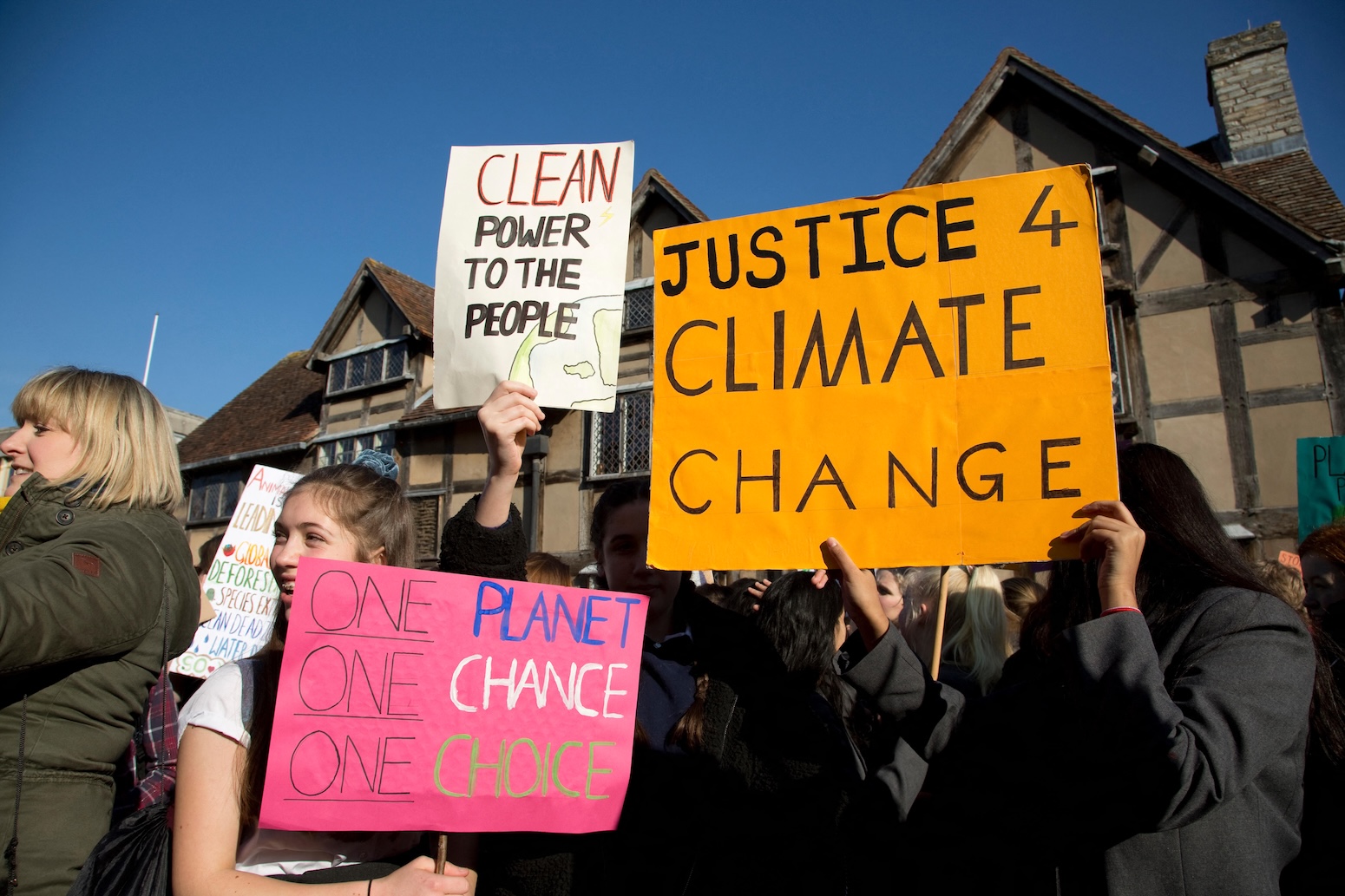
Correcting climate ‘misperceptions’ may not boost climate action - Carbon Brief
Most people "underestimate" general support for climate change and "overestimate" actual, real-world climate action.
The junkification of research - Carl Rhodes, Martina K Linnenluecke, 2025
This essay considers the emergent phenomenon of ‘junkification’ in academic research publishing. The term junkification was originally coined to describe the in...

Disinformation and grievance narratives
Synthese - Disinformation is often defined as misleading content intended to instill false beliefs. But this definition is too narrow. We need to focus instead on its broader epistemic effects....

The Problem With Promoting ‘Gold Standard Science’
Opinion | Branding scientific research with a simplified label risks misleading the public and harming scientific literacy.

AMMeBa: A Large-Scale Survey and Dataset of Media-Based Misinformation In-The-Wild
The prevalence and harms of online misinformation is a perennial concern for internet platforms, institutions and society at large. Over time, information shared online has become more media-heavy and misinformation has readily adapted to these new modalities. The rise of generative AI-based tools, which provide widely-accessible methods for synthesizing realistic audio, images, video and human-like text, have amplified these concerns. Despite intense public interest and significant press coverage, quantitative information on the prevalence and modality of media-based misinformation remains scarce. Here, we present the results of a two-year study using human raters to annotate online media-based misinformation, mostly focusing on images, based on claims assessed in a large sample of publicly-accessible fact checks with the ClaimReview markup. We present an image typology, designed to capture aspects of the image and manipulation relevant to the image's role in the misinformation claim. We visualize the distribution of these types over time. We show the rise of generative AI-based content in misinformation claims, and that its commonality is a relatively recent phenomenon, occurring significantly after heavy press coverage. We also show "simple" methods dominated historically, particularly context manipulations, and continued to hold a majority as of the end of data collection in November 2023. The dataset, Annotated Misinformation, Media-Based (AMMeBa), is publicly-available, and we hope that these data will serve as both a means of evaluating mitigation methods in a realistic setting and as a first-of-its-kind census of the types and modalities of online misinformation.

AMMeBa: A Large-Scale Survey and Dataset of Media-Based Misinformation In-The-Wild
The prevalence and harms of online misinformation is a perennial concern for internet platforms, institutions and society at large. Over time, information shared online has become more media-heavy and misinformation has readily adapted to these new modalities. The rise of generative AI-based tools, which provide widely-accessible methods for synthesizing realistic audio, images, video and human-like text, have amplified these concerns. Despite intense public interest and significant press coverage, quantitative information on the prevalence and modality of media-based misinformation remains scarce. Here, we present the results of a two-year study using human raters to annotate online media-based misinformation, mostly focusing on images, based on claims assessed in a large sample of publicly-accessible fact checks with the ClaimReview markup. We present an image typology, designed to capture aspects of the image and manipulation relevant to the image's role in the misinformation claim. We visualize the distribution of these types over time. We show the rise of generative AI-based content in misinformation claims, and that its commonality is a relatively recent phenomenon, occurring significantly after heavy press coverage. We also show "simple" methods dominated historically, particularly context manipulations, and continued to hold a majority as of the end of data collection in November 2023. The dataset, Annotated Misinformation, Media-Based (AMMeBa), is publicly-available, and we hope that these data will serve as both a means of evaluating mitigation methods in a realistic setting and as a first-of-its-kind census of the types and modalities of online misinformation.
Living in the Simulacra
Despite a twenty-first-century plethora of images and our collective understanding that digital tools may alter the truth, human beings have a strong belief ...

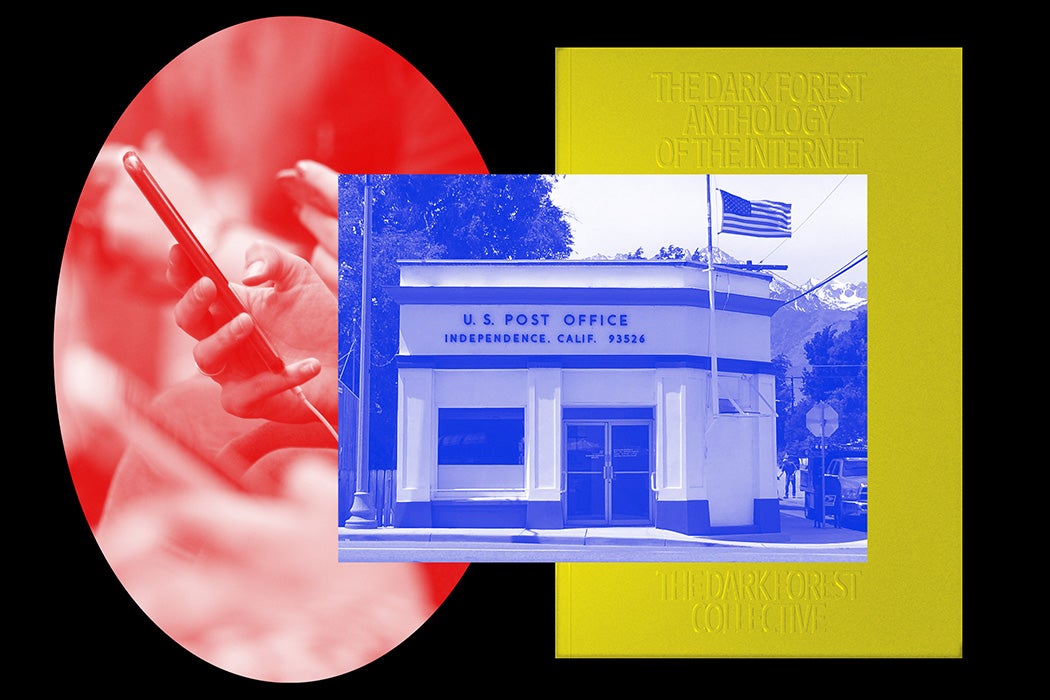
The Case for a Public Social Media Platform - JSTOR Daily
Artist and writer Joshua Citarella explores why corporate platforms corrode democracy—and what a postal-service-style digital commons could do differently.
On Betraying Principles
Why Creative Commons must be about more than reducing friction on reuse This week, I had the experience of being told the work we are doing at Creative Commons right now is betraying the founding principles of the organization. This is not the first time and it won’t be the last.

Rethinking Digital Commons in the Age of Viral Hate
Hate has a significant advantage on social networks: its ability to go viral. The case of Luigi Mangione, the alleged murderer, urgently calls for a rethink of digital commons.

Too many of y’all get the shape of atproto fundamentally incorrect, thinking it’s about “data ownership,” but it’s literally never been about that, and if you keep banging that drum, you’ll miss the point, just like we have every other time.

Bryan (they/them) on pckt
pckt.blog