

The Coral Project is an open source project to help publishers of all sizes build better communities around their journalism. We’re creating tools that help everyone to feel safe, respected, and heard.
Coraline Ada Ehmke: The Rising Ethical Storm in Open Source
In the twenty years since the term “open source” was coined by Christine Peterson, our community has grown astronomically, all the while learning from its successes and failures. A lot has changed for open source developers in the past two decades. But the political and technological landscape has also changed.
“Paging Dr. Fraud”: The Fake Publishers That Are Ruining Science
For years, spurious journals have proliferated online, promising academic credibility in exchange for cash.
I spent a weekend at Google talking with nerds about charity. I came away … worried.
Vox is a general interest news site for the 21st century. Its mission: to help everyone understand our complicated world, so that we can all help shape it. In text, video and audio, our reporters explain politics, policy, world affairs, technology, culture, science, the climate crisis, money, health and everything else that matters. Our goal is to ensure that everyone, regardless of income or status, can access accurate information that empowers them.

As election looms, a network of mysterious ‘pink slime’ local news outlets nearly triples in size
Editor’s Note: This is the second of our four pieces on this network. In December 2019, we first established the scope of the “pink slime” network distributing algorithmic stories and conservative talking points. In October 2021, we found that the network had received funding from multiple dark money groups as well as collaborated with advocacy […]

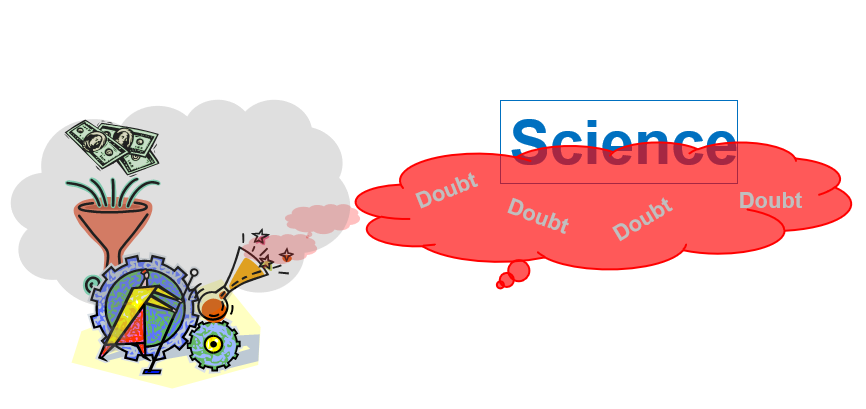
Dark-Moneyed Denialists Are Running 'Fixing Science' Symposium of Doubt
The “Fixing Science” symposium, which is hosted by the National Association of Scholars and kicks off today in Oakland, California, includes credible speakers who want to improve some areas of science hurt by the use of poor statistical methods or making irreproducible claims. Unfortunately, they are outnumbered by people who have often cast doubt on mainstream climate, environmental, and health sciences. For […]
Value and vulnerability: a framework for understanding the complexity of misinformation use
Why does misinformation influence some and not others? Vulnerability is often mischaracterized as personal weakness or deficiency, or as susceptibility to “infection” or “pollution”—dehumanizing descriptions that highlight supposed shortcomings of media consumers. We propose a broader perspective that focuses on the value of misinformation to persons, groups, and platforms that adopt or share it. The Vulnerability and Value (VV) framework conceptualizes vulnerability as arising from interconnected scales and systems of valuation. Using a complex adaptive systems framing, we describe how misinformation can generate value for individuals, groups, and platforms. When misinformation spreads successfully, it often does so because it serves purposes that extend beyond veracity. Its spread indicates something significant is at stake for those who believe or facilitate it. A key contribution of the VV framework is to formalize the tradeoff individuals face: whether to question and evaluate misinformation or to accept and share it.
VoxPort (@voxport.bsky.social)
-Working on VoxPort: ATProtocol–driven platform where podcasters truly own their voices. -Building for independence, discovery, and community. -If you’re a podcaster, dev, or just curious about open media - let’s connect.
Correcting climate ‘misperceptions’ may not boost climate action - Carbon Brief
Most people "underestimate" general support for climate change and "overestimate" actual, real-world climate action.
The junkification of research - Carl Rhodes, Martina K Linnenluecke, 2025
This essay considers the emergent phenomenon of ‘junkification’ in academic research publishing. The term junkification was originally coined to describe the in...

Disinformation and grievance narratives
Synthese - Disinformation is often defined as misleading content intended to instill false beliefs. But this definition is too narrow. We need to focus instead on its broader epistemic effects....

The Problem With Promoting ‘Gold Standard Science’
Opinion | Branding scientific research with a simplified label risks misleading the public and harming scientific literacy.
AMMeBa: A Large-Scale Survey and Dataset of Media-Based Misinformation In-The-Wild
The prevalence and harms of online misinformation is a perennial concern for internet platforms, institutions and society at large. Over time, information shared online has become more media-heavy and misinformation has readily adapted to these new modalities. The rise of generative AI-based tools, which provide widely-accessible methods for synthesizing realistic audio, images, video and human-like text, have amplified these concerns. Despite intense public interest and significant press coverage, quantitative information on the prevalence and modality of media-based misinformation remains scarce. Here, we present the results of a two-year study using human raters to annotate online media-based misinformation, mostly focusing on images, based on claims assessed in a large sample of publicly-accessible fact checks with the ClaimReview markup. We present an image typology, designed to capture aspects of the image and manipulation relevant to the image's role in the misinformation claim. We visualize the distribution of these types over time. We show the rise of generative AI-based content in misinformation claims, and that its commonality is a relatively recent phenomenon, occurring significantly after heavy press coverage. We also show "simple" methods dominated historically, particularly context manipulations, and continued to hold a majority as of the end of data collection in November 2023. The dataset, Annotated Misinformation, Media-Based (AMMeBa), is publicly-available, and we hope that these data will serve as both a means of evaluating mitigation methods in a realistic setting and as a first-of-its-kind census of the types and modalities of online misinformation.
Facts and Myths about Misperceptions
Misperceptions threaten to warp mass opinion and public policy on controversial issues in politics, science, and health. What explains the prevalence and persistence of these false and unsupported beliefs, which seem to be genuinely held by many people? Though limits on cognitive resources and attention play an important role, many of the most destructive misperceptions arise in domains where individuals have weak incentives to hold accurate beliefs and strong directional motivations to endorse beliefs that are consistent with a group identity such as partisanship. These tendencies are often exploited by elites who frequently create and amplify misperceptions to influence elections and public policy. Though evidence is lacking for claims of a “post-truth” era, changes in the speed with which false information travels and the extent to which it can find receptive audiences require new approaches to counter misinformation. Reducing the propagation and influence of false claims will require further efforts to inoculate people in advance of exposure (for example, media literacy), debunk false claims that are already salient or widespread (for example, fact-checking), reduce the prevalence of low-quality information (for example, changing social media algorithms), and discourage elites from promoting false information (for example, strengthening reputational sanctions).
Fakebook: Using Data Science to Spot Fake News
Setting aside all the absurdity of thinking we need to have scientific papers with risks of hallucination, I'm flabbergasted this was taken as sufficiently novel to warrant publication in Nature. It's just sort of stitching things together with MCP...

Ran Blekhman
This is the future of scientific papers. Instead of a PDF, the paper is an AI agent that you can talk to, ask questions, run analyses. No more digging through supplements - just ask the paper directly: "what p-value cutoff was used in Fig 3B? Re-run at 0.01." nature.com/articles/s41586-026-11044-y
