

Create the perfect easing curve with this helpful tool!
Bezier Curve as Easing Function In C++
It’s been a while since my last guest post on Adam’s blog, but I’m back with something short and practical—think of it as an epilogue to this earlier post on Bézier curves in animation. The last post focused on the theory and mathematics behind Bézier curves. What it lacked was a practical perspective—an opportunity to see the implementation in action. I wanted to share with you a simple library that I have created. Its purpose is to directly represent cubic Bézier Curves as Easing Functions.
Easings - Generate, test and share custom easing curves.
Test common easing curves on a range of interfaces. Or generate and share your own cubic-bezier curves.
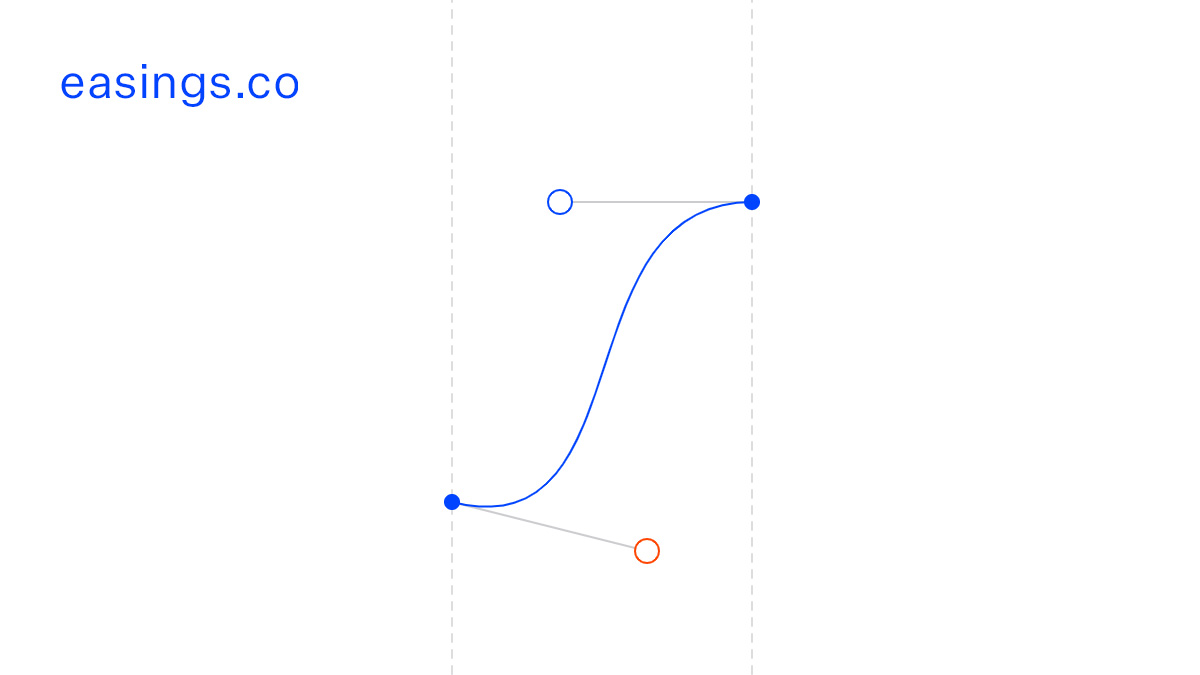
Easing Functions Cheat Sheet
Easing functions specify the speed of animation to make the movement more natural. Real objects don’t just move at a constant speed, and do not start and stop in an instant. This page helps you choose the right easing function.

kurvenlineal — scale fitter
kurvenlineal is a bezier easing run in reverse. Normally you start with a cubic-bezier() and sample values from it, in this case you start with the values: hand it a list of numbers and it finds the quadratic or cubic easing (endpoints fixed at 0,0 → 1,1) that stays as close as possible to all of them (a least-squares fit).
The mathematical beauty of hyperbezier curves
The mathematical beauty of hyperbezier curves
Bézier Spline Simplification Using Locally Integrated Error Metrics
This summary was generated using automated tools and was not authored or reviewed by the article's author(s). It is provided to support discovery, help readers assess relevance, and assist readers from adjacent research areas in understanding the work. It is intended to complement the author-supplied abstract, which remains the primary summary of the paper. The full article remains the authoritative version of record. Click here to learn more.

AutoAnimate - Add motion to your apps with a single line of code
A zero-config, drop-in animation utility that automatically adds smooth transitions to your web app. Use it with React, Solid, Vue, Svelte, or any other JavaScript application.

CSS by T. Afif (@css-only.dev)
More range sliders with fancy shapes? Let's go! This time with a tooltip showing the value. curve, wave, zig-zag, arc ... Which one do you prefer? css-tip.com/shaped-range... 0% JavaScript and 100% CSS magic (border-shape, shape(), scroll-driven animations, and more!)

Fast calculation of the distance to cubic Bezier curves on the GPU
Bézier curves are a core building block of text and 2D shapes rendering. There are several approaches to rendering them, but one especially challenging problem, both mathematically and technically, is computing the distance to a Bézier curve. For quadratic curves (one control point), this is fairly accessible, but for cubic (two control points) we're going to see why it is so hard.
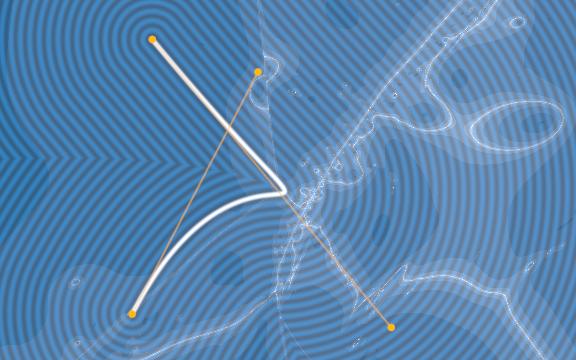
Curved Text Along a Path | CSS-Tricks
We can flow text along a curved line with three tools built right into SVG: , and .

Native-Like Animations for Page Transitions on the Web | CSS-Tricks
Some of the most inspiring examples I’ve seen of front-end development have involved some sort of page transitions that look slick like they do in mobile
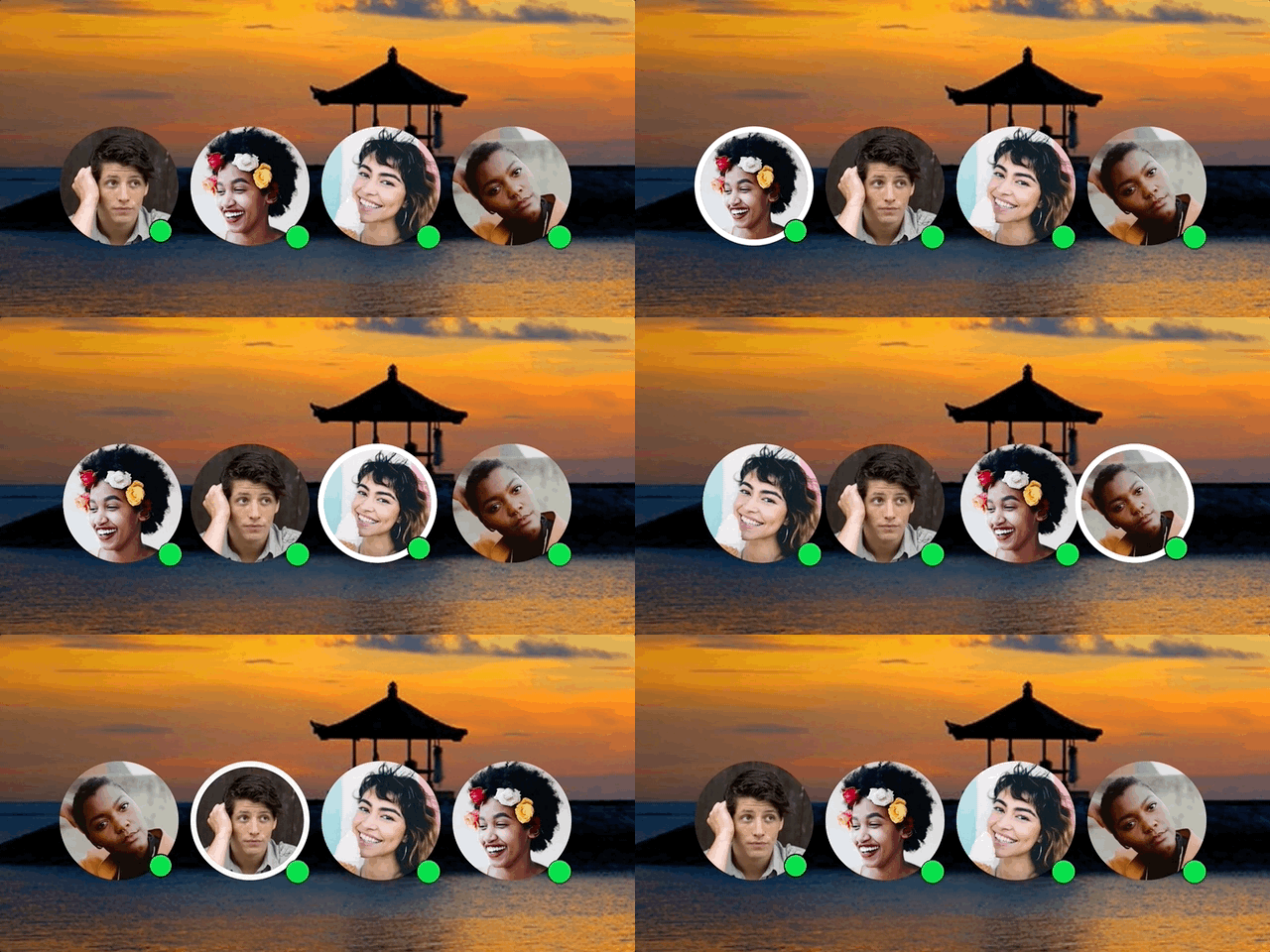
Real-time Motion Retargeting to Highly Varied User-Created Morphologies - Chris Hecker's Website
Chris Hecker[1] Bernd Raabe[2] Ryan W. Enslow[3]John DeWeese[4] Jordan Maynard[5] Kees van Prooijen[6]
Firefox OS, Animations & the Dark Cubic-Bezier of the Soul – Mozilla Hacks - the Web developer blog
I’ve been using Firefox OS daily for a couple of years now (wow, time flies!). While performance has steadily improved with efforts like Project Silk, I've often noticed delays in ...

The Animated Elliptic Curve
Visualize elliptic curve cryptography with animated examples

Curvenote® (@curvenote.com)
Curvenote's mission is to free science from static PDF documents to enable researchers to continuously share more interactive, reproducible, and richly-linked #openscience content. Curvenote develops authoring and publishing tools for researchers.

Anchor positioning makes this type of effect feel almost too easy to make now. If you want the long-form where I break it down in more detail, you can find it here: youtu.be/8_NQ7ARXz8c
