

Originally published in German as Feminist Server – Sichtbarkeit und Funktionalität. Digitale Infrastruktur als gemeinschaftliches Projekt, in Springerin 4/2019.
Re-enchanting the world: feminism and the politics of the commons
Silvia Federici is one of the most important contempora…

Commons Network
Digital Commons are not only about digital technology, but also about the economy, how it is organised and who it benefits. Digital Commons represent a democratic practice, with shared ownership, thus initiating a shift away from centralised (private or state) management of technology and towards democratisation of digital infrastructure. In this way Digital Commons help guard and reinforce such public values as democracy, self-determination and sovereignty. In the first explainer we put forward how this shift offers numerous opportunities for the Netherlands, or any country that takes Digital Commons seriously. Read the explainer

Re-enchanting the world : feminism and the politics of the commons
xviii, 227 pages ; 23 cm; "Silvia Federici is one of the most important contemporary theorists of capitalism and feminist movements. In this collection of her work spanning over twenty years, she provides a detailed history and critique of the politics of the commons from a feminist perspective. In her clear and combative voice, Federici provides readers with an analysis of some of the key issues and debates in contemporary thinking on this subject. Drawing on rich historical research, she maps the connections between the previous forms of enclosure that occurred with the birth of capitalism and the destruction of the commons and the "new enclosures" at the heart of the present phase of global capitalist accumulation. Considering the commons from a feminist perspective, this collection centers on women and reproductive work as crucial to both our economic survival and the construction of a world free from the hierarchies and divisions capital has planted in the body of the world proletariat. Federici is clear that the commons should not be understood as happy islands in a sea of exploitative relations but rather autonomous spaces from which to challenge the existing capitalist organization of life and labor"--; Foreward by Peter Linebaugh; Includes bibliographical references (pages198-216) and index; On primitive accumulation, globalization, and reproduction -- Introduction to the new enclosures -- The debt crisis, Africa, and the new enclosures -- China: breaking the iron rice bowl -- From commoning to debt: financialization, microcredit, and the changing architecture of capital accumulation -- Beneath the United States, the Commons -- Commons against and beyond Capitalism -- The University: a knowledge common? -- Feminism and the politics of the commons in an era of primitive accumulation -- Women's struggles for land in Africa and the reconstruction of the commons -- Women's struggles for land and the common good in Latin America -- Marxism, feminism, and the commons -- From crisis to commons: reproductive work, affective labor and technology, and the transformation of everyday life -- Re-enchanting the world: technology, the body, and the construction of the commons

mai ishikawa sutton
My work lies at the intersection of technology and the solidarity economy. I’m passionate about strengthening the digital commons, in which people control and steward communication technologies as collective goods.
Elections and Activism: Case Studies
The Commons is an online library for the change makers of the world and for those interested in social change, activism, organising, advocacy and justice.

Digital Commons: Our Shared Right to Knowledge and Culture
As the volume of cultural and scientific works produced and available on the internet continues to expand, the question of freedom to consult and use this immense ‘digital commons’ is becoming a critical one, particularly as cutting off access could entail serious consequences for education, cultural exchange, and even the health of European citizens.

The Case for a Public Social Media Platform - JSTOR Daily
Artist and writer Joshua Citarella explores why corporate platforms corrode democracy—and what a postal-service-style digital commons could do differently.

Messaging Guide to Counter Far Right Narratives
The Commons is an online library for the change makers of the world and for those interested in social change, activism, organising, advocacy and justice.

Governable spaces: a feminist agenda for platform policy
A proposal, informed by feminist theory, for a policy agenda of “governable spaces” across the domains of social media, gig economies, and network infrastructure.

Ecofeminist and Always Unfinished Space Making
This entry is part of rosa's Ecofeminist Dictionary from the project A Traversal Network of Feminist Servers (ATNOFS) and is based on two conversations with Sergiu Nisioi and Anca Bucur of hypha 1.
Real Problems, Real Solutions: A Messaging Guide to Move Beyond Racial Scapegoating in the Victorian Election
The Commons is an online library for the change makers of the world and for those interested in social change, activism, organising, advocacy and justice.
Deep Roots, Real Power: Candid Stories from the Field
The Commons is an online library for the change makers of the world and for those interested in social change, activism, organising, advocacy and justice.
Good, Standard Work: Creating the Commons
A defence of digital stewardship, IndieWeb principles, Blackfoot models of collective flourishing, and what it means to plant seeds in a garden you'll neve…

Uncommon victories: Lessons from Warringah and Indi
The Commons is an online library for the change makers of the world and for those interested in social change, activism, organising, advocacy and justice.

The 2023 Voice Referendum Outcome: A Messaging Guide
The Commons is an online library for the change makers of the world and for those interested in social change, activism, organising, advocacy and justice.
Feminist Computing


Men in tech #YesAllMen - EMF 2026
Data Feminism for AI
quod.lib.umich.edu

Wired women : gender and new realities in cyberspace
www.bloomsbury.com
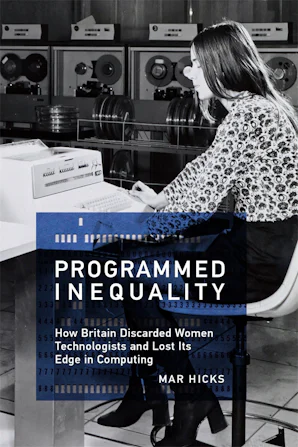
Programmed Inequality