Joining us at the Creative Commons Global Summit in 2018, NYU professor and legal scholar Jane Anderson presented the collaborative project “Local Contexts,” “an initiative to support Native, First Nations, Aboriginal, Inuit, Metis and Indigenous communities in the management of their intellectual property and cultural heritage specifically within the digital environment.”
The Shared Patterns of Indigenous Culture, Permaculture and Digital Commons | David Bollier
Rarely have I read an essay that knits together some very different commons with such wisdom and depth. Joline Blais' 2006 essay, “Indigenous Domain: Pilgrims, Permaculture and Perl,” is a wonderfully insightful analysis that reveals the underlying unity and logic of commons principles. Her piece appeared in Intelligent Agent (vol. 6, no. 2), published by the Inter-Society for the Electronic Arts.
Digital Commons: Our Shared Right to Knowledge and Culture
As the volume of cultural and scientific works produced and available on the internet continues to expand, the question of freedom to consult and use this immense ‘digital commons’ is becoming a critical one, particularly as cutting off access could entail serious consequences for education, cultural exchange, and even the health of European citizens.

Local Power: Shifting Power at the Local Level - Candidate School
The Commons is an online library for the change makers of the world and for those interested in social change, activism, organising, advocacy and justice.

On Betraying Principles
Why Creative Commons must be about more than reducing friction on reuse This week, I had the experience of being told the work we are doing at Creative Commons right now is betraying the founding principles of the organization. This is not the first time and it won’t be the last.

Power and Power Mapping: Start Here
The Commons is an online library for the change makers of the world and for those interested in social change, activism, organising, advocacy and justice.
Uncommon victories: Lessons from Warringah and Indi
The Commons is an online library for the change makers of the world and for those interested in social change, activism, organising, advocacy and justice.

Deep Roots, Real Power: Candid Stories from the Field
The Commons is an online library for the change makers of the world and for those interested in social change, activism, organising, advocacy and justice.
New to the Commons? | David Bollier
If you’re coming to the commons for the first time, it can be difficult to grok the idea because there are so many different ways to understand the commons. That’s because the commons is not so much a fixed, universal thing as a general concept describing durable, dynamic sets of social relationships for managing resources -- all sorts of resources: digital, urban, natural, indigenous, rural, cultural, scientific, to use some crude categories.
Commons Network
Digital Commons are not only about digital technology, but also about the economy, how it is organised and who it benefits. Digital Commons represent a democratic practice, with shared ownership, thus initiating a shift away from centralised (private or state) management of technology and towards democratisation of digital infrastructure. In this way Digital Commons help guard and reinforce such public values as democracy, self-determination and sovereignty. In the first explainer we put forward how this shift offers numerous opportunities for the Netherlands, or any country that takes Digital Commons seriously. Read the explainer

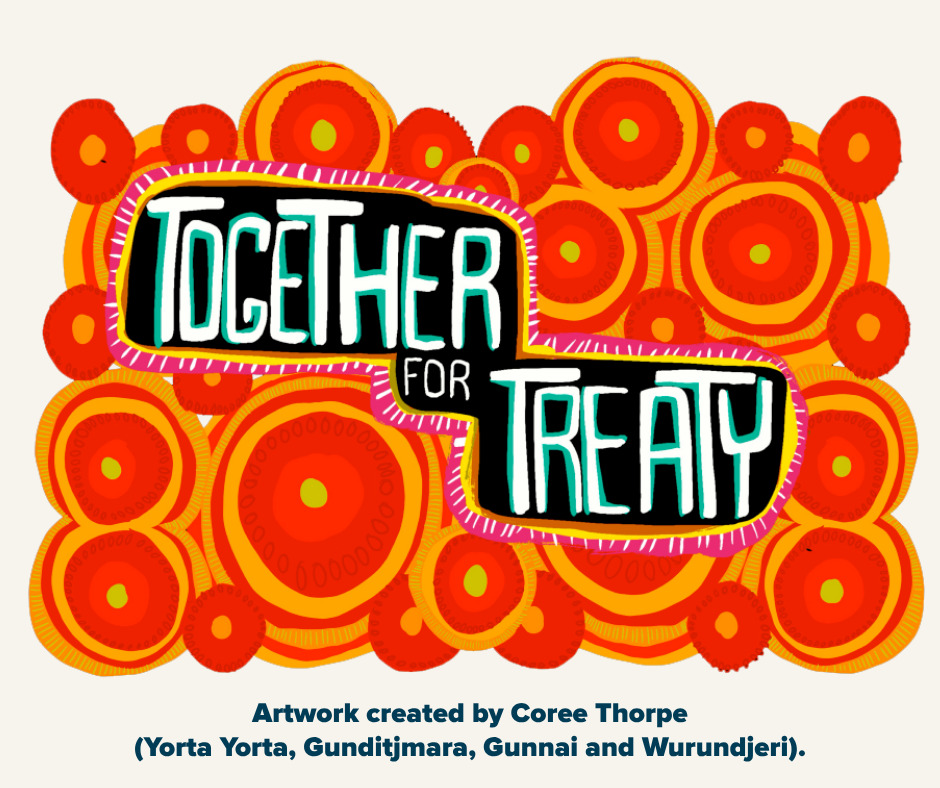
Together for Treaty
The Commons is an online library for the change makers of the world and for those interested in social change, activism, organising, advocacy and justice.
Digital commons
The digital commons refers to shared digital resources—such as software, knowledge, data, and cultural content—that are collectively produced and governed by a community and intended for public use.[1][2] These commons are distinguished by open access, participatory management, and licensing practices that preserve reuse and redistribution. Digital commons play a vital role in areas such as education, research, software development, and civic engagement.
Collectief Eigendom
Cultural practices of collective ownership over natural resources have been around for quite some time. Do these ways of working have a digital counterpart? It may seem simple at first. To translate cultural practices of collective ownership into the digital realm, just use a Creative Commons license to allow others to make use of your work, share further modifications, and contribute to the wealth of the digital commons. That’s it. Some stories are just too good to be true.
“UNSETTLING LANDSCAPES: APPLICATIONS OF ETHNOBOTANICAL RESEARCH IN DEFINING ABORIGINAL RIGHTS AND RE-AFFIRMING INDIGENOUS LAWS IN T’SOU-KE TERRITORY, VANCOUVER ISLAND AND BEYOND.”
In this dissertation, I explore how, in Canada, Indigenous people’s relationships with culturally-significant plant species are an expression of Aboriginal rights, and I ask how these rights can be affirmed and exercised using a form of intersocietal law within and between First Nations and state governments. I examine how my own and others’ ethnobotanical and ethnoecological research can help to decolonize the Crown legal systems that limit Indigenous peoples in regenerating their relationships with native plant species and the ecosystems within which they are situated. In order to explore how Indigenous people’s relationships with native plant species can be expressed in law, my dissertation is grounded in a case study, developed and carried out in collaboration with the T’Sou-ke Nation, members of which have lived on southern Vancouver Island since time immemorial as part of the Straits Salish language group. Using the T’Sou-ke case study as an example, I explain how this evidence of knowledge and use of plants helps to root contemporary First Nations’ rights throughout their territories, which is essential to establishing the basis of land and resource rights that have legal force to be claimed today.I indicate current challenges faced by T’Sou-ke Nation in exercising plant-associated rights throughout their territory and outline how the current legal test for proving Aboriginal rights is problematic. The T’Sou-ke have an abundance of rich evidence of their use of 100 native plant species and of Indigenous laws and governance associated with the same. I contend that the obvious and long-standing Indigenous management of these plant species and various ecosystems on southern Vancouver Island supports a very significant claim of legal rights and I believe that my research is broadly applicable to other First Nations in BC and beyond. The T’Sou-ke Nation, historically and today, are norm creating, generating and interpreting people as reflected in their distinct social organization adapted and adjusted by their members through many changing social and ecological variables over centuries. The re-examination of the values, rules, protocols, customs and practices associated with markers of Indigenous plant use throughout Straits Salish landscapes, specifically with the assistance of Indigenous knowledge holders, as well as ethnohistorical, ethnobotanical, and traditional ecological knowledge, re-frames how evidence of land use and occupancy is presented, and, ultimately, how we might all govern these resources together. For the T’Sou-ke, laws around plants are not limited to certain traditional practices, or to specific sites or places; law also rests in species and in the long-term relationships that people have with culturally important plant species. As such, the normative ordering of T’Sou-ke laws relating to their plant use and management must be judged on T’Sou-ke terms, not by Canadian legal terms. My hope is that this research contributes to the larger discussion of acknowledging Indigenous peoples’ distinct and culturally relative rights and principles with respect to native plants, while strengthening and growing the ties that bind all British Columbians together.
Decolonizing Our Minds and Actions
By Waziyatawin and Michael Yellow Bird, from the Introduction to For Indigenous Minds Only: A Decolonization Handbook: Introduction and Background In 2005, eight Indigenous intellectuals created th…

Scaling Social Movements: An Overview
The Commons is an online library for the change makers of the world and for those interested in social change, activism, organising, advocacy and justice.

Center for a Stateless Society
All content on this site is available for republishing under a Creative Commons Public Domain Dedication.